













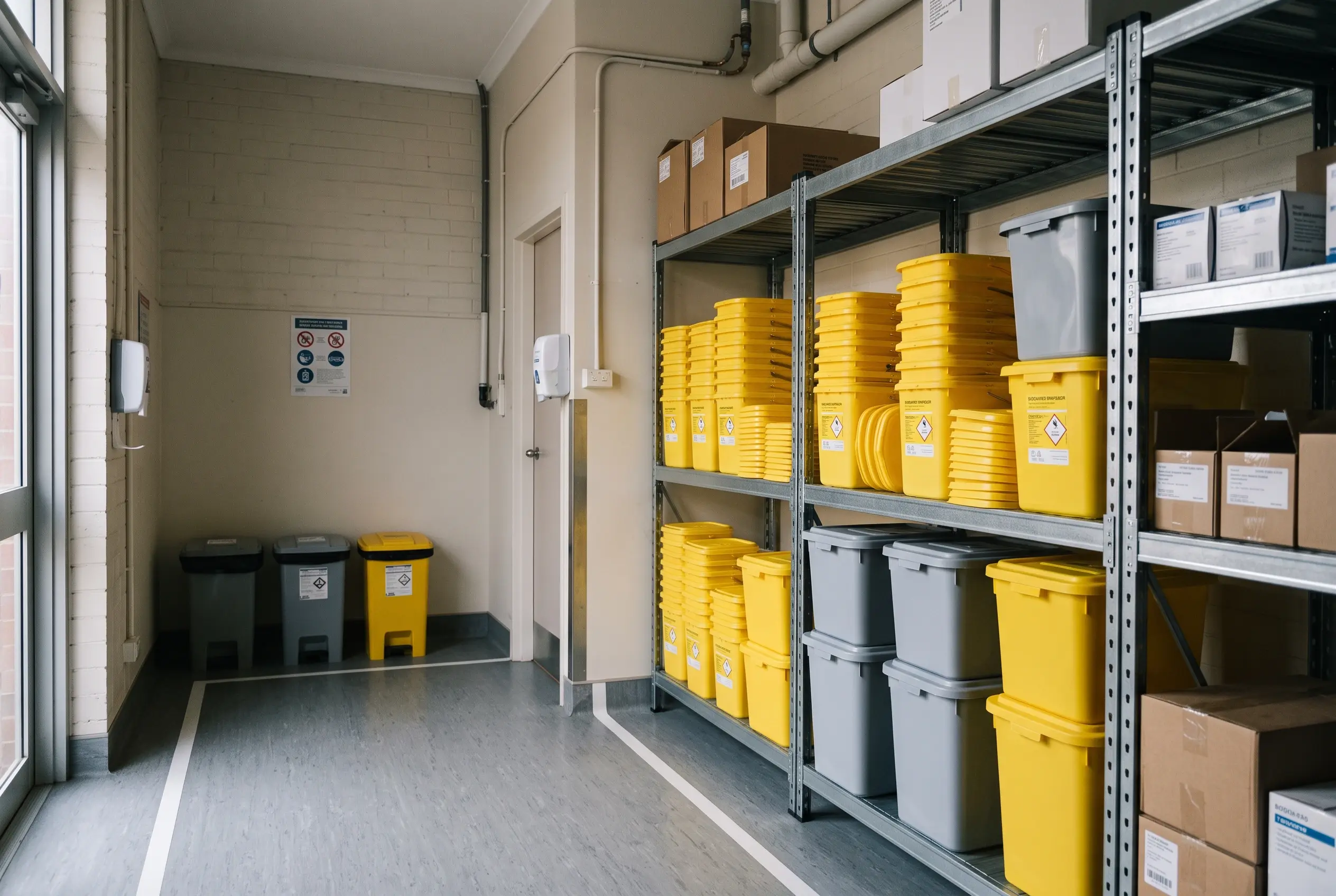
Busy healthcare weeks usually expose small gaps in waste routines. The pressure often appears in treatment rooms, storage cupboards and shared staff areas first.
A useful plan starts before the appointment book fills. It checks container stock, collection timing, staff responsibilities and room-by-room waste volumes.
The goal is steady movement, not extra administration. Clear medical waste planning helps managers reduce last-minute calls and keep teams focused on patient flow.
A busy week can include public holidays, staff leave, seasonal demand or procedure-heavy days. Each factor can change how waste builds up on site.
Cleanpro provides medical waste collection across the Perth metropolitan area, with on-call and scheduled servicing options. Before a busy week, confirm the agreed collection dates and accepted waste streams against the clinic's appointment schedule.
Forecast Waste Demand From The Booked Sessions
Review the appointment types and treatment sessions before setting the week's container and collection requirements.
Review the days between confirmed pickups, not just the calendar week. A procedure-heavy Friday followed by a holiday can place more demand on available containment and storage than the same workload just before a collection.
Record the decision from the review: retain the normal arrangement, request an agreed adjustment or escalate a capacity gap before the affected session starts.
Review Appointment Pressure
Procedure-heavy days can create more waste than standard consultations. Immunisation sessions, wound care, pathology activity and minor procedures may all change requirements.
Managers should note the rooms likely to generate extra waste. This helps decide where extra containers or earlier checks may be useful.
Check Public Holiday Effects
Public holidays can disrupt collection timing and supplier access. A short calendar review can prevent a simple date change from creating storage pressure.
Staff rosters also matter. If the usual person is away, another role should know how to check containers and escalate concerns.
Count Usable Containers Before The First Busy Session
Good medical waste planning includes the condition, location and availability of containers. A plan should cover what is in use and what is in reserve.
Containers should be easy for staff to access without creating clutter. Storage areas should be orderly enough for quick counts and simple restocking.
Managers should also check whether storage areas are clearly separated from general supplies. This can reduce confusion when staff are moving quickly.
Match Containers To Activity
A treatment room may need different support from a consultation room. The right fit depends on waste type, room volume and available space.
Keep Reserve Stock Visible
Reserve stock should be visible to authorised staff and checked before demand rises. Hidden stock can lead to unnecessary ordering or late changeovers.
Count reserve containers by type, not just total units. Compare them with the rooms and procedures planned for the week, and note the agreed reorder point and who can authorise a replenishment.
Confirm The Pickup Window Against The Appointment Book
Collection timing should suit the rhythm of the site. A pickup that interrupts peak arrivals may create avoidable pressure for reception and clinical staff.
Managers can review opening hours, staff availability, parking access and storage limits before confirming the agreed collection arrangements. Sharing relevant access changes in advance can help reduce the risk of missed access or avoidable delays.
A short pre-week review can also identify access issues. Locked gates, after-hours changes and shared tenancy rules may need attention before collection day.
Check acceptance before adding a new stream to the normal pickup. The Cleanpro medical-bin arrangement excludes anatomical, cytotoxic, pharmaceutical and laparoscopic waste. Arrange the appropriate separate route before the activity that will generate an excluded material.
Put the agreed collection date, access window and nominated staff role in one handover note. If a holiday changes the normal schedule, obtain confirmation rather than assuming the pickup will move to the next working day.
Assign An Owner To Each Unresolved Readiness Gap
Separate a stock shortfall from a collection problem in the readiness note. Ordering unused containers does not remove closed waste already occupying the secure holding area; requesting a pickup does not necessarily replenish the correct container types for tomorrow's procedures.
Define The Escalation Path
Each area should have a clear escalation path for full containers, missing stock or unexpected waste volumes. This avoids delays during a busy session.
The escalation path should name a role rather than a person where possible. This helps when rosters change or relief staff are present.
Check The Rooms Whose Workload Has Changed
For a room gaining an extra procedure session, compare its installed containers and reserve types with that session's expected waste. Record any shortfall against the affected day and room, so the manager can resolve it before staff begin preparing patients.
Give relief staff the location of the agreed reserve and the role handling unresolved shortages. They should not have to decide whether a different container or waste route is acceptable during the first appointment.
If a trolley, chair or cabinet has moved, check that staff can still reach the intended container and take closed waste to its agreed holding point. Include that check in the room's readiness decision, rather than leaving a layout note with no action owner.
Treat a room as unresolved where suitable containment or safe access is missing. Record who must confirm the correction and by when; a tick beside the room name should mean the identified gap has actually been settled.
Set The Capacity Trigger For A Delayed Pickup
The week-ahead review should include a fallback for a cancelled or delayed pickup. Identify who can request another collection, what secure holding capacity remains and when the issue must reach the clinical or facility lead.
WA Health's Code of Practice for Clinical and Related Waste Management includes contingency planning where treatment or disposal is unavailable. It applies specifically to WA Health personnel and contractors, and more generally through the public health duty. Use the applicable workplace requirements when setting the site's own fallback.
Do not solve a capacity gap by overfilling containers, compressing bags by hand or mixing streams. If the agreed holding arrangement will be exceeded, escalate before that point so the responsible manager can decide how the activity and collection plan must change.
A short readiness note can bring together four decisions: expected activity, usable container stock, confirmed pickup and fallback capacity. Mark unresolved items clearly enough for the incoming shift to act on them.
At the end of the week, compare the forecast with what actually happened. Record which room filled containers sooner than expected and whether collection access worked at the agreed time.
Use that difference to change the next forecast. A procedure-heavy session needs a different allowance from an ordinary consultation block; avoid carrying forward the same stock estimate simply because it was used last week.
FAQ
What should a pre-week waste plan include?
It should cover expected activity, container stock, collection timing, staff responsibilities, storage access and a clear escalation path for issues.
What if reserve stock is adequate but the holding area is nearly full?
Those are different capacity limits. Keep replacement stock available, but escalate the closed-waste holding gap against the confirmed collection window. Extra empty containers do not create approved storage space.
When should a healthcare waste service be reviewed?
It should be reviewed when appointment patterns change, waste volumes rise, storage pressure appears or collection timing no longer suits the site.
What if next week's treatment mix adds a new waste stream?
Confirm classification, suitable containment and an accepted collection route before that activity begins. Do not add the stream to an existing pickup simply because the site already has medical-waste bins.
Conclusion
Before the busy week begins, the manager should be able to name the available containers, the confirmed collection window and the action if either falls short. Confirm that the selected medical-waste arrangement matches those decisions, including the accepted and excluded waste streams. A resolved capacity gap before the first appointment is more useful than a tidy checklist completed after storage is full.