













A sheet can feel pleasant in your hand yet pull away from a mattress corner when the bed is made. Another may fit neatly but have a surface that feels different from the room’s intended finish. Choosing accommodation bed linen means considering fabric and fit together. Thread count, fibre blend, sheet format and size identification each answer a different part of that choice.
For a hotel or serviced apartment, begin with the bed as it will actually be used, including its protector and any topper. Then compare sample sheets rather than choosing by a number or bed-size name alone. The aim is a fabric you have assessed, dimensions that suit the complete bed and an identification method that remains understandable when the sheets are folded.
What Thread Count Measures
Thread count is the combined number of lengthwise and crosswise yarns within a square inch of woven fabric. The lengthwise yarns are called warp; the crosswise yarns are weft. A yarn is a strand made from fibres. The University of Kentucky’s sheet guide explains this measurement and why a higher count does not automatically mean a softer or better sheet.
The count describes how many yarns occupy that area, not everything about those yarns. Their size and quality, the fibres they contain and the way they are woven also influence feel. Two sheets with the same count can therefore feel noticeably different. Treat the number as one comparison detail, not a score that ranks every fabric from poor to excellent.
Why the Highest Number Is Not the Starting Point
Start with the feel you want to assess, such as crisp rather than silky, and compare suitable samples together. A higher thread count cannot tell you whether a fitted corner will stay seated, how much fabric a flat sheet leaves for tucking, or whether you prefer its surface. Those questions require handling and fitting the sheet. There is no single thread-count target that answers all of them for every accommodation room.
Understand Fibre Blend and Weave
Fibre composition tells you what the yarns are made from. Weave describes how those yarns cross one another to form fabric. A cotton/polyester blend combines the two fibres; it does not name a weave. Keeping these terms separate makes sample comparisons clearer, because two blended sheets can have different constructions and different surface characteristics even when their material descriptions sound similar.
Cotton fibres are generally soft and breathable. Polyester contributes durability and easy care, although high-polyester sheets may retain more body heat. These are material tendencies, not guaranteed results for a particular blend. The University of Kentucky’s textile explanation considers fibre content alongside construction and yarn properties, so a blend name alone should not decide which sample feels most appropriate.
Percale and Sateen Describe Construction
Percale uses a plain weave: yarns alternate over and under one another, usually producing a crisp feel. Sateen lets yarns pass over several others before crossing underneath, creating a smoother surface. Those longer exposed sections are called floats, and the looser construction is more prone to snagging. These terms explain fabric differences; neither term identifies the fibre blend or establishes which weaves a particular accommodation supplier offers.
Compare Sample Feel Before Making the Bed
Handle samples in comparable condition. Comparing a newly unpacked sheet with one already prepared for room use can confuse the decision. Spread each sample out, feel the main surface and hem separately, and let part of it hang over your hand. This reveals surface texture, edge thickness and drape, meaning how readily the fabric falls into folds.
Use concrete descriptions such as smooth, textured, crisp or flexible rather than a single judgement of luxury. Ask the people assessing samples to describe what they notice before discussing preferences. If opinions differ, identify the actual difference: one person may favour a crisp surface while another prefers softer folds. Neither response predicts how every guest will experience the finished bed.
Match Sheet Format to the Complete Bed
Flat and fitted describe sheet formats, while names such as queen and king describe bed-size categories. A fitted sheet has shaped corners and an elasticated edge that wraps around the mattress. A flat sheet is an unshaped rectangle positioned and tucked as needed. A familiar bed name does not tell you the dimensions required for either format, particularly when a topper changes the bed’s depth.
Fitted Sheets Need Length, Width and Depth
Measure mattress length from head to foot and width from side to side. Measure the full depth the fitted sheet must enclose with the usual topper and protector in place. A topper adds a cushioning layer above the mattress; a protector covers it. Measuring only the bare mattress can leave out part of the bed that the fitted corners must reach around.
Compare those measurements with the fitted sheet’s intended mattress fit and pocket depth, the depth of its shaped corner. Then fit the sample on all four corners. Look for edges that reach beneath the mattress, corners that remain seated and excess fabric gathering across the sleeping surface. A deeper pocket does not correct a mismatch in length or width, so inspect all three dimensions together.
Flat Sheets Need Coverage, Drop and Tuck
Flat-sheet width must cover the mattress top and leave fabric down each side. This hanging allowance is the drop. If the sides will be tucked, additional fabric must reach underneath as well. Start with the measured bed width, then allow for the intended drop and tuck on both sides. A sheet equal only to mattress width would provide no side coverage.
Length needs its own assessment. Position the sheet at the head of the bed with the intended turnback, the folded-over top edge, then inspect the fabric available at the foot. Check the tuck without pulling the top edge out of position. For a flat bottom sheet, assess the allowance around the mattress instead. Its role changes the coverage needed, even on the same bed.
Use Hem Threads to Recognise Size
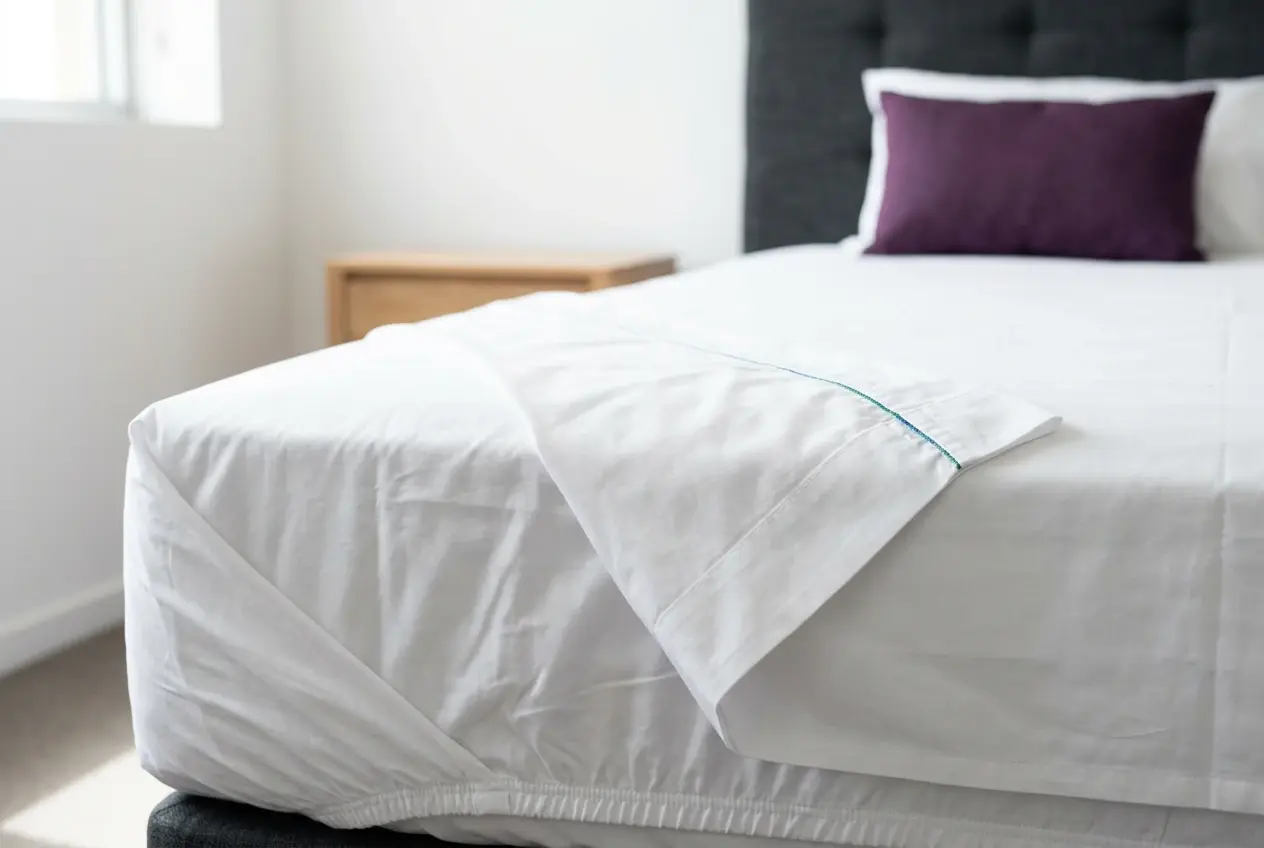
A coloured thread at the hem gives staff a visible size cue when similar-looking sheets are folded. The hem is the finished edge of the fabric. Our accommodation linen includes cotton/polyester blends, various thread counts, and flat and fitted sheets with coloured hem threads for size identification. The marker helps distinguish sizes, while the sheet’s shape still identifies its format.
Use the size key supplied for the actual sheets rather than assigning meanings from memory. A key is simply the reference that connects each thread colour with its size. Keep it where sheets are selected, with flat and fitted formats clearly distinguished. A colour used elsewhere in the property or by another supplier need not mean the same thing.
Avoid Cross-Size and Cross-Format Mix-Ups
Read the marker and recognise the format together. A correctly identified size does not turn a flat sheet into a fitted one, and an elasticated corner does not establish the right mattress depth. During selection, open enough of the item to recognise its shape. If the thread is difficult to distinguish, use the item’s other identification rather than treating a similar shade as a match.
Connect the Sheet Choice to the Room Set
Once a sheet combination has been assessed for a bed configuration, keep one room-set record linking the mattress and its usual layers to the selected sheets. Include sheet formats and dimensions, specified blend and thread count, the hem-thread size key and intended flat-sheet placement. This gives housekeeping a shared reference without repeating the full measurement exercise at each linen change.
Where rooms have different bed configurations, identify which rooms each assessed sheet combination covers. Two beds with the same size name may need different fitted depths or flat-sheet allowances. We provide managed linen rental and laundry for hotels and serviced apartments, so the selection needs to work within that service as well as on the bed. Discuss the available sheet options with us against the property’s configurations rather than assuming every room can use the same combination.
Check Placement and Record Bed Changes
At the bed check, distinguish a fit problem from a fabric preference. A short foot tuck, a loose fitted corner and an unwanted surface feel point to different aspects of the selection; recording the specific issue makes it easier to compare an alternative without changing everything at once.
Recheck the affected sheets when a mattress, topper or protector changes. An added topper can alter fitted depth and flat-sheet drop while the bed-size name stays the same. Update the room-set record after reassessment so it reflects the bed now in the room.
Conclusion
A complete accommodation sheet choice brings assessed fabric feel together with dimensions suited to the made bed. Thread count, fibre blend and weave inform the fabric comparison; mattress measurements and normal layers establish fitted depth and flat-sheet allowances. Carry that choice into housekeeping through recognisable hem markers and clearly identified formats. To connect these decisions to our managed linen rental and laundry service, discuss your property’s bed configurations and fabric preferences with us, then confirm which available sheet options suit them.