












Healthcare facilities across Perth metro face a critical challenge: maintaining infection control standards whilst managing the constant demand for clean, compliant uniforms. Medical staff require fresh scrubs, lab coats, and protective garments daily, yet traditional in-house laundry systems struggle to meet AS/NZS 4146 thermal disinfection requirements whilst managing operational costs.
managing operational costs.
Professional healthcare uniform programs address this challenge through specialised services designed for hospitals, medical centres, aged care facilities, and allied health practices. SWS Group delivers these services across Perth metro, with thermally disinfected uniforms meeting Australian healthcare standards and flexible delivery schedules from daily to weekly based on facility requirements.
Understanding how professional healthcare uniform laundry differs from standard services helps facility managers make informed decisions about infection control strategies, compliance management, and operational efficiency.
Why Healthcare Uniform Laundry Differs From Standard Commercial Services
Healthcare textiles carry unique infection control risks that standard commercial laundry cannot address. Blood-borne pathogens, bodily fluids, and multi-drug resistant organisms contaminate medical uniforms during routine patient care. Inadequate laundering processes create cross-contamination risks that compromise patient safety and breach Work Health and Safety Act 2020 obligations.
AS/NZS 4146:2000 establishes the Australian standard for laundry practice in healthcare facilities. This standard mandates thermal disinfection at minimum 65°C for 10 minutes or 71°C for 3 minutes to eliminate pathogens effectively. Standard commercial laundry operations rarely achieve these parameters, prioritising energy efficiency over infection control requirements.
Healthcare uniform services must also manage tracking systems that ensure contaminated items never mix with clean inventory. Colour-coded bag systems, separate processing areas, and validated wash cycles form essential components of compliant healthcare laundry operations. Facilities that attempt in-house laundering often lack the infrastructure to maintain these segregation protocols consistently.
Infection Control Standards for Medical Laundry in Western Australia
The Healthcare Laundry Accreditation Council (HLAC) provides international benchmarks for healthcare textile processing, though Australian facilities primarily reference AS/NZS 4146 for compliance. This standard addresses every stage from contaminated linen collection through final delivery of clean items.
Key requirements include thermal disinfection parameters (wash cycles achieving validated time-temperature combinations that eliminate vegetative bacteria, fungi, and viruses), segregation protocols (contaminated and clean processing areas maintaining physical separation), water quality standards (final rinse water meeting potable water standards), and validated processes (documented wash cycle validation through biological and chemical indicators).
Perth healthcare facilities face additional considerations under the WHS Act 2020, which establishes employer obligations to eliminate or minimise infection risks to staff. Outsourcing to healthcare linen services that maintain documented compliance removes significant regulatory burden from facility managers. Integration with floor mat rental programs and pest control services creates comprehensive facility hygiene management under coordinated provider accountability.
Service Models for Perth Healthcare Facilities
Healthcare uniform programs operate under three primary service models, each addressing different facility requirements and budget parameters.
Full Rental Programs: The provider supplies, launders, and replaces all uniforms. Facilities pay per garment per service cycle. This model eliminates capital investment in uniform inventory and transfers replacement costs to the service provider. Medical uniform rental programs like these suit most hospitals and large medical centres for consistent presentation and simplified inventory management.
Launder-Only Services: Facilities purchase their own uniform inventory and contract laundering services. This approach suits organisations with existing uniform programs or specific garment requirements. Costs typically calculate per kilogram or per piece, with minimum service thresholds.
Hybrid Models: Some facilities maintain rental programs for standard scrubs whilst purchasing specialised garments (surgical gowns, specialty department uniforms) that require custom specifications. The laundry provider processes all items but only maintains ownership of rental inventory.
Service frequencies range from daily deliveries for high-volume hospitals to weekly cycles for smaller medical practices. Emergency response capabilities matter for facilities that experience unexpected patient surges or infection control incidents requiring immediate uniform replenishment.
Cost Considerations and Budget Planning
Healthcare uniform laundry costs vary based on facility size, service frequency, garment types, and delivery requirements. Perth metro facilities typically encounter these pricing structures:
Rental program pricing: $2.50–$4.50 per garment per week for standard scrubs, with higher rates for specialised items like surgical gowns ($6–$8) or lab coats ($5–$7). Launder-only pricing: $3.50–$5.50 per kilogram for healthcare-grade thermal disinfection processing. Hidden costs of in-house laundering include commercial washer-extractors ($15,000–$35,000), dryers ($12,000–$25,000), utilities averaging $800–$1,500 monthly for medium facilities, maintenance, and staff wages.
Break-even analysis typically shows that facilities processing fewer than 300kg weekly achieve better cost efficiency through outsourced services. The capital investment, compliance burden, and operational complexity rarely justify in-house operations for smaller medical practices or aged care facilities.
Uniform Inventory Management and Tracking Systems
Professional healthcare uniform services implement inventory management systems that prevent shortages, track garment lifecycles, and ensure consistent availability. These systems address common challenges that plague in-house laundry operations.
Par level management establishes minimum inventory quantities based on facility size, staff numbers, and service frequency. Typical par levels maintain 3–4 uniforms per staff member—one worn, one in laundry, one in reserve, plus buffer stock for emergency needs.
Automated replenishment uses RFID tags or barcode systems that track individual garments through wash cycles, monitoring usage patterns and automatically triggering replacements when items reach predetermined wash cycle limits (typically 50–75 cycles for standard scrubs).
Size and style availability ensures professional services maintain comprehensive size ranges (XXS through 5XL) and multiple style options to accommodate diverse staff populations. Custom embroidery or facility branding integrates into rental programs without additional per-garment charges in most contracts.
Replacement protocols include clear policies addressing garment damage, loss, or theft. Rental agreements typically include normal wear replacement at no charge, with fees for items damaged beyond normal use or removed from facility premises.
Professional services provide these inventory management capabilities through established systems that serve Perth's healthcare sector, eliminating the administrative burden facilities face when managing uniform programs internally.
Compliance Documentation and Audit Requirements
Healthcare facilities undergo regular accreditation audits that examine infection control practices, including textile processing. Services must provide documentation demonstrating AS/NZS 4146 compliance: wash cycle validation records from chemical and biological indicator tests, temperature monitoring logs with continuous recording throughout processing cycles, water quality testing results, staff training documentation, and transport and delivery protocols.
Perth healthcare facilities can request these compliance documents during service selection, verifying that providers maintain systems meeting accreditation requirements before contract commitment.
Environmental Considerations in Healthcare Laundry
Modern healthcare laundry operations balance infection control requirements with environmental sustainability through water recycling, energy-efficient equipment, and chemical optimisation.
Water recycling systems recycle up to 60% of process water through multi-stage filtration and treatment. Final rinse water (which meets potable standards) becomes pre-wash water for subsequent loads, reducing consumption by 40–50% compared to single-pass systems.
Energy recovery through heat exchangers captures thermal energy from wash and rinse cycles, pre-heating incoming water. Gas-fired tunnel washers with heat recovery achieve 30–40% energy savings compared to conventional batch washers.
Chemical optimisation uses automated dispensing systems that deliver precise detergent, bleach, and neutraliser quantities based on load size and soil level. This eliminates overuse whilst maintaining disinfection efficacy, reducing chemical consumption by 20–30%.
Textile lifecycle extension occurs through professional processing that extends garment lifecycles. Healthcare uniforms processed by specialised services typically achieve 50–75 wash cycles compared to 30–40 cycles in poorly managed in-house operations.
These environmental initiatives reduce operational costs whilst meeting healthcare facilities' sustainability objectives. Perth metro facilities increasingly prioritise service providers demonstrating measurable environmental performance alongside infection control compliance.
Integration With Broader Facility Hygiene Programs
Healthcare uniform services function most effectively when integrated with comprehensive facility hygiene programs that address all textile and sanitation requirements.
Linen and uniform coordination simplifies vendor management, reduces delivery frequencies, and consolidates compliance documentation. Coordinated scheduling ensures that linen deliveries align with uniform replenishment.
Washroom hygiene services complement uniform programs by maintaining hand hygiene facilities, soap dispensers, and hand towel systems that support infection control protocols. Staff changing areas require coordinated washroom and uniform services for complete hygiene management.
Pest control integration addresses unique pest management challenges that intersect with textile storage and laundry operations. Integrated pest management programs protect clean uniform storage areas from contamination whilst addressing facility-wide pest risks.
Single-provider accountability simplifies facility management, reduces administrative burden, and ensures that hygiene services operate under coordinated quality systems rather than fragmented vendor arrangements.
Service Selection Criteria for Perth Healthcare Facilities
Healthcare facility managers evaluating uniform laundry services should assess providers against specific criteria that determine service quality and compliance reliability.
Accreditation and compliance verification requires documentation of AS/NZS 4146 compliance, including recent validation testing results. Verify that the provider maintains current accreditation and undergoes regular third-party audits.
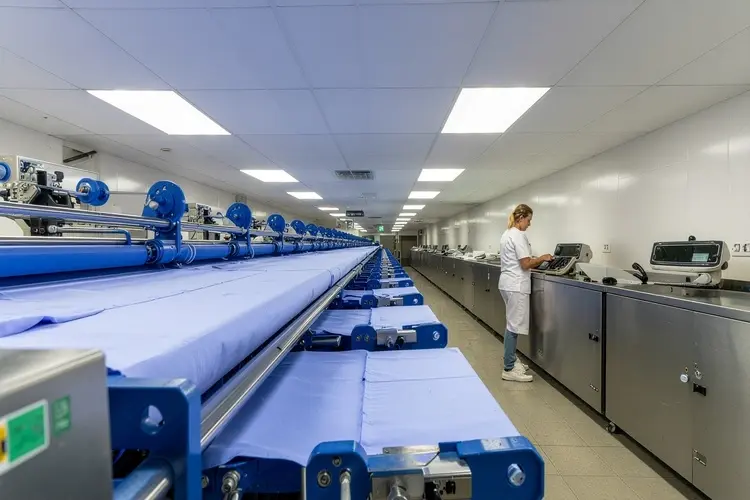
Facility infrastructure assessment involves touring the laundry processing facility to observe segregation protocols, equipment condition, and quality control procedures. Professional healthcare laundries maintain visibly distinct contaminated and clean processing zones with controlled access.
Service reliability metrics request performance data showing on-time delivery rates, order accuracy, and emergency response times. Established providers maintain 98%+ delivery accuracy with documented protocols for service failures.
Perth metro coverage confirms that the provider maintains regular delivery routes to your facility location. Services based in Perth metro areas offer more flexible scheduling and faster emergency response than regional providers.
Contract flexibility evaluates minimum service commitments, pricing structures for volume changes, and termination provisions. Healthcare facilities experience census fluctuations requiring service scalability without penalty provisions.
References from similar facilities contact other healthcare organisations of similar size and type. Direct conversations with existing customers reveal service realities that marketing materials cannot capture.
Implementation Timeline and Transition Planning
Healthcare facilities transitioning from in-house laundry or changing service providers require structured implementation planning to prevent service disruptions.
Initial assessment (weeks 1–2) involves the service provider conducting facility assessment, staff counts, and usage pattern analysis. This establishes par levels, determines service frequency, and identifies special requirements.
Contract finalisation (week 3) includes pricing, service schedules, and performance metrics receiving formal documentation. Compliance requirements, emergency response protocols, and quality standards integrate into service level agreements.
Inventory deployment (weeks 4–5) sees initial uniform inventory arrive with sizing sessions for staff. Distribution systems receive setup with designated storage areas, collection protocols, and staff education on proper uniform handling.
Parallel operation (weeks 6–7) allows some facilities to run parallel operations, maintaining existing laundry systems whilst testing new service delivery. This identifies issues before full transition and provides backup during initial implementation.
Full transition (week 8) involves complete transition to new service with daily monitoring of delivery accuracy, uniform availability, and staff satisfaction. Service providers typically assign dedicated account representatives during initial months to address issues immediately.
Ongoing optimisation (month 3+) uses usage data analysis to identify opportunities to adjust par levels, modify service frequencies, or add specialty items. Quarterly reviews ensure that service parameters align with facility needs.
Measuring Service Performance and Quality Outcomes
Healthcare facilities should establish measurable performance indicators that track uniform service quality and compliance.
Delivery accuracy: Percentage of orders delivered complete and on-time (target 98%+). Garment quality: Percentage of delivered uniforms meeting cleanliness, repair, and presentation standards (target 99%+). Inventory availability: Percentage of time all required sizes and styles remain available (target 100% for standard sizes). Compliance documentation: Timeliness and completeness of required validation testing (target 100% compliance). Emergency response time: Hours from emergency request to delivery (target 4 hours or less for Perth metro).
Regular performance reviews with service providers address trends, identify improvement opportunities, and ensure accountability for contracted service levels.
Conclusion
Healthcare uniform laundry services in Perth metro provide essential infection control infrastructure that most facilities cannot replicate cost-effectively through in-house operations. AS/NZS 4146 compliance requires validated thermal disinfection processes, segregation protocols, and documented quality systems that demand significant capital investment and operational expertise.
Professional services deliver these capabilities whilst eliminating the administrative burden, compliance documentation requirements, and inventory management challenges that divert healthcare facility resources from patient care priorities. Rental programs remove capital costs and replacement risks, whilst launder-only services support facilities with existing uniform investments.
Integration with comprehensive facility hygiene programs throughSWS Group simplifies vendor management and ensures coordinated service delivery across multiple facility needs. Single accountability for textiles, washroom services, and pest management reduces administrative complexity whilst maintaining consistent quality standards.
Perth healthcare facilities evaluating uniform laundry services should prioritise providers demonstrating documented AS/NZS 4146 compliance, established Perth metro delivery infrastructure, and proven performance with similar healthcare organisations. Integration with comprehensive facility services including first aid compliance ensures coordinated infection control across all operational areas. Contact (08) 9336 6944 to discuss your specific requirements and arrange a facility assessment.