













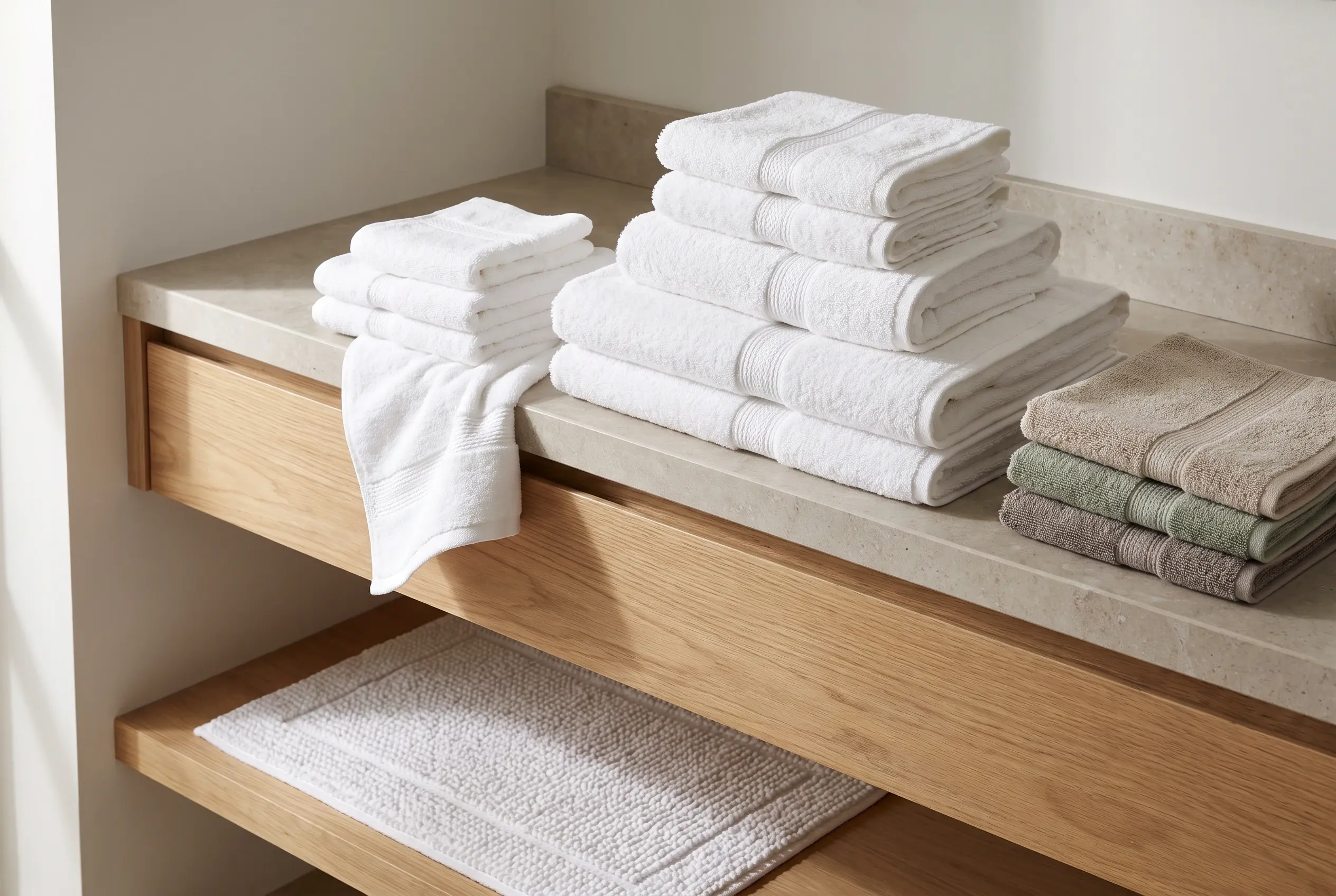
A day-spa towel brief is more useful when it names the job each item must do. “Soft white towels” may describe the desired impression, but it does not tell a supplier whether the requirement is for a hand towel, a fuller bath towel, a washcloth or a bath mat. The Cleantex day-spa range includes these cotton-terry formats in various sizes and weights, with colour options to discuss. Build the specification around guest touchpoints, then record the dimensions, weight preference and colour needed for each item.
Start with the guest touchpoint, not a catch-all towel request
List the guest touchpoints in the order they occur, from hand-drying at a basin to wrapping or drying after a treatment or shower. Give each touchpoint its own line, including any washcloths and bath mats, so a single towel description does not stand in for the whole set.
White washcloths, hand towels, bath towels and bath mats are available in 100% cotton terry. Decide which format belongs at each touchpoint. A large towel may be unnecessary at a hand-drying point, while a hand towel will not provide the coverage expected of a bath towel.
Give each towel type a clear role in the set
- Check a washcloth sample in the tray or presentation arrangement where guests will find it. Record whether it will be presented folded or open, so its dimensions can be checked against the space available.
- Hand towels can be assigned to the hand-drying role. The brief should define the desired size and colour treatment for that setting, especially where the towel sits alongside visible spa finishes.
- Bath towels can be specified for the fuller guest wrap or drying role. Here, the size and chosen weight deserve more attention because they influence how substantial the item feels in use.
- Bath mats should be identified separately from towels. Their role is tied to the bathroom setting, so the brief should state the intended placement and visual relationship to the rest of the towel set.
Use size to describe coverage and placement
Size is most helpful when it answers a simple practical question: what must this item comfortably cover or where must it sit? A towel specification does not need to treat size as a ranking of luxury. Instead, it should state the role, then choose a size that suits that role within the available range.
For a bath towel, consider the coverage the guest needs after a treatment, shower or change. Compare an unfolded sample with the intended use and record its dimensions, rather than relying on a size name alone. Confirm the dimensions of the selected option before the full set is ordered.
For hand towels, placement matters as much as coverage. A towel that appears at a basin, vanity or change area should fit the surrounding presentation without becoming visually cumbersome. For washcloths, the specification can be shorter and more functional, but it should still identify the required size category. Bath mats need their own size field because the relevant question is the footprint of the area where the mat will be used, not the guest-wrap role of a bath towel.
Use weight as a comparison field
Compare weight alongside dimensions, but do not treat weight as a complete quality measure. Research on woven terry towels shows that yarn and fabric construction also affect softness and absorbency. Ask for the available weight options for the chosen format, then handle samples of comparable size before deciding which feel suits the spa.
Record the selected product or sample reference and ask whether fabric weight is specified in GSM (grams per square metre). GSM describes weight per unit area, not the total weight of a finished towel. Keep the unit with the figure so two options can be compared on the same basis.
Make colour a deliberate part of the guest-facing design
Colour gives the towel set a consistent visual direction across the guest journey. Our day-spa linen range includes colour options. Record the preferred palette, then confirm the available colours for each selected format, size and weight.
Choose either a single colour direction or a controlled variation. A unified towel colour can create continuity across changing, bathroom and treatment areas. Different colours can distinguish towel types while still fitting the interior palette. Compare the actual samples beside the spa’s finishes and under its normal lighting before settling the combination.
Record the agreed shade or sample reference, not just “neutral” or “blue”. If matching an existing set matters, place an existing towel beside the proposed sample and decide whether the difference is acceptable before ordering.
Build the brief as a set of linked fields
Use the completed brief to check for gaps between towel types. If the bath towel has been chosen but the washcloth or mat is still undecided, keep that choice visible rather than treating the whole set as approved.
For example, a bath-towel entry can read: guest wrap after shower; dimensions confirmed against an unfolded sample; selected weight and unit; agreed shade; sample reference. Leave an undecided field marked for confirmation rather than letting a general label such as “luxury white towel” stand in for the missing choice.
Check the completed brief against our day-spa linen range. Confirm the available combination of format, size, weight and colour for each line; where a preferred combination is unavailable, decide which feature matters most before choosing an alternative.
Review the samples before agreeing the set
Start the final review with the bath towel because guest coverage is usually the least interchangeable requirement. Check the smaller items against their own placements, then compare the set together. A cohesive appearance should not come at the expense of a towel that is too small for its intended use.
For managed linen rental, carry the confirmed item references into the order. Keep any unresolved choices separate so they are not mistaken for approved requirements.