











Food processing facilities and commercial catering kitchens operate under some of the most demanding hygiene obligations in Australian industry. Every surface, utensil, and material that contacts food - or contacts people who handle food - is a potential contamination pathway. Linen is one of the most frequently overlooked items in this hygiene equation.
Tea towels, aprons, cloth cleaning materials, and surface covers used in commercial kitchens and food production areas accumulate biological, chemical, and allergen contamination throughout every shift. Without a structured approach to linen management, these materials become uncontrolled contamination sources that can compromise product safety, fail regulatory audits, and trigger costly product recalls.
Through Cleantex, food processing operations and catering businesses across Perth access HACCP-compliant linen management programs designed to meet food safety regulations, support audit documentation requirements, and remove the operational burden of managing food-grade linen internally.
Why Linen Is a Critical HACCP Consideration
The HACCP framework requires food businesses to identify and control contamination hazards at every point in the production or service process. Textiles and linens used in food environments present biological, chemical, and physical contamination risks that are consistently underestimated in hazard analyses.
Biological Contamination Pathways
Bacteria including Salmonella, E. coli, Listeria, and Staphylococcus aureus survive on fabric surfaces for significant periods. Linen used to wipe down food contact surfaces, handle equipment, or cover food preparation areas accumulates and transfers pathogenic organisms across multiple contact points throughout a shift.
Cross-contamination through linen is particularly dangerous because the transfer is often invisible. A cloth that appears clean may carry significant pathogen loads from previous use. Without validated laundering between uses, these organisms persist and multiply - particularly in the warm, humid conditions of kitchen and food processing environments. Food processing linen hygiene that fails to address this biological risk creates an ongoing, undocumented contamination pathway within an otherwise controlled food safety system.
Physical and Chemical Hazard Risks
Beyond biological contamination, food environment textiles create physical and chemical hazard risks. Degraded fabric sheds fibres that can enter food products as physical contaminants. Chemical residues from cleaning agents embedded in improperly rinsed linen can transfer to food contact surfaces during use. Both hazard types are identifiable in HACCP analyses and require documented controls.
Food safety audit documentation increasingly requires evidence that linen is managed as a controlled material - with validated laundering processes, documented exchange frequencies, and inspection records demonstrating ongoing garment integrity. HACCP-compliant linen management programs provide this documentation as a standard component of the managed service.
HACCP Requirements for Linen in Food Environments
The HACCP framework treats linen as a potential Critical Control Point in many food processing and catering environments. Businesses operating under HACCP plans must demonstrate control over every contamination pathway - and linen managed outside a validated process represents an uncontrolled variable that food safety auditors will identify and challenge.
Laundering Validation and Audit Documentation
Validated laundering requires documented wash temperatures sufficient to eliminate target pathogens, chemical verification records, and process consistency across every laundering cycle. Food Standards Australia New Zealand (FSANZ) requires businesses to control and document all hygiene processes - including textile management.
Home laundering and standard commercial dry cleaning do not meet these requirements. Neither provides temperature validation, chemical documentation, or the process consistency required by HACCP-compliant linen management programs. Food businesses that permit staff to launder food-grade linen at home introduce an uncontrolled, undocumented variable into their food safety system.
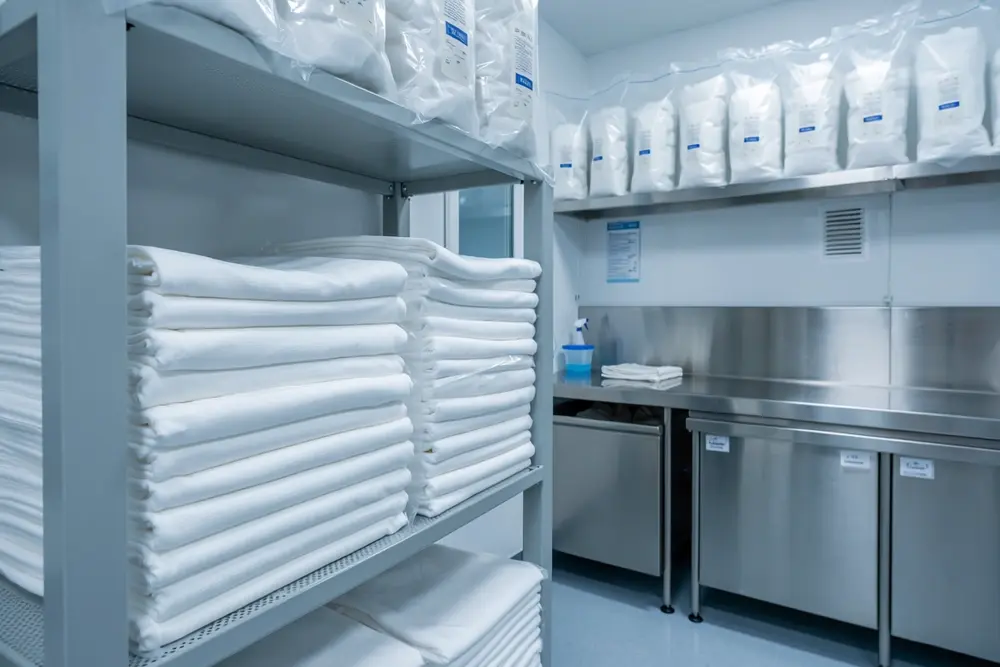
A managed linen rental program processes all textiles in industrial laundering facilities where parameters are validated and recorded. Every cycle is documented. Garment condition is assessed at each return. This creates a laundering audit trail that directly supports the food safety audit documentation requirements of HACCP audits, retailer food safety assessments, and SQF or BRC certification processes. For businesses undergoing third-party certification, this documentation can be the difference between a successful audit and a costly remediation process.
Zone-Specific Linen Allocation
Cross-contamination between food zones is one of the primary contamination risks in food production and catering environments. Raw material handling areas, allergen zones, and ready-to-eat preparation areas all carry different contamination profiles. Linen used in one zone must not carry contamination into another.
Zone-specific linen allocation - colour-coded cloths, aprons, and surface covers assigned to specific work areas and laundered separately - is a practical HACCP control that managed programs implement systematically. Food processing linen hygiene across multiple production zones cannot be reliably maintained when linen management is left to individual staff discretion. A managed program removes this variability by controlling garment allocation at the provider level.
Types of Linen Used in Food Processing and Catering Environments
Food industry linen covers a broader range of items than many businesses account for in their HACCP plans. Each item type carries its own contamination risk profile and laundering requirement.
Kitchen cloths and wipes used for surface sanitation are among the highest-risk linen items in any food environment. Their direct contact with food preparation surfaces and food contact equipment makes validated laundering between uses essential. Single-use disposable wipes eliminate some risks but generate significant waste. Managed cloth programs balance hygiene control with environmental and cost considerations.
Aprons and protective garments worn during food handling combine the contamination risks of workwear and linen. They accumulate biological contamination from food handling, chemical contamination from cleaning processes, and allergen residues from product handling. Zone-specific apron allocation and validated laundering are both required for effective HACCP compliance.
Service linen - tablecloths, napkins, bar cloths, and service towels used in catering and food service environments - carries lower direct food contact risk but remains a contamination pathway. Soiled service linen that is not managed through a validated process introduces biological risks into food service environments.
Linen rental services through Cleantex cover all of these linen categories. Programs are tailored to the specific operational requirements of food processing facilities and catering operations, with laundering specifications appropriate for each item type and use category.
Catering Operations vs. Food Processing: Different Linen Demands
While food processing facilities and catering operations share the same HACCP obligations, their linen requirements differ in operationally significant ways.
Food processing facilities typically require high volumes of linen across large workforces and extended production runs. Colour-coded zoning systems, allergen-dedicated linen, and high-frequency laundering schedules are the norm. Food safety audit documentation must cover large volumes of individual items across multiple production zones. Consistency of supply is critical - production cannot be delayed by linen shortages.
Catering operations face different challenges. High-volume service events, variable staffing, and multiple concurrent service locations create logistical complexity that in-house linen management struggles to handle. A catered function for two hundred guests requires significant quantities of service linen - tablecloths, napkins, and serving cloths - that must be supplied, used, collected, and returned to service-ready condition on tight timelines.
Managed linen programs serve both profiles. Food processing businesses receive ongoing programs with consistent exchange schedules and full audit documentation. Catering operations access flexible linen supply with event-based volume adjustments. Both receive industrial laundering validated to food safety hygiene standards and the documentation support needed for compliance processes.
Allergen Management and Dedicated Linen Protocols
Allergen management is among the most scrutinised areas of food safety compliance in Australia. Cross-contact between allergen-containing and allergen-free production zones is a significant cause of product recalls and regulatory action. Linen is a recognised allergen transfer pathway that is frequently absent from allergen management plans.
A structured HACCP-compliant linen management program incorporates allergen-specific linen protocols. Dedicated linen items for allergen handling areas are laundered separately using validated processes and returned to the correct zone to prevent mixing with allergen-free linen.
For food businesses producing free-from products - gluten-free, nut-free, dairy-free - this level of linen control supports the allergen management documentation that retail buyers and certification bodies require. Food processing linen hygiene programs that fail to address allergen cross-contact through linen create documented compliance gaps that are difficult to defend during audits or recall investigations. Retail buyers in particular are increasing their scrutiny of allergen management evidence packages - linen management documentation is increasingly expected to be part of that record.
Entrance and Floor Contamination Control
External contamination enters food facilities through entrances - on footwear, equipment wheels, and delivery traffic. Managing this contamination pathway complements internal linen hygiene controls and contributes to the overall food safety system.
Floor mat rental programs provide managed entrance matting at facility entry points. Commercial entrance mats capture dirt, debris, and moisture before they reach production areas. Rental programs ensure mats are regularly collected, laundered, and replaced - preventing them from becoming contamination redistribution points rather than capture barriers.
In high-care and allergen-controlled production areas, an unserviced entrance mat represents the same type of uncontrolled contamination pathway as unvalidated linen laundering. Both require systematic, documented management. Managed entrance matting combined with HACCP-compliant linen management creates a layered contamination defence that addresses both internal textile contamination and external entry-point contamination simultaneously.
Integrating Linen with Broader Food Facility Hygiene
Linen management is one layer of a comprehensive food facility hygiene strategy. Surface sanitation, facility cleaning, washroom management, and pest control all require equally structured, documented approaches to satisfy food safety audit requirements.
Commercial cleaning services for food environments apply hospital-grade disinfection standards across processing areas, cold rooms, and packaging zones. Scheduled cleaning programs maintain surface hygiene between production runs. SWS Group brings Cleantex and Cleanpro together to provide food businesses with an integrated hygiene solution that covers linen management, surface cleaning, and facility maintenance under a single managed provider with consistent documentation standards.
Food safety auditors look for evidence of a coordinated hygiene system rather than isolated individual controls. When linen management, facility cleaning, and entrance hygiene are managed through a single provider, the audit evidence package is more coherent, more consistent in format, and more defensible during challenging audit processes.
The Business Case for Managed Linen Rental
Managing food-grade linen in-house carries costs that purchasing calculations consistently underestimate. Industrial laundering infrastructure, validated process documentation systems, garment inspection processes, allergen-separated laundering protocols, and replacement budgets all sit outside the visible purchase cost of buying linen outright.
For most food processing and catering businesses, building a compliant in-house HACCP-compliant linen management system requires investment that exceeds the managed rental alternative. A managed program converts all of these capital and variable costs into a predictable per-item fee. Laundering, inspection, allergen-separated processing, food safety audit documentation, and linen replacement are all included.
The administrative overhead of managing linen in-house also carries real cost. Tracking individual items, managing laundering schedules, documenting process records, and responding to compliance gaps consumes operational management time. SWS Group removes this administrative burden for food businesses across Perth - providing a documented, externally managed linen program that supports compliance while freeing operational teams to focus on production and service. For businesses seeking comprehensive food processing solutions, managed linen programs are a practical, cost-effective component of a broader facility hygiene strategy.
Conclusion
HACCP-compliant linen management is a non-negotiable component of food safety compliance for Perth food processing and catering operations. Managed programs address laundering validation, zone-specific allocation, allergen protocols, and audit documentation - removing a significant compliance burden from operations teams.
To discuss linen management options for a food processing or catering operation, call (08) 9336 6944 for an obligation-free discussion. To request an obligation-free quote, contact the Cleantex team directly to outline specific facility requirements.