












Maintaining a pristine business environment is a fundamental requirement for operational success. A clean workspace signals competence to clients and respect to employees. It creates an atmosphere where productivity can thrive without the distraction of clutter or grime. However, establishing the correct schedule to maintain this standard requires careful planning. Many business owners struggle to balance operational costs with the need for high-level hygiene.
Under-cleaning leads to rapid deterioration of assets and potential health risks for staff. Over-cleaning can result in unnecessary expenditure that offers diminishing returns. The goal is to find a "goldilocks" zone where the office remains perpetually presentable. This requires a nuanced understanding of how the workspace functions day-to-day. Factors such as foot traffic, industry type, and office layout all play a role.
SWS Group specialises in helping Western Australian businesses navigate these decisions. The company provides integrated hygiene solutions that adapt to the specific needs of each facility. By assessing unique site requirements, the team helps managers establish a robust cleaning roster. This ensures that every dollar spent on hygiene delivers tangible value to the business.
Determining the Ideal Schedule
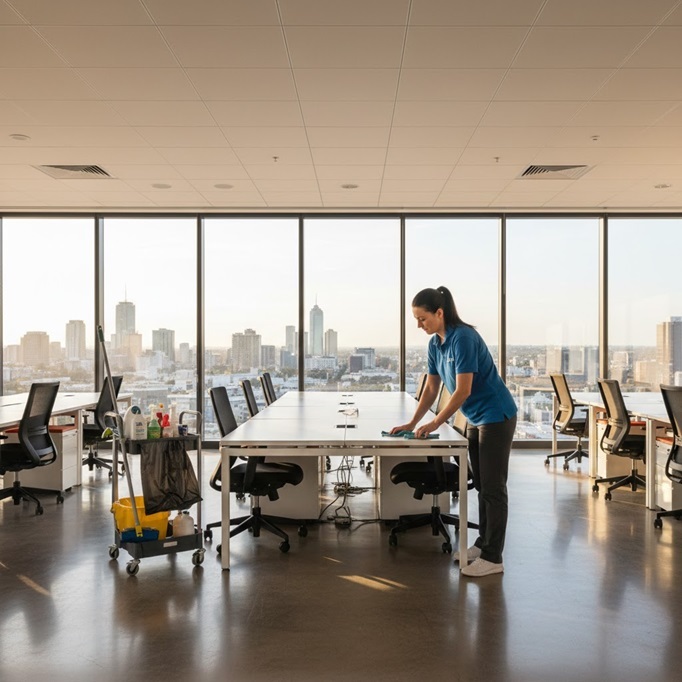
There is no single answer to the question of scheduling. A boutique law firm in Subiaco has vastly different needs from a mining support office in Welshpool. The most significant variable is occupant density. An open-plan office with fifty staff members generates significantly more waste and dust than a spacious showroom with five employees. As density increases, the required office cleaning frequency must also increase to maintain standards.
Client interaction is another critical factor. Businesses that host frequent face-to-face meetings must maintain a showroom standard at all times. A potential client formulates an opinion about a company within seconds of entering the reception. Visible dust on skirting boards or fingerprints on glass doors can subtly undermine professional credibility. For these client-facing businesses, daily servicing is often the only viable option.
Conversely, administrative back-offices with no public access might operate effectively on a thrice-weekly schedule. This allows the budget to be allocated towards deep cleaning tasks rather than daily surface wipes. Understanding these nuances helps in structuring a scope of works that makes sense. It prevents resources from being wasted on low-priority areas while ensuring high-traffic zones receive adequate attention.
Daily Cleaning Protocols: High-Priority Zones
Certain areas of an office act as barometers for the overall hygiene of the building. These high-priority zones accumulate soil and bacteria rapidly. Neglecting them for even twenty-four hours can lead to noticeable degradation in quality. Establishing a daily routine for these specific areas is the baseline for professional office cleaning in Perth.
Reception areas and entrance foyers demand daily attention. This includes thorough vacuuming of entrance mats and polishing of reception desks. Glass entry doors often collect smudges and need daily spot cleaning. This ensures that the first point of contact remains flawless.
Kitchens and breakrooms are also critical daily targets. These are high-risk areas for bacterial growth due to food preparation. Daily tasks must go beyond a simple wipe-down. They should include sanitising benchtops, cleaning microwave interiors, and disinfecting fridge handles. Sinks must be scrubbed to prevent biofilm buildup. Bins containing food waste must be emptied every evening to prevent pest attraction.
Washroom Hygiene Management
Washroom standards are the most common source of workplace complaints regarding cleaning. A washroom in a busy office can deteriorate rapidly between the morning and afternoon. For any office with more than ten staff members, daily washroom servicing is a non-negotiable requirement.
Effective management involves more than just cleaning toilets. It requires the sanitisation of all touchpoints, including cubicle locks, flush buttons, and tapware. Mirrors must be polished to remove splashes, and floors require mopping with hospital-grade disinfectant. This rigorous approach prevents cross-contamination and maintains a pleasant environment for staff.
Engaging professional commercial cleaning services ensures that these standards are met consistently. Professional cleaners use colour-coded equipment to prevent the spread of germs from the washroom to the kitchen. This level of hygiene control is difficult to achieve with ad-hoc cleaning arrangements.
Weekly and Monthly Maintenance Tasks
While high-traffic zones need daily care, other areas can be maintained on a rotating schedule. This helps manage the overall office cleaning frequency without blowing the budget. Private offices, boardrooms that are rarely used, and archive storage rooms often fall into this category. A weekly vacuum and dust are usually sufficient to keep these spaces fresh.
Detailed tasks such as high dusting should be scheduled weekly or fortnightly. Dust accumulates slowly on top of partition walls, picture frames, and filing cabinets. Incorporating these tasks into a rotational schedule ensures they are addressed before the buildup becomes visible. This prevents the "grey film" that often plagues neglected offices.
Monthly tasks focus on the preservation of assets. This might include buffing hard floors to restore shine or chemically cleaning internal glass partitions. Upholstery cleaning for office chairs and deep extraction cleaning for carpets are typically quarterly or annual events. By layering these periodic tasks over the daily routine, businesses ensure that the facility remains in peak condition year-round.
Floor Care and the Perth Environment
The physical environment in Western Australia presents specific challenges for floor care. The coastal plain is dominated by sandy soil. This grit is highly abrasive and is constantly tracked indoors on the soles of shoes. Once inside, it acts like sandpaper on floor coverings. It cuts through carpet fibres and scratches the surface of vinyl and timber floors.
To combat this, the office cleaning frequency for floors must often be higher in Perth than in other cities. Daily vacuuming of traffic lanes is essential to remove this grit before it works its way into the carpet pile. Hard floors require daily dust mopping to prevent scratches that dull the finish.
The most effective defence against this local challenge is preventative matting. Implementing a floor mat rental service captures up to 80% of dirt at the door. Cleantex provides high-quality mats that are rotated regularly for commercially laundered replacements. This simple service drastically reduces the amount of sand entering the workspace. It protects expensive flooring assets and reduces the time required for internal cleaning.
Seasonal Impacts on Cleaning Schedules
Cleaning requirements are not static; they fluctuate with the seasons. Perth’s climate dictates specific adjustments to the cleaning scope. The wet winter months bring mud and moisture into the workplace. Umbrella stands need emptying, and hard floors require more frequent mopping to prevent slip hazards. Entrance mats may need more frequent rotation during July and August to cope with the water load.
Conversely, the hot, dry summer brings different challenges. The "Fremantle Doctor" and easterly winds carry significant amounts of dust and pollen. Offices often see a rapid increase in dust settling on desks and monitors during these months. Air conditioning systems work harder, potentially circulating allergens if vents are not kept clean.
Allergy sufferers can struggle in dusty office environments. Increasing the frequency of damp dusting during spring and summer helps maintain indoor air quality. A flexible provider of office cleaning in Perth will adjust the scope of works to match these seasonal shifts. This proactive approach ensures that the office environment remains comfortable regardless of the weather outside.
The Health Connection: Reducing Absenteeism
There is a direct correlation between office cleanliness and staff health. Offices are enclosed ecosystems where viruses can spread rapidly. A single employee coming to work with the flu can contaminate shared surfaces within hours. This leads to waves of absenteeism that disrupt productivity and project timelines.
A strategic cleaning schedule focuses heavily on breaking the chain of infection. This is done by targeting "touchpoints." Door handles, lift buttons, photocopier screens, and light switches are touched hundreds of times a day. Standard cleaning removes visible dirt, but disinfection kills pathogens.
High-frequency touchpoints should be disinfected daily using hospital-grade products. This creates a safer workspace and demonstrates a duty of care towards employees. Compliance with Western Australian Work Health and Safety (WHS) laws requires businesses to provide hygienic welfare facilities. Regular office cleaning in Perth is a critical component of meeting these legal obligations.
Security and Trust in Service Provision
Inviting a cleaning team into an office requires a high level of trust. Cleaners often operate after hours when the building is empty. They have access to areas where sensitive documents, expensive equipment, and personal items are kept. Security is therefore a paramount concern when selecting a provider.
Reputable companies implement strict security protocols. This includes police clearances for all staff and comprehensive background checks. Key management systems track who has access to the building and when. Alarm codes should be unique to the cleaning provider to audit access times.
Insurance is another critical layer of protection. A professional provider carries public liability and workers' compensation insurance. This protects the business owner from liability should an accident occur on site. Cheap, uninsured operators pose a significant financial risk to the hiring company.
Sustainability and Waste Management
Modern businesses in Perth are increasingly conscious of their environmental footprint. The cleaning industry has historically been a heavy user of harsh chemicals and water. However, modern practices have shifted towards sustainability. Many offices now request green cleaning solutions as part of their corporate social responsibility (CSR) targets.
This involves using biodegradable, non-toxic cleaning agents that are safe for waterways. Microfibre technology reduces the need for chemicals entirely on many surfaces. Sustainable practices also extend to waste management. Ensuring that recycling bins are correctly sorted and disposed of is vital.
SWS Group prioritises environmentally responsible practices across its divisions. From water-saving laundry processes in the Cleantex division to eco-friendly products used by Cleanpro, sustainability is integrated into the service. Correctly managing waste streams reduces the volume of rubbish sent to landfill. This aligns the cleaning service with the broader environmental goals of the client.
Consumables: The Hidden Efficiency
An often-overlooked aspect of maintaining an office is the management of consumables. Running out of toilet paper, hand soap, or paper towels is unprofessional and inconvenient. It creates frustration for staff and leaves a poor impression on visitors. Managing these supplies internally can be inefficient, requiring administration staff to monitor stock levels.
Professional workplace facility services often include stock management. The cleaning team monitors levels and restocks dispensers as part of their daily routine. This "set and forget" model ensures that washrooms and kitchens are always fully stocked.
Cleanpro teams check dispensers daily, while the Cleantex division can supply the necessary paper products and soaps. This integration ensures seamless supply without the business owner needing to intervene. It eliminates the need for emergency trips to the supermarket and ensures compatible products are always available.
Why Integrated Solutions Work Best
Managing multiple contractors for different hygiene needs is time-consuming. Having one company for cleaning, another for pest control, and a third for sanitary bins creates an administrative burden. It also leads to accountability gaps where contractors blame each other for issues.
An integrated approach solves this friction. A single provider handling cleaning, washroom services, and pest control ensures a holistic standard of hygiene. If a pest issue arises in the kitchen, the cleaning team can communicate directly with the pest control division.
This model saves time on invoicing and communication. It also often results in cost savings through bundled service agreements. SWS Group’s ability to deliver cleaning, pest control, and laundry services offers a unique advantage. It simplifies the supply chain for facility managers across Western Australia.
Customising Your Scope of Works
There is no "one size fits all" scope of works in commercial cleaning. A medical centre in Nedlands needs a different checklist than an architectural firm in Fremantle. The best providers spend time on site before quoting. They assess the specific finishes, traffic flows, and usage patterns of the office.
This site audit allows for a customised schedule. Perhaps the reception needs daily cleaning, but the back office only needs attention three days a week. Customisation prevents paying for unnecessary services while ensuring critical areas are never neglected.
Regular reviews of this schedule are also important. As a business grows and staff numbers increase, the office cleaning frequency may need to ramp up. A proactive cleaning partner will suggest these adjustments before hygiene standards slip. This dynamic approach ensures the service evolves alongside the business.
Conclusion
Determining the right schedule for professional cleaning is a strategic decision. It requires balancing budget constraints with the need for a healthy, professional environment. For most Perth offices, a combination of daily service for high-traffic areas and weekly attention for lower-use zones works best.
Investing in preventative measures like entrance matting and establishing clear desk policies enhances the value of the service. Ultimately, a clean office supports a healthy, productive workforce and projects professionalism to the market. Regular office cleaning in Perth is an investment in the brand and the people who drive it.
To explore the right solution, speak with specialists to discuss specific requirements. Call (08) 9336 6944 for an obligation-free consultation regarding cleaning schedules.