












Western Australian organisations frequently encounter significant fluctuations in workforce volume due to peak industrial cycles and seasonal commercial demand. For businesses operating in sectors such as mining, hospitality, and logistics, the ability to rapidly increase staff capacity is a critical component of operational success. Achieving efficient seasonal workwear scaling Perth managers require involves a disciplined approach to textile management that accounts for both financial stability and safety compliance. Relying on traditional uniform ownership models often creates significant bottlenecks during these periods of high activity.
The management of casual and contract personnel involves more than simple recruitment. It requires a technical framework for providing high-performance apparel that meets Australian safety standards whilst remaining cost-effective. Implementing a professional program for casual staff uniform management WA facilities depend on ensures that every temporary employee receives hygiene-rated clothing that supports their safety and productivity. A managed service model provides the flexibility to adjust inventory levels without the burden of long-term capital investment.
Logistical Challenges of Short-Term Workforce Fluctuations
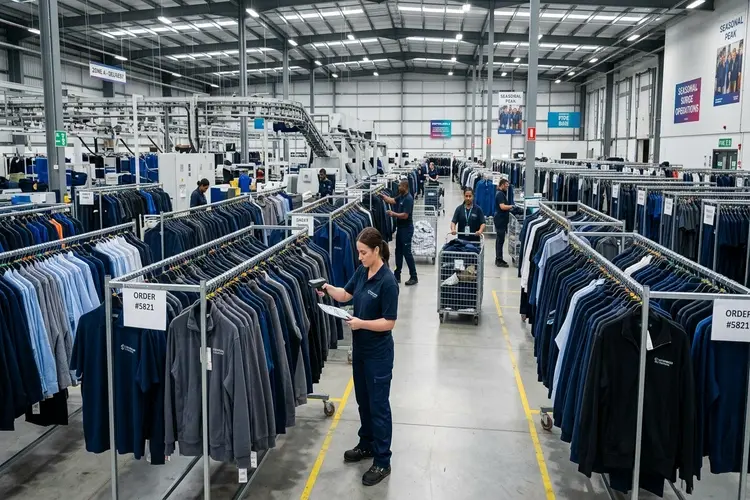
Maintaining a consistent supply of functional apparel for a rapidly expanding team presents complex logistical hurdles. The distance between metropolitan supply hubs and regional Western Australian sites necessitates a robust distribution network to manage sudden spikes in demand. When hundreds of new contractors arrive on site for a peak project cycle, the administrative burden of individual garment assignment and tracking can overwhelm manual systems. Establishing a professional framework for seasonal workwear scaling Perth providers deliver allows for the seamless distribution of gear without disrupting core site activities.
Environmental factors in the Western Australian climate also impact the logistics of uniform management. The accumulation of iron ore dust or industrial grease during peak mining swings necessitates a high frequency of industrial laundering to preserve garment performance. For many organisations, the transition to Cleantex services provides the necessary infrastructure to manage these high-volume exchanges. This integrated approach ensures that every item in circulation is inspected, repaired, and sanitised according to clinical standards, protecting the health of the entire workforce.
Financial Implications of Capital Expenditure vs Rental Models
The capital expenditure required to purchase a full inventory of high-quality industrial workwear for temporary personnel is rarely a sound financial strategy. Ownership involves hidden costs associated with storage, administration, and the eventual disposal of outdated or damaged stock. For businesses focused on casual staff uniform management WA standards, a managed rental model offers a more sustainable alternative. This allows organisations to preserve capital for core activities while benefiting from a premium apparel program that scales in real-time.
Rental models provide budget certainty through fixed monthly service fees. This removes the financial risk associated with seasonal fluctuations, as the inventory can be adjusted to match headcount. Professional linen services include the cost of restorative laundering and repairs, ensuring that the total cost of ownership remains low. By consolidating these requirements into a managed program, Western Australian businesses gain access to higher-quality textiles than would typically be feasible through individual purchase, improving the overall professional appearance of the team.
Technical Specifications for High-Turnover Seasonal Apparel
Apparel used in high-turnover environments must withstand frequent laundering cycles without compromising its protective properties. In industrial sectors, garments must comply with AS/NZS 4602.1 for high-visibility and AS/NZS 4399 for sun protection. Achieving effective seasonal workwear scaling Perth facilities implement involves selecting textiles with high tensile strength and colour fastness. These technical fabrics are engineered to resist the mechanical stress of industrial processing, ensuring they remain fit for purpose throughout the seasonal surge.
Garment construction is another critical variable in technical apparel. Triple-stitched seams and reinforced stress points are essential for garments used in heavy industry or logistics. When organisations utilise commercial workwear programs, they ensure that every item issued to seasonal staff meets these high benchmarks for durability. This focus on technical specifications reduces the frequency of garment failure, which is essential for maintaining safety and morale during periods of intense activity.
Regulatory Compliance and the WHS Act 2020 for Temporary Staff
The Work Health and Safety Act 2020 places a clear duty of care on Western Australian PCBUs (Persons Conducting a Business or Undertaking) to provide a safe working environment. This duty extends to casual, contract, and seasonal staff. Providing substandard or poorly maintained apparel for temporary workers can lead to regulatory non-compliance and increased liability. Implementing a robust strategy for casual staff uniform management WA organisations follow is a demonstrable way to meet these safety obligations.
Professional providers manage the documentation and audit trails necessary to verify that garments are being cleaned and maintained to industrial standards. This is particularly important for high-visibility clothing, which loses its reflective properties if washed with incorrect chemicals. By outsourcing this management to specialists, organisations ensure that their safety equipment is maintained by experts who understand the specific regulatory requirements of the Western Australian industrial sector. This proactive approach to compliance protects the business from the legal risks associated with workplace accidents or hygiene failures.
Strategic Inventory Management and Tracking Technology
Managing a revolving inventory for a fluctuating workforce requires sophisticated tracking technology to prevent loss and ensure accountability. In a high-occupancy environment, keeping track of individual garment assignments is a significant task that can lead to inventory shrinkage if not managed professionally. Effective seasonal workwear scaling Perth programs utilize digital tracking, such as RFID tags or barcodes, to monitor the location and wash count of every item.
This data-driven approach allows for accurate stock forecasting. It ensures that the facility is never under-supplied during peak periods or when additional contractors arrive on site unexpectedly. Automated tracking also identifies when a garment is nearing the end of its safety rating, allowing for proactive replacement before a failure occurs. For Western Australian businesses, this centralised oversight removes the logistical headache of manual stocktakes and reduces the risk of garment loss in remote or busy locations.
Thermal Comfort and Physiological Performance in Peak Periods
The Western Australian climate presents significant challenges for physical labour, particularly during the summer months when ambient temperatures often exceed 40 degrees Celsius. In these conditions, the body’s primary cooling mechanism is the evaporation of sweat. Clothing that inhibits this process increases the risk of heat-related illnesses. High-performance casual staff uniform management WA solutions prioritise moisture-wicking technology and air permeability to support the wearer’s physiological needs.
Effective thermal regulation is not merely a comfort issue; it is a fundamental safety requirement. Personnel who are thermally comfortable are more alert, less prone to fatigue, and more productive during long shifts. By providing apparel engineered for the Western Australian climate, facility managers demonstrate a commitment to workforce wellness and operational efficiency. SWS Group integrates these technical considerations into every uniform program, ensuring that seasonal staff are protected from the harsh environmental conditions typical of the region.
Integrated Facility Hygiene and Workwear Coordination
The cleanliness of staff apparel is intrinsically linked to the broader hygiene standards of the facility. Contaminated uniforms can track industrial soils and pathogens into communal dining areas and administrative zones, increasing the cleaning burden and attracting pests. Coordinating seasonal workwear scaling Perth with professional Cleanpro services ensures a holistic approach to facility health.
Maintaining a sterile environment is essential for preventing the spread of illness among a confined workforce, particularly in remote camps or busy metropolitan hubs. This integration includes the provision of professional facility cleaning and specialized floor protection. The use of high-quality commercial floor mats at site entries helps capture grit and moisture, protecting internal floors and reducing the spread of dust. This comprehensive facility management style is a hallmark of Western Australian businesses that prioritise the health and dignity of their personnel.
Strategic Benefits of Integrated Service Models
For businesses operating across multiple sites, managing separate vendors for cleaning, pest control, and laundry is inefficient. An integrated service model provided by SWS Group offers a single point of accountability for all facility hygiene requirements. This coordination ensures that all services work in harmony to maintain high standards during peak periods. For example, a textile technician delivering uniforms can also identify potential safety hazards or replenish first aid supplies in storage zones.
Strategic advantages include:
- Full compliance with the Work Health and Safety Act 2020 for all staff categories.
- Improved staff morale and reduced risk of heat-related illness during surges.
- Enhanced operational efficiency through simplified vendor management.
- Protection of brand reputation through professional staff appearance.
- Demonstrable commitment to hygiene and safety for all stakeholders.
By removing the complexity of textile management, project directors can focus on production and safety. Specialist facility services deliver the technical expertise needed to manage every aspect of the environment, from the industrial workshop to the administrative office. This integrated approach ensures that the Western Australian climate and seasonal logistics do not compromise the safety or productivity of the facility.
Documentation, Auditing, and Verification of Standards
Verification is as critical as the service itself in a professional setting. Organisations must be able to prove that their hygiene and safety protocols meet the required standards during internal audits or regulatory inspections. Managed workwear programs provide detailed reporting on laundering efficacy, garment repair history, and compliance status. This numerical data provides confidence that the risks associated with industrial soilage are being addressed.
Specialised providers use biological testing to verify that textiles are free from organic matter and pathogens after laundering. This level of scientific rigour is impossible to achieve with domestic or employee-led washing. For high-occupancy environments where the health of the entire team is paramount, this transparency is invaluable. Establishing these verification protocols early ensures that the facility is ready for regulatory scrutiny and supports the long-term sustainability of the organisation's operations.
Conclusion: Securing Operational Excellence
Excellence in seasonal workforce management requires a disciplined, scientific approach that accounts for the unique challenges of the Western Australian environment. By focusing on breathable, high-performance textiles and integrating restorative laundering with broader facility services, Perth providers can establish a standard of care that is both safe and professional. Maintaining high standards in seasonal workwear scaling Perth and casual staff uniform management WA involves an ongoing commitment to the wellness and safety of the workforce.
Professional management of these textiles ensures that every employee can work in a garment that is clean, safe, and thermally efficient. Whether managing a small boutique team or a large-scale industrial site, the principles of fabric performance, hygiene standards, and documented verification remain the same. SWS Group provides the integrated support necessary to meet these rigorous demands. To discuss a customised workwear assessment for your facility, call our Perth office: (08) 9336 6944.