













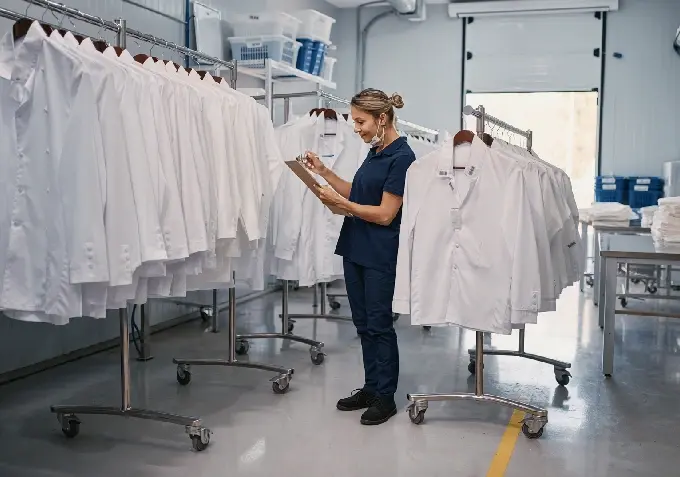
Uniform expenses represent a significant operational cost for hospitality businesses. Restaurants, hotels, and cafes face ongoing challenges managing uniform purchases, replacements, and maintenance. These costs accumulate quickly, particularly for venues with large teams or high staff turnover.
Traditional uniform purchasing requires substantial upfront capital investment. Businesses must buy complete uniform sets for every team member across front-of-house, back-of-house, and management staff. Replacement costs mount as uniforms become stained, damaged, or worn through daily use in demanding hospitality environments.
SWS Group provides an alternative through Cleantex's workwear rental programs designed specifically for Perth hospitality businesses. These managed uniform services eliminate capital expenses whilst maintaining professional appearance standards. The rental model transforms uniform costs from unpredictable capital outlays into manageable operational expenses.
The True Cost of Purchasing Hospitality Uniforms
Purchasing uniforms outright creates several financial challenges for hospitality operators. The initial investment covers not just base uniform costs but sizing samples, excess inventory, and buffer stock for unexpected needs. A mid-sized restaurant might spend thousands of dollars equipping a team of 20-30 staff members. Hotels with housekeeping, reception, restaurant, and maintenance departments face even larger uniform inventories.
Replacement costs emerge rapidly in hospitality settings. Kitchen uniforms face grease stains, chemical exposure, and heat damage. Front-of-house attire encounters food spills, wine stains, and general wear from constant movement. Most hospitality uniforms require replacement within 6-12 months of heavy use. High-traffic venues may need replacements every 3-6 months for certain positions.
Hidden ownership costs include storage space for excess inventory, administrative time managing sizing and distribution, and staff hours spent on uniform care. These expenses rarely appear in initial uniform budgets but significantly impact total cost of ownership. Managers spend valuable time coordinating uniform distribution, tracking inventory levels, and managing replacement requests rather than focusing on guest service.
Sizing complexity adds another layer of expense. Hospitality businesses must maintain multiple sizes of each uniform piece to accommodate staff of varying body types. This requirement multiplies inventory costs substantially. Purchased uniforms that do not fit properly cannot be returned once personalised with logos or embroidery, creating waste.
How Rental Programs Eliminate Capital Expenses
Workwear rental programs operate on a pay-per-use model that removes upfront capital requirements. Businesses pay a manageable weekly or monthly fee per uniform item rather than purchasing entire wardrobes. This approach preserves cash flow for other operational priorities like equipment upgrades, marketing campaigns, or facility improvements.
Rental agreements include regular replacement of damaged or worn uniforms at no additional cost. Stained chef jackets, torn server aprons, or faded housekeeping attire get swapped for fresh items as part of the standard service. Businesses never pay replacement costs for normal wear and tear. This protection proves particularly valuable in high-volume kitchens where uniform damage occurs frequently.
Predictable monthly expenses simplify budgeting and financial planning. Uniform rental solutions eliminate surprise costs from unexpected damage, staff growth, or seasonal hiring needs. Finance teams can forecast hygiene expenses with precision rather than managing variable purchasing cycles. The consistent cost structure helps businesses maintain profit margins even during challenging trading periods.
Rental programs also eliminate the depreciation problem inherent in uniform ownership. Purchased uniforms lose value immediately and continue depreciating until replacement becomes necessary. Rental models convert this depreciating asset into a service expense that delivers consistent value throughout the agreement period.
Maintenance and Laundry: The Hidden Savings
Commercial laundry represents one of the largest hidden costs in uniform ownership. Industrial-grade washing, drying, and pressing services charge per kilogram for hospitality textiles. A busy restaurant can generate 50-100 kilograms of uniform laundry weekly. Alternatively, in-house laundry requires equipment investment, utility costs, detergent supplies, and staff time.
Workwear rental programs include professional laundering as part of the service fee. Industrial cleaning facilities handle all washing, stain treatment, and garment care using commercial-grade equipment and hospital-grade cleaning processes. Uniforms return hygienically clean and pressed, ready for immediate use. The industrial cleaning standards far exceed typical domestic washing capabilities.
Staff time savings prove substantial when outsourcing uniform care. Managers no longer coordinate laundry schedules, inspect garment condition, or troubleshoot cleaning issues. Team members avoid taking uniforms home for washing, reducing liability concerns and ensuring consistent presentation standards. This time reallocation allows staff to focus on revenue-generating activities and guest service improvements.
Water and energy consumption decreases significantly when commercial laundry operations handle uniform cleaning. Professional facilities achieve economies of scale impossible for individual venues. Many Perth venues pair workwear rental with linen rental services to streamline all textile management under one provider. This consolidation maximises efficiency and reduces environmental impact through optimised cleaning cycles.
Professional Appearance Without Premium Prices
Brand presentation matters significantly in competitive hospitality markets. Guests form immediate impressions based on staff appearance and uniform quality. Maintaining consistently professional presentation becomes challenging when uniforms age unevenly or budgets force extended use of worn garments. First impressions influence guest satisfaction scores, online reviews, and repeat patronage decisions.
Rental programs provide regular uniform rotation that keeps every team member looking sharp. Fresh uniforms arrive on scheduled delivery cycles, replacing items that show wear before appearance degrades noticeably. This consistent replacement maintains brand standards without requiring premium-priced uniform purchases. Venues benefit from looking like they invest heavily in presentation without the corresponding capital expenditure.
Colour consistency across the entire team improves when uniforms age together through managed replacement cycles. Purchased uniforms fade at different rates depending on usage patterns, creating mismatched appearance issues. Some team members wear bright, new uniforms whilst others wear faded versions of the same design. Hospitality workwear programs ensure every team member wears uniforms of identical quality and appearance, projecting cohesive brand identity.
Logo and embroidery quality remains crisp throughout the uniform lifecycle with rental services. Professional textile care prevents the fraying, fading, and deterioration that commonly affects purchased uniforms. Maintaining sharp branding becomes effortless when the service provider handles quality control.
Flexibility for Seasonal and Casual Staffing
Perth's hospitality industry experiences significant seasonal variation. Tourist seasons, corporate events, and holiday periods demand larger teams. Quiet periods require reduced staffing. This fluctuation creates uniform inventory challenges for businesses managing their own wardrobe stocks. Purchased uniforms represent sunk costs whether staff members are actively working or not.
Uniform rental solutions scale easily to match staffing levels. Adding casual staff during busy periods requires a simple service adjustment rather than emergency uniform purchases. Reducing uniform quantities during slower months lowers weekly costs proportionally. This flexibility eliminates the problem of excess inventory sitting unused during off-peak periods.
Quick onboarding for new employees becomes simpler with rental programs. Correct sizing and immediate availability mean new team members start fully uniformed from day one. No waiting for orders, no temporary mismatched attire, no sizing errors that require returns and reorders. This rapid deployment capability proves essential during unexpected staff departures or sudden business growth.
Businesses in the food and beverage sector particularly benefit from this rapid deployment capability. High staff turnover rates in hospitality make traditional uniform purchasing inefficient. Rental programs adapt to workforce changes seamlessly, ensuring every employee has appropriate attire regardless of tenure length.
Special events and functions requiring additional staff present no uniform challenges with rental services. Venues can temporarily increase uniform quantities for wedding seasons, conference bookings, or special dining events. Once the peak period ends, uniform levels return to baseline without leaving the business holding excess inventory.
Hygiene Compliance and Food Safety Standards
Food businesses operating in Perth must meet strict hygiene standards enforced by local health authorities. Staff uniforms play a critical role in maintaining these standards. Clean, well-maintained uniforms prevent cross-contamination and demonstrate commitment to food safety protocols. Regular uniform changes reduce bacterial buildup that can compromise hygiene standards.
HACCP compliance requirements mandate regular laundering of food handling attire at appropriate temperatures. Commercial laundry facilities used by workwear rental services operate at temperatures that effectively eliminate pathogens. Domestic washing machines often cannot achieve the sustained high temperatures required for proper sanitation. Industrial cleaning processes meet and exceed regulatory requirements for food service environments.
Kitchen staff handling raw proteins, allergens, and prepared foods need frequent uniform changes to prevent cross-contamination. Rental programs provide sufficient uniform quantities to enable daily changes without requiring venues to maintain massive inventories. Multiple uniforms per team member ensure clean attire availability even during intensive service periods.
Documentation and traceability requirements become simpler with managed uniform services. Professional providers maintain cleaning records, temperature logs, and hygiene certifications that support compliance audits. These records demonstrate due diligence in maintaining food safety standards throughout textile management processes.
Complete Hygiene Solutions for Hospitality
Hospitality venues require comprehensive hygiene management beyond just staff uniforms. Entrance areas need effective matting to control dust and moisture. Reception areas, dining rooms, and guest facilities demand professional cleaning. Kitchen environments require strict hygiene protocols. Coordinating multiple providers for these services increases administrative complexity and vendor management overhead.
Integrated workplace hygiene solutions simplify vendor management by consolidating services under one provider. Cleantex's entrance matting solutions work alongside workwear rental to protect flooring and reduce slip hazards. This integration streamlines invoicing, service scheduling, and quality oversight. Single-point contact simplifies communication and problem resolution across all hygiene services.
Accommodation businesses particularly value this consolidated approach. Hotels managing housekeeping uniforms, guest linen, entrance mats, and commercial cleaning can coordinate all textile services through one relationship. Fewer suppliers mean simplified operations and consistent service standards across all hygiene requirements. Consolidated billing reduces administrative burden on accounts payable teams.
Quality consistency improves when one provider handles multiple hygiene aspects. Service delivery becomes predictable and reliable when accountability rests with a single organisation. Problem-solving simplifies because the provider understands how different services interact within the venue's operations. This holistic approach to workplace hygiene delivers better outcomes than fragmented service arrangements.
Conclusion
Workwear rental programs deliver measurable cost savings for Perth hospitality businesses through eliminated capital expenses, included maintenance, and operational flexibility. The rental model transforms uniform management from a complex procurement challenge into a predictable service arrangement. Professional appearance standards remain high whilst financial resources stay focused on core business priorities.
For tailored hospitality hygiene solutions, call (08) 9336 6944 to discuss specific uniform and textile requirements. Contact SWS Group for an obligation-free consultation on workwear rental programs designed for Perth's hospitality sector.