













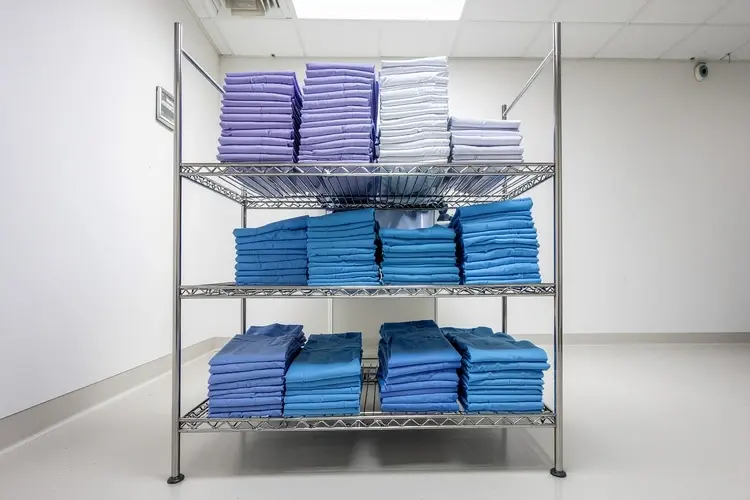
Bunbury's healthcare facilities face a persistent challenge that rarely makes headlines yet impacts every shift: maintaining adequate supplies of clean, compliant medical scrubs whilst managing laundry costs and infection control protocols. For a regional hospital processing 200+ staff changes daily, the logistics of scrub management consume resources that could otherwise support patient care.
Medical scrub rental programs eliminate this operational burden through professionally laundered, AS/NZS 4146-compliant garments delivered on predictable schedules. Professional services operate these programs across Western Australian healthcare facilities, including Bunbury's hospital and aged care sectors, with thermal disinfection processes that meet infection control requirements without requiring on-site laundry infrastructure.
Understanding how rental programs address Bunbury's specific logistics challenges helps facility managers make informed decisions about scrub supply strategies, compliance management, and operational efficiency.
Why Regional Hospitals Choose Rental Over Purchase
Bunbury's distance from Perth metro suppliers creates specific logistical challenges for healthcare facilities managing their own scrub inventories. A 180-kilometre supply chain means emergency restocks require minimum half-day turnarounds, and local retail options rarely stock medical-grade garments in sufficient quantities for hospital-scale operations.
Purchased scrubs require individual staff members to maintain personal inventories, creating inconsistencies in garment quality, colour standardisation, and replacement schedules. Professional healthcare services from SWS Group provide systematic solutions that eliminate these inconsistencies through managed programs. When staff launder scrubs at home, facilities lose control over thermal disinfection temperatures, detergent selection, and cross-contamination prevention, variables that directly impact infection control protocols.
Professional rental programs centralise these variables under professional management. Healthcare linen services process scrubs through commercial laundry systems that achieve 71°C minimum for three minutes, the AS/NZS 4146 standard for healthcare textile disinfection. Home washing machines rarely exceed 60°C, and staff members understandably prioritise convenience over compliance when managing personal garments.
The inventory management advantage becomes particularly evident during staff expansion or departmental restructuring. A Bunbury hospital adding 15 nursing positions requires immediate scrub access for new employees. Purchase models demand upfront capital expenditure and size-specific ordering with 2–3 week lead times. Rental programs adjust weekly delivery quantities within one billing cycle, matching garment supply to actual staffing levels without capital investment.
Infection Control Standards for Medical Scrubs
Healthcare textiles function as potential vectors for pathogen transmission between clinical environments and community settings. The distinction between medical-grade laundering and domestic washing processes centres on validated thermal disinfection that eliminates bacterial contamination, including antibiotic-resistant organisms prevalent in hospital environments.
AS/NZS 4146 establishes specific parameters for healthcare textile processing: thermal disinfection at minimum 71°C sustained for three minutes, chemical disinfection using EPA-registered products at manufacturer-specified concentrations, microbiological monitoring through regular testing protocols, and handling protocols with segregated processing that prevents cross-contamination between soiled and clean textiles.
Bunbury hospitals operating under Australian Health Service accreditation requirements must demonstrate compliance with infection prevention protocols that extend to staff uniforms. When scrubs receive home laundering, facilities cannot verify thermal disinfection temperatures or validate microbiological effectiveness, creating documentation gaps during accreditation audits.
Professional medical scrub rental services maintain batch processing records that track each load through wash, disinfection, and quality verification stages. These records provide auditable evidence of infection control compliance, transferring documentation responsibility from individual staff members to the service provider.
The practical infection control advantage manifests in outbreak scenarios. When a ward identifies increased infection rates, facilities using rental programs can request enhanced disinfection protocols or complete garment rotation within 24–48 hours. Purchase models require individual staff members to coordinate personal garment replacement, creating implementation delays and compliance inconsistencies.
Service Models for Bunbury Healthcare Facilities
Medical scrub rental operates through three primary service structures, each addressing different facility requirements and operational preferences.
Individual Allocation Programs assign specific garments to named staff members, with personalised sizing and quantity calculations based on shift patterns. A full-time nurse working four 10-hour shifts weekly typically receives 6–8 sets to accommodate shift overlaps and emergency call-ins. Garments carry individual identification through RFID tags or barcode systems, enabling tracking throughout the laundry cycle and automated inventory management.
This model suits facilities prioritising staff satisfaction and garment fit consistency. Bunbury's aged care facilities frequently select individual allocation for nursing staff who value wearing properly fitted garments throughout extended shifts. The trade-off involves higher per-garment costs due to personalised inventory management and increased processing complexity.
Pool Systems maintain facility-based inventories in common sizing ranges, with staff selecting appropriately sized garments from centralised storage at shift commencement. A 50-bed hospital might maintain 200–300 scrub sets across size ranges from XS to 3XL, with daily deliveries replacing soiled garments collected in designated laundry bins.
Pool models reduce per-garment costs through simplified inventory management whilst accommodating casual staff, agency nurses, and fluctuating departmental needs without individual allocations. The system requires adequate storage space for clean garment dispensing and soiled textile collection, typically 4–6 square metres for a 50-bed facility.
Hybrid Approaches combine individual allocation for permanent staff with pool inventory for casual employees and emergency replacements. This structure balances cost efficiency with staff satisfaction, particularly in facilities experiencing high casual staff utilisation or frequent departmental transfers.
Delivery frequencies range from daily to thrice-weekly based on facility size and storage capacity. Bunbury hospitals typically operate on twice-weekly schedules that balance delivery costs against storage requirements, with emergency same-day service available for unexpected demand spikes or contamination incidents.
Cost Structures and Budget Planning
Medical scrub rental pricing operates on per-garment-per-week models that bundle laundering, replacement, inventory management, and delivery services into single line items. Bunbury healthcare facilities typically pay $4.50–$7.50 per garment weekly depending on service frequency, allocation model, and contract volume.
A 100-staff hospital operating individual allocation for 80 permanent employees plus 40-garment pool inventory for casual staff processes approximately 520 garments weekly. At $5.50 per garment average, annual costs reach $140,400, a figure that includes all laundering, thermal disinfection, garment replacement, and delivery services.
Purchase models appear cheaper in isolation, medical-grade scrubs cost $35–$65 per set retail, but hidden costs accumulate rapidly: replacement cycles requiring new inventory every 6–12 months, staff laundering time consuming 90+ minutes per load, utility expenses for hot water heating and dryer operation, compliance risk from inability to verify thermal disinfection, and inventory management consuming staff time tracking garment allocation and size changes.
When these variables receive cost allocation, purchase models frequently exceed rental pricing whilst transferring operational burden to clinical staff and facility managers.
The budget planning advantage of rental programs centres on predictable monthly expenses without capital expenditure or replacement cycles. A Bunbury hospital implementing scrub rental knows precise annual costs at contract commencement, enabling accurate budget forecasting without unexpected replacement expenses or equipment failures.
Quality Assurance and Garment Lifecycle Management
Professional medical scrub rental maintains garment quality through systematic inspection protocols that remove deteriorated items before they reach clinical environments. Each garment receives visual inspection during processing, with automatic removal when fabric shows thinning, persistent staining, or compromised seam integrity.
This quality control prevents the common purchase-model scenario where staff members continue wearing faded, thinned, or damaged scrubs due to replacement cost concerns or procurement delays. Rental programs replace garments automatically, maintaining consistent professional appearance without requiring staff requests or approval processes.
Colour consistency presents particular challenges in purchase models where individual staff members buy replacements from different suppliers or product lines over time. A nursing team might display five different shades of "navy blue" due to varied manufacturers, purchase dates, and washing histories. Professional rental programs source garments from consistent suppliers with colour-matching protocols, maintaining departmental uniformity that supports professional presentation and departmental identification.
The environmental advantage of centralised commercial laundering exceeds home washing efficiency through water recycling systems, optimised chemical dosing, and high-efficiency extraction that reduces drying energy. Professional services incorporate water recycling that reduces consumption by 40% compared to single-pass systems, whilst commercial dryers achieve faster drying at lower per-garment energy costs than domestic equipment. Integration with washroom hygiene services and floor mat programs creates comprehensive facility contamination control through coordinated service delivery.
Garment lifecycle extends under professional laundering through appropriate chemical selection, controlled mechanical action, and proper drying temperatures. Medical scrubs processed through commercial systems typically achieve 75–100 wash cycles before replacement, compared to 40–60 cycles under home laundering conditions where excessive detergent, high-heat drying, and improper sorting accelerate deterioration.
Implementation Process for Bunbury Facilities
Transitioning from purchase to rental models requires 4–6 weeks for complete implementation, beginning with facility assessment and staff sizing. Service providers conduct on-site visits to determine storage requirements, delivery access points, and soiled textile collection workflows.
Staff sizing sessions collect measurements across all shifts, accommodating employees unable to attend single-session events. Individual allocation programs require comprehensive sizing data including height, weight, and garment preferences to ensure proper fit from program commencement. Pool systems need demographic sizing distribution to calculate appropriate quantities across size ranges.
Storage infrastructure requirements vary by service model and facility size. Individual allocation demands secure, climate-controlled space for personalised garment storage, typically wall-mounted cubby systems or mobile garment racks. Pool systems require accessible dispensing areas near change rooms with clear size labelling and adequate circulation space.
Soiled textile collection points need positioning that prevents cross-contamination between clean and used garments whilst remaining convenient for staff disposal. Bunbury hospitals typically install collection bins in change room areas with foot-operated lids and clear contamination-level labelling for standard versus high-risk garments.
The transition period involves parallel operation where rental garments gradually replace purchased inventory as staff members exhaust personal supplies. This staged approach prevents disruption whilst allowing service refinement based on actual usage patterns and staff feedback.
Training requirements remain minimal, staff need basic instruction on garment selection, proper disposal procedures, and reporting protocols for sizing issues or quality concerns. Most facilities complete training through brief shift-change briefings supplemented by posted instructions at dispensing and collection points.
Compliance Documentation and Accreditation Support
Healthcare facility accreditation under Australian Health Service standards requires documented evidence of infection prevention protocols extending to staff uniforms and clinical textiles. Medical scrub rental programs provide this documentation through comprehensive processing records that track garment batches from collection through disinfection and quality verification.
Monthly compliance reports detail thermal disinfection temperatures, cycle completion verification, and microbiological testing results that demonstrate pathogen elimination effectiveness. These reports integrate directly into facility infection control documentation, supporting accreditation submissions without requiring facility staff to compile data from multiple sources.
The documentation advantage becomes particularly valuable during outbreak investigations or infection control audits. When auditors question staff uniform laundering protocols, facilities using rental programs provide third-party verified records demonstrating consistent thermal disinfection compliance. Purchase models require individual staff attestation regarding home laundering practices, documentation that carries minimal verification value during formal audits.
Chemical safety documentation for laundry products transfers to service providers under rental models, eliminating facility responsibility for maintaining Safety Data Sheets, chemical handling protocols, and staff training records for laundering products. This documentation burden proves particularly valuable for smaller Bunbury facilities lacking dedicated environmental services staff.
Regional Service Considerations for Bunbury
Bunbury's regional location creates specific service delivery considerations that differ from Perth metro operations. Delivery schedules account for 180-kilometre transit distances, with route optimisation that combines multiple facility stops to maintain cost efficiency whilst ensuring reliable service frequencies.
Emergency service response times extend compared to metro facilities, same-day delivery requires minimum four-hour notice for Bunbury locations versus two-hour metro response. Facilities should maintain modest buffer inventory (10–15% above typical weekly consumption) to accommodate unexpected demand spikes between scheduled deliveries.
The regional service advantage emerges through relationship continuity, Bunbury facilities typically work with consistent delivery personnel who understand facility-specific requirements, access protocols, and contact preferences. This continuity reduces communication errors and enables informal problem-solving that proves difficult in high-turnover metro service environments.
Local representation through regional account management ensures Bunbury facilities receive responsive support without requiring Perth head office escalation for routine service adjustments. When a facility needs temporary quantity increases for seasonal staff expansion, regional managers authorise changes within single business days.
Making the Transition to Professional Scrub Rental
Bunbury healthcare facilities considering medical scrub rental should begin evaluation 8–12 weeks before intended implementation to accommodate assessment, sizing, and infrastructure preparation timelines. Initial facility assessments identify storage locations, delivery access requirements, and staff sizing scheduling without commitment to proceed.
Cost comparison requires comprehensive analysis beyond simple per-garment pricing, include current laundering utility costs, staff time allocation, replacement cycles, and compliance documentation burden in purchase-model calculations. Most facilities discover rental programs deliver cost neutrality or savings whilst eliminating operational complexity and compliance risk.
Staff engagement during evaluation phases improves implementation success through early communication about program benefits, sizing processes, and garment quality expectations. Facilities should emphasise infection control advantages and professional appearance consistency rather than presenting rental as cost-reduction measures that might suggest budget constraints.
For Bunbury hospitals, aged care facilities, and medical centres seeking to improve infection control compliance whilst reducing operational burden, professional medical scrub rental delivers validated thermal disinfection, predictable costs, and comprehensive documentation support. Coordinated facility services including first aid compliance ensure complete infection control across all healthcare operations. Contact (08) 9336 6944 to discuss facility-specific requirements and arrange a no-obligation service assessment.