













A commercial site can offer dozens of places worth a look, but that does not mean every point deserves the same attention. The useful question is not how many checks can be added to a plan. It is which locations are most likely to produce information that helps a facilities manager decide what to review next. Recent observations, repeat patterns, protected edges and the consequence of missing a change all matter more than a neat grid of identical check marks.
Commercial pest monitoring points work best when they are selected for a reason that can be explained later. A location near a reported sign may need an earlier review. A concealed junction between two site conditions may be more informative than an open area that is easy to inspect. The aim is to create an ordered set of observations, not to diagnose a species or predict an outcome from one sign. That distinction makes the inspection more useful for day-to-day site management and for any later professional discussion.
In this article, a monitoring point means a location selected for repeat observation; it does not necessarily refer to a physical pest monitor or treatment device installed by a pest-management provider.
Start by separating monitoring from a general walk-through
A general walk-through helps people become familiar with a site. A monitoring point has a narrower job. It is a specific location that is revisited because it can show whether an observation is isolated, recurring or changing. The point might be chosen because of a report from a staff member, a mark found during a routine check, a sheltered edge, a service route or a change in how the area is being used.
This difference prevents a common planning mistake. When every room, corridor and exterior edge is treated as equally urgent, the record can become long without becoming useful. A shorter list of well-chosen commercial pest monitoring points gives the next inspection a clear purpose. It also makes it easier to compare like with like, because the same location is being checked for the same reason.
A site plan can still provide context, but it should not decide the priority on its own. The priority comes from the evidence attached to each point. A location that has produced repeated observations may sit above a convenient but low-information spot. Conversely, an accessible point with no history may remain on the route without taking attention away from an area that needs a more deliberate review.
Put urgent findings ahead of routine comparisons
Start with any point that meets the site’s escalation criteria or has a serious operational consequence if activity is missed. Then use recent and repeated observations to order the remaining checks. An older unresolved finding should not slip below a new low-consequence sighting simply because the latter is more recent. Each point needs a location and enough history for a meaningful comparison.
Treat the first pass as a question of repeatability. Can the point be revisited without relying on memory alone? Can a manager compare what is present now with what was previously recorded? If the answer is yes, the location becomes a stronger candidate for early monitoring. If the answer is no, improve the description before adding more points to the plan.
Keep the observation separate from the diagnosis: record what was seen, where it was seen and whether it recurs. WA Health's guidance on managing pesticides in local-government pest-control programmes discusses integrated pest management, including risk assessment, regular monitoring and timely decision-making. Although the guidance is written for local-government authorities rather than commercial facilities, these principles provide useful context for reviewing site observations. It does not prescribe a monitoring-point system for commercial premises. Read the WA Health guidance.
Look for transitions that make a location informative
Some points matter because they sit at a transition. These are places where movement, shelter, moisture, stored materials or building features create a reason to observe more carefully. The value is not in assuming that a transition will contain pest activity. It is in recognising that the location can help explain whether an observation is connected with a route, a condition or a one-off event.
For example, a service penetration, a concealed wall edge, a floor-to-wall junction or the boundary of a storage area can help connect an observation with a possible route. Give each point a recognisable location and observe it from a safe, accessible position. Leave closed voids, electrical equipment and restricted spaces for an appropriately arranged inspection.
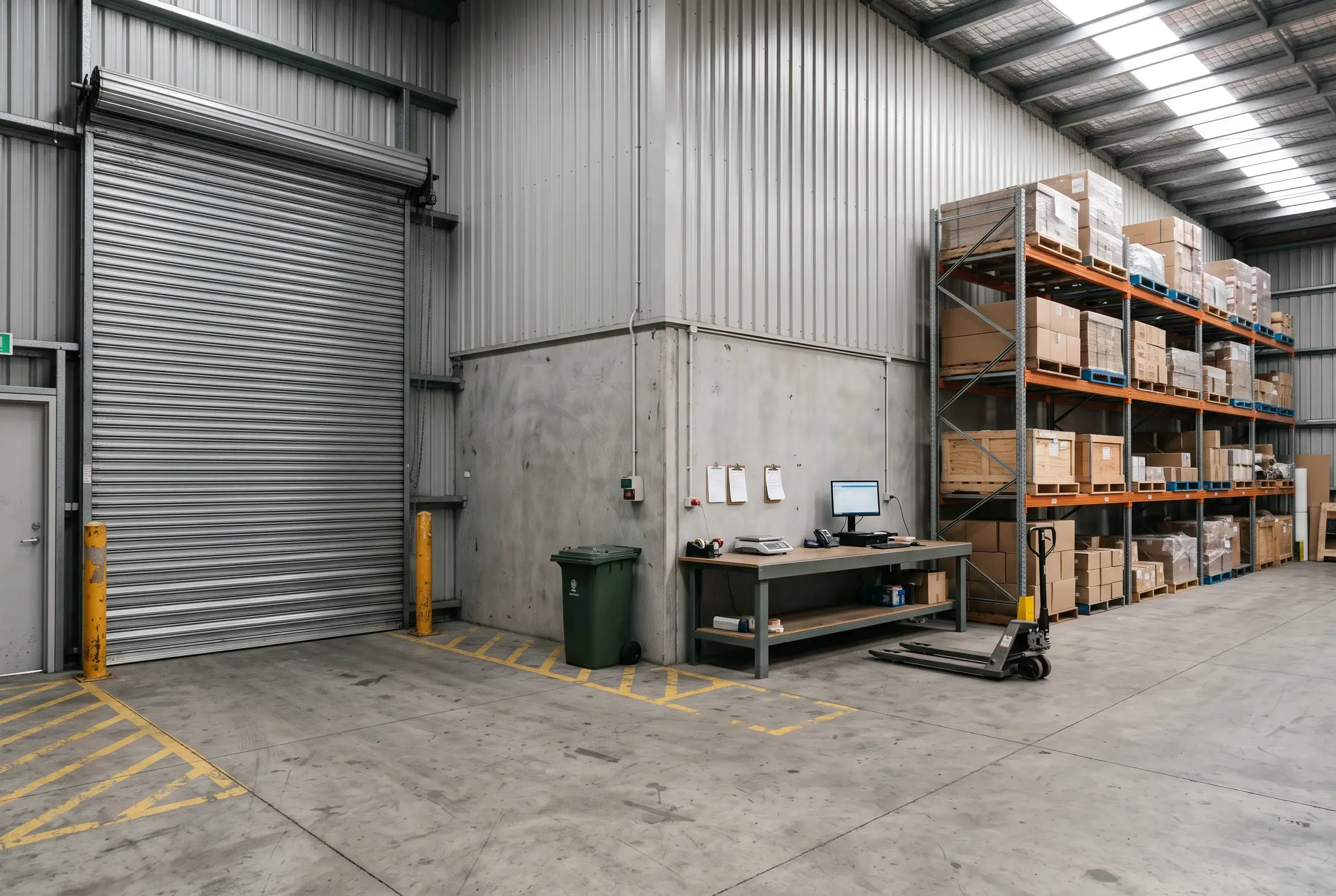
Receiving and storage edges deserve attention when stock movement changes what can be seen. For automotive and industrial pest control, precise receiving and storage locations help focus professional assessment. Record which racking edge or receiving entrance needs inspection, rather than marking the whole warehouse as one monitoring point.
Rank points by site consequence as well as visibility
A highly visible point is not always the most important point. Some locations are easy to pass every day but offer little new information. Others may be less prominent yet have a greater operational consequence if a recurring observation is missed. The priority should therefore take both visibility and site significance into account.
A practical way to rank pest inspection priority areas is to ask four short questions:
- Is there a recent or repeated observation tied to this location?
- Can the point be identified and revisited consistently?
- Would a recurring observation here affect an important part of the site’s operation?
- Can the check be carried out safely, with the right access and without disrupting normal work?
These questions do not create a universal scoring system. They give a facilities manager a reasoned order for the next inspection. A point with a clear observation history and a meaningful site role may belong near the top of the list. A point that is difficult to access safely may need a planned review rather than an informal check. The important thing is that the priority is recorded, not assumed.
Make the record useful to the next person
A monitoring point loses value when the only person who understands it is the person who created the list. The record should allow another manager, contractor or site representative to find the same location and understand why it was selected. Plain, location-specific wording is usually better than jargon.
For each point, record the site area, a simple location description, the date, the observable sign or condition, the reason for the point’s priority and the next review action. A photograph or site-plan reference may help where it is permitted and practical, but neither should replace a written description. The written note explains what the image or marker is meant to show.
Record the inspection question for each point: for example, whether a previously reported sign has appeared again along the same wall edge. Keep its priority reason beside that question. A manager can then see why an unresolved finding ranks above a quiet comparison point without reconstructing the complete sighting log.
Review the order when site conditions change
Commercial sites do not stay static. Storage arrangements, maintenance work, seasonal conditions, access restrictions and changes in normal activity can all affect whether a point remains useful. A monitoring plan should therefore be reviewed when the site changes, rather than being treated as a permanent map.
Review the points when layout, activity or access changes. Keep existing identifiers and note why a point’s priority has changed. If a point no longer provides a useful comparison, discuss its status at the next professional review rather than silently deleting its history. Site observations should not move or retire professionally installed monitors or treatment devices; agree any device changes with the technician.
Keep the revised order alongside the site plan, with the reason for each priority. That lets the next person distinguish an active follow-up point from a location retained for comparison, without rebuilding the route from memory.
When a documented pattern needs professional input
A well-kept monitoring record gives a commercial discussion a better starting point. It can show where observations occurred, whether they repeated, what changed around the location and which points have already been checked. That is more useful than relying on a general impression that a site “seems to have a problem”.
When arranging commercial pest-control services, provide the monitoring record for professional review. A recurring sign at the same point is worth raising with the technician using the dates and location already recorded. Agree whether that point needs closer inspection and when it should next be checked; do not leave an unresolved report buried in the log.
Keep the highest-information points in view
Keep urgent and unresolved findings visible, then rank the remaining points by recent evidence and site consequence. Give each location a clear inspection question and confirm it can be checked safely. At the next review, compare those same points before expanding the route, and agree any changes to professional monitoring equipment with the technician.