










A public sharps disposal unit has a different job from a container inside a controlled clinical room. People need to recognise and use it without staff supervision, while access to deposited contents remains restricted. That makes the housing, opening and position important, alongside container capacity and servicing.
The right choice brings those parts together. A secure enclosure is not enough if accepted items cannot pass through its opening, or if the container fills before collection. Start with the public setting, then assess the complete installation rather than choosing a container size or locking cabinet in isolation.
Distinguish the Housing From the Inner Container
The outer housing and the sharps container inside it perform different roles. The housing provides the public-facing enclosure and controls authorised access. The inner container receives the deposited material. Their compatibility matters because the opening, container position and service access must work together in the proposed arrangement.
Confirm the Supplied Housing and Replacement Container Work Together
Ask what the supply includes. A housing alone is not a complete disposal arrangement, and a replacement container should not be assumed suitable simply because it fits inside. Confirm the intended container and how its inlet aligns with the public opening. Check whether replacements will remain available through the servicing arrangement.
Separate component features: a narrow chute on one container does not establish that every housing uses it or conceals contents the same way. Assess the actual combination offered, including what a person can see from the normal approach. Any claim about resistance to access or damage should apply to that combination, not to an unrelated container. This prevents a strong-looking cabinet from masking an unresolved question about the receptacle inside.
Match the Opening to Accepted Items
Before comparing apertures, establish what the disposal point will accept. Individual needles and syringes are not the same size or shape as personal sharps containers or packaged returns. A unit intended for one type of deposit may not accommodate another. Neither the cabinet dimensions nor its nominal capacity answers that question.
Verify Accepted Returns Fit Without Compromising Access Controls
Confirm the accepted items with the service provider, then check their fit through the complete inlet. If packaged returns are intended, ask for confirmation using their dimensions or a clean, unused example. The selection should not depend on users forcing items through, opening returned containers or changing how their sharps are contained.
The opening also needs to work with the enclosure’s access controls. A larger aperture is not automatically better, just as a smaller opening is not automatically suitable. Ask how the proposed design accommodates accepted deposits while restricting access to contents.
Identification at the disposal point should reflect those limits. If the service does not accept a particular item, the signage should not suggest otherwise. Clear acceptance information also helps avoid ordinary rubbish taking up usable space.
Balance Access, Privacy and Visibility
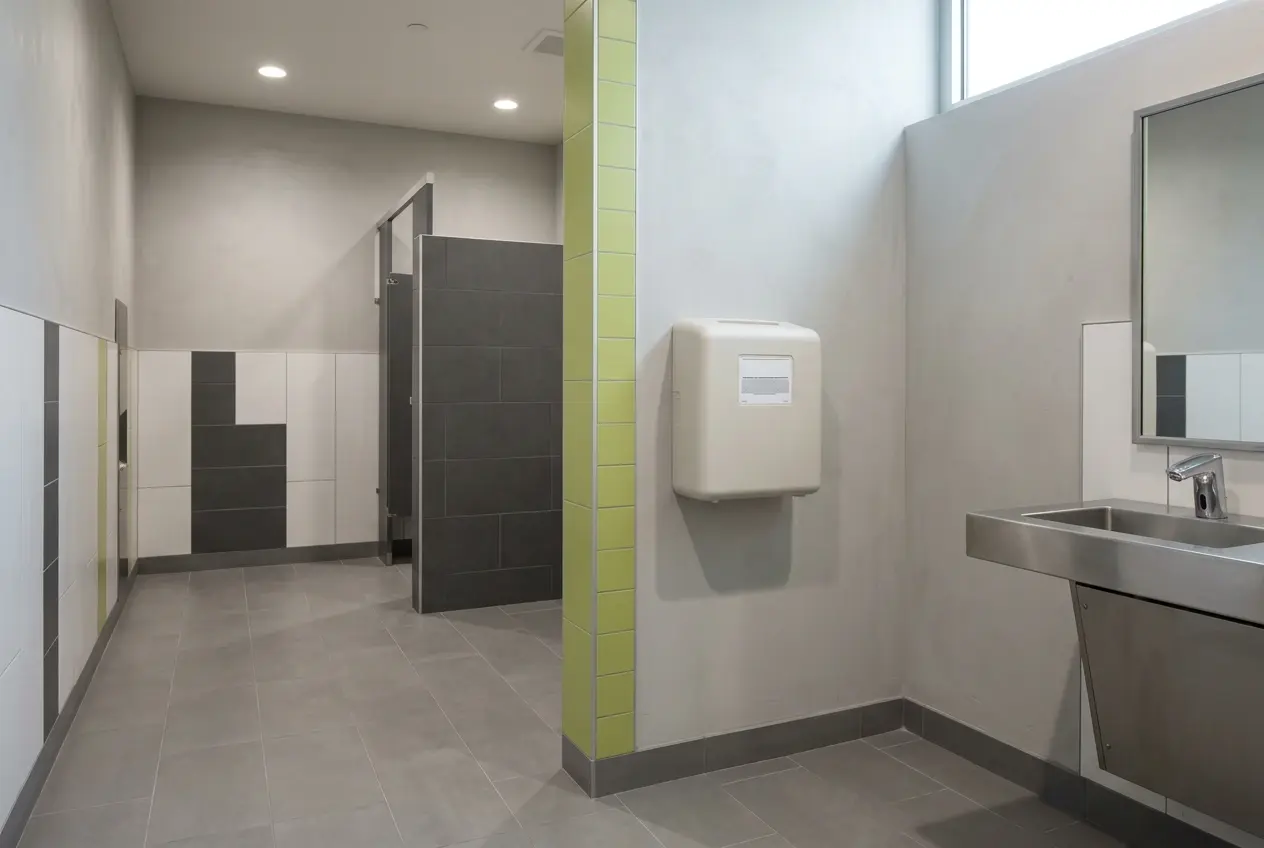
Choose the position from the user’s approach, not just from an available patch of wall. Someone should be able to find the unit, reach it and leave without obstructing circulation. Check the space with doors open and consider bags, mobility aids and other fittings that affect how people move through it.
Privacy and visibility need not conflict. The disposal point can be easy to locate without putting its user directly beside a queue or busy doorway. A secluded corner, however, may make faults harder for staff to notice. Aim for a discreet position that remains part of normal premises checks, rather than trying to monitor individual users.
Check Opening Hours and Site-Assessed Accessibility
NSW community sharps guidance identifies limited opening hours, access and privacy concerns as barriers to disposal. It also addresses container and packaging fit. These are useful practical considerations for selection, not a statement of WA legal duties.
A unit behind a locked amenity door cannot serve visitors outside those opening hours. Confirm the proposed mounting height and approach space through the site’s accessibility assessment rather than assuming one position suits every user.
Assess the Lock and Mounting Together
A lock controls access through the housing door, but it does not resolve every security question. Ask what restricts access through the disposal opening, who may unlock the enclosure and how keys will be controlled. Authorised servicing should not depend on a key held by someone who is rarely on site.
Confirm Mounting Suitability and Clearance for Servicing
Concealed fastening points are worth considering because they keep attachment points out of the exposed face. They do not, by themselves, establish that a unit cannot be removed or damaged. The mounting surface and installation method remain important. Provide the installer with the wall material and condition so that suitability can be assessed before committing to the position.
Retain enough clearance for normal use and authorised servicing. A housing can fit on a wall yet have its service door blocked by a nearby fitting. Look for possible contact from swinging doors, cleaning trolleys and bags, as well as obstructions that may appear later through storage.
If the position is exposed to weather or frequent splashing, obtain confirmation of suitability for those conditions. Do not infer outdoor performance from a robust appearance or from claims about another product.
Size Usable Capacity Around Servicing
Capacity is part of choosing a public sharps disposal unit, not an issue to defer until the housing has been chosen. Ask about the inner container’s permitted fill limit and how authorised personnel determine when replacement is needed. Cabinet volume is not storage capacity, and the container should not be treated as usable to its brim.
HealthyWA disposal advice identifies special needle and syringe disposal units as an option and warns against overfilling containers. It also advises against putting loose needles and syringes into recycling bins, drains or toilets. For a public installation, this reinforces the need for an available disposal point that remains within its intended capacity.
Set and Review the Collection Interval Against Expected Demand
Estimate demand from the setting and any existing service records, while allowing for uncertainty at a new location. Busy event periods, longer opening hours or accepted packaged returns may change how quickly usable space is taken up. A larger container may help, but only if its compatible housing and inlet suit the site.
Agree an initial collection interval and a way to review it after use begins. Repeatedly approaching the fill limit calls for changing capacity, collection frequency or provision, rather than continuing to rely on the original estimate.
Make Replacement Practical at the Chosen Location
The unit needs to work for the authorised servicing team as well as the public. Confirm whether servicing involves exchanging the inner container, replacing another component or a different agreed method. The buyer does not need handling instructions, but does need to understand what space, access and coordination the service requires.
Check how the team will reach the unit during collection hours. Locked doors, booking arrangements and temporary closures can prevent a planned visit even when the unit itself is suitable. Establish who provides access and how completion or a missed visit will be recorded. Cleaning attendance should not be mistaken for sharps servicing unless that responsibility is expressly included.
We provide sharps disposal services for premises in the Perth metro area, with public housings featuring a locking mechanism and concealed fastening holes. Discuss your proposed location, accepted items and compatible container with us alongside collection needs. These features are starting points, not confirmation that the arrangement suits your site. Avoid choosing a cabinet first and discovering later that its replacement container or service access does not suit the operation.
Assign Full, Blocked and Damaged Unit Responsibilities
Routine collection does not answer what happens between visits. Before choosing the arrangement, identify who receives reports of a full container, blocked opening, damaged housing or faulty lock. Assign a facilities contact and a backup so that a report does not remain unattended when one person is absent.
Agree how the responsible person will obtain qualified assistance and manage an unavailable disposal point. Specify who can restrict its use and how users will be directed to a confirmed alternative. A contact method at the unit should reach someone able to arrange a response, rather than simply record a complaint.
Separate Staff Reporting From Qualified Fault Response
Keep the boundary clear for general staff and visitors. They should not reach into the opening, push down contents or attempt to retrieve deposited items. A blockage is a reason to report the problem, not an invitation to make more space. Any loose sharps nearby require the site’s trained response, not an improvised task for the person who notices them.
When comparing service arrangements, distinguish routine collection from assistance with faults, damage or unexpectedly early filling. Confirm what can be arranged and who authorises it. Do not assume that a collection agreement includes immediate attendance or housing repairs.
Choose the Complete Arrangement, Not One Feature
Before approving a public sharps disposal unit, prioritise confirmed compatibility and access over a neat appearance or a larger advertised capacity. Check the complete arrangement:
- Can intended users find and access the unit at the assessed mounting height during the hours it is needed?
- Are accepted items, inlet fit and compatible replacement containers confirmed?
- Can authorised personnel service it before the fill limit is reached?
- Is someone responsible for faults, early filling and temporary loss of access?
A smaller, well-positioned installation with suitable collection may be more workable than a larger unit that is awkward to use or maintain. Where a critical answer remains uncertain, resolve it before installation rather than leaving staff or visitors to work around the problem.