













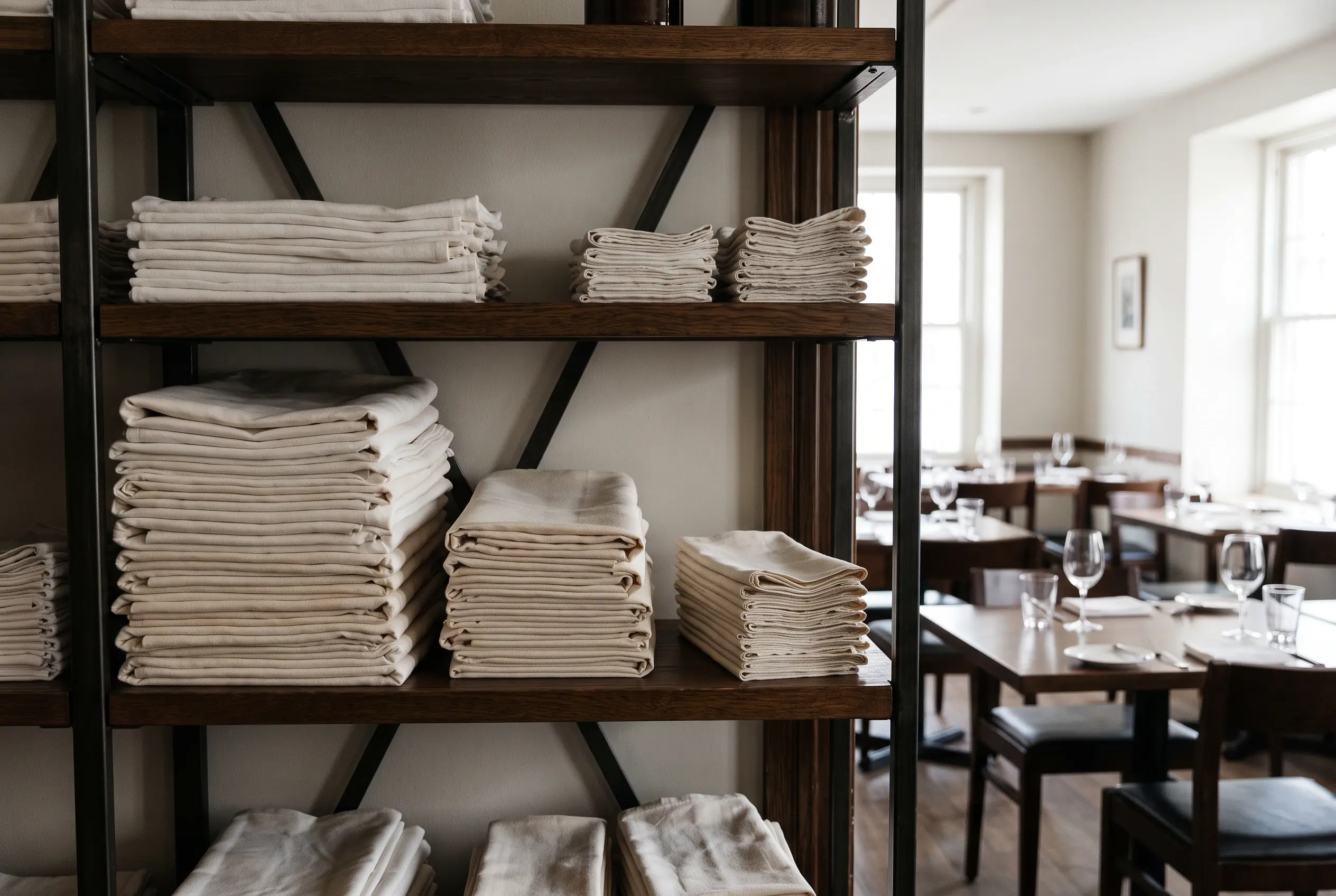
A restaurant can hold a substantial amount of linen stock and still run short during an ordinary week. A shortage can arise when stock levels are based on rough cover estimates, an unusually busy night or the total number of tables, rather than on the way the dining room is actually dressed, cleared and reset. A baseline should answer one practical question: how much clean linen must be available to support the venue's normal weekly restaurant service without relying on linen that has already been used or is awaiting replenishment.
Setting weekly restaurant linen stock levels is therefore a planning exercise, not a matter of applying a generic multiplier. Start with the floor plan, the table types in use and the linen required for each table or place setting. From there, calculate the demand for a typical service, account for the planned number of turns and establish how much clean linen needs to be available throughout the replenishment cycle. The result is a practical starting par level that can be reviewed against actual service requirements.
Define the normal week before counting anything
A baseline should reflect normal trading patterns rather than the busiest night the restaurant has hosted. Start with a representative week and identify the services that routinely require a full table reset. A breakfast venue, a lunch-and-dinner restaurant and a venue that trades only in the evening may use linen differently, even when their total weekly covers are similar.
Record the operating pattern clearly. Note which days the restaurant trades, whether lunch and dinner use the same floor plan, the usual number of turns for each table type, and whether table linen is changed between every seating or only when required. This prevents a calculation from treating every cover as identical when the dining room has different table sizes, layouts or linen requirements.
Keep peak-period demand separate from the ordinary baseline. A major function, holiday service or one-off group booking can increase linen use, but it should not automatically determine the stock level for every week. Recording exceptional demand separately makes it easier to understand why additional linen may be needed without distorting the calculation for regular trade.
Build an item map from the floor plan
The floor plan provides a more useful starting point than a single table count because it shows what needs to be dressed. List each table type separately, such as two-top tables, four-top tables, shared tables and round tables. Then identify the linen item required for each arrangement during a standard service.
A basic item map might include tablecloths by size, napkins and overlays. The purpose is to prevent one overall stock figure from hiding a shortage in a particular size or style. Having several spare tablecloths, for example, will not solve a shortage if they are unsuitable for the restaurant's most frequently used table size.
For each table type, record:
- The number of tables prepared for a normal service
- The linen pieces required per table or cover
- The specific size, material, colour or finish required for the planned presentation
A restaurant can also record linen used on side stations or display surfaces separately from its dining-table requirements. Keeping these items distinct makes it easier to calculate the quantities needed for each area without assuming that they form part of the same table linen requirement.
Calculate one service demand first
Once the item map is complete, calculate the linen required for one normal service before estimating the whole week's demand. For tablecloths, multiply the number of tables in each group by the number of cloths required for that arrangement. For napkins, multiply the expected covers by the number of napkins used per cover. If overlays are used only on selected tables, calculate them separately rather than averaging their use across the dining room.
For example, if a standard dinner layout uses 18 four-top tables with one cloth each, that service requires 18 cloths in the relevant size for the initial setup. If the same dinner expects 72 covers and uses one napkin per cover, the initial setup requires 72 napkins. These calculations use the actual layout and service plan rather than a stock figure carried over from a different room arrangement.
Where a table is reset for a later seating, record the additional linen use separately. A tablecloth changed between two planned turns represents two cloth uses across the service, but it does not automatically mean that two cloths must be available on the table at the same time. The restaurant needs to account for when the replacement cloth must be clean and ready for the next setup. Napkin demand, meanwhile, follows the number of covers and the restaurant's napkin-use practice rather than the number of tables.
Keeping table-based and cover-based requirements separate helps prevent inaccurate stock calculations. It also makes it easier to identify which items need replenishment more frequently during ordinary service.
Turn service demand into clean-set coverage
The next step is to establish how much clean linen must be available before the next replenishment. A clean set represents the quantity needed to dress the relevant tables or covers once. If the agreed service schedule provides clean linen weekly, include every planned service and reset between those deliveries, rather than counting only the next sitting. Used pieces awaiting collection or laundering should not be treated as clean stock available for another service.
A restaurant with one dinner service may need a different clean-stock position from a venue that turns tables at both lunch and dinner. Work through the normal replenishment interval in sequence and account for the linen required at each service. The calculation should consider when used items are removed, when replacement linen is needed and when the next scheduled delivery is expected.
For each item, total the planned requirements across the replenishment interval, then account for the clean linen that will be available at each point in the cycle. Add the restaurant's considered reserve separately. Where every service uses the same quantity, multiplying the one-service requirement by the number of services may provide a useful starting estimate. Where layouts, cover counts or reset requirements vary, calculate each service individually instead.
This approach helps distinguish total linen use over a period from the quantity of clean linen that must be available at one time. The two figures are not necessarily the same because collection, laundering, replenishment and service timing affect when individual pieces can be used again.
Set the reserve from observed pressure points
A reserve is most useful when it has a clear reason. Rather than applying the same percentage to every linen item, consider where normal service is most likely to create additional demand. A particular tablecloth size may need more flexibility because it fits a frequently used table type. Napkins may require a larger reserve if cover numbers regularly vary within the restaurant's normal trading range. An overlay used on only a small number of tables may need a different allowance.
Review recent ordinary services and identify what created pressure. Was a common table layout added at short notice? Did a reset require more linen than expected? Did an item need replacing before the next service? These observations can help the restaurant decide whether its existing reserve is appropriate. They also prevent a large reserve from becoming a substitute for an accurate demand calculation.
Keep exceptional functions and temporary peak periods outside the ordinary reserve. Record delivery shortfalls separately from linen consumption so that a supply discrepancy does not incorrectly increase the quantity estimated for normal trade.
Turn the baseline into an item and delivery schedule
Once the calculation is complete, organise the results into an item schedule. Each line should identify the linen item, its table type or intended use, the requirement for one service, the clean-stock coverage needed for the ordinary replenishment cycle and the reason for any additional reserve. This makes it easier to check whether the weekly restaurant linen stock figure is supported by specific requirements rather than a general total.
Keep the item specification beside each quantity when matching the schedule to the restaurant table linen supplied by Cleantex. The range includes different sizes, materials, colours and finishes. When planning quantities, record each required specification separately so that the restaurant does not treat different tablecloth options as interchangeable. A separate line for each required size and type makes the schedule more useful to the people preparing the dining room.
For Perth restaurant operators, from sole-proprietor venues to multi-chain businesses, Cleantex supplies tablecloths, overlays and napkins in a range of sizes, materials and colours.
Cleantex's managed linen rental service includes scheduled deliveries, with linen volumes and pickup and delivery arrangements tailored to the business. Restaurants should confirm their agreed service schedule and the clean linen expected for each replenishment, then check their own stock plan against every service before the next delivery. A weekly total alone will not show whether enough clean linen is available for the final service before replenishment.
Review the baseline when normal trade changes
A par level is a working baseline, not a figure to set once and forget. Review it after a sustained change in the normal floor plan, trading hours, seating pattern or the way table linen is used. Checking the figures after several representative weeks can provide a more reliable picture than reacting to one unusual service.
Return to the original question during each review: can the next ordinary service be dressed and reset using the clean linen normally available? If not, identify the item and service pattern behind the shortfall. If a substantial quantity remains consistently unused, the schedule may still reflect an earlier assumption that no longer matches the restaurant's current operations.
A useful baseline is specific enough to guide daily preparation and straightforward enough to review. By calculating demand from the actual floor plan, separating table-based requirements from cover-based use, accounting for replenishment timing and setting reserves around observed pressure points, a restaurant can establish a table linen position that supports regular service without confusing everyday requirements with exceptional peak demand.