













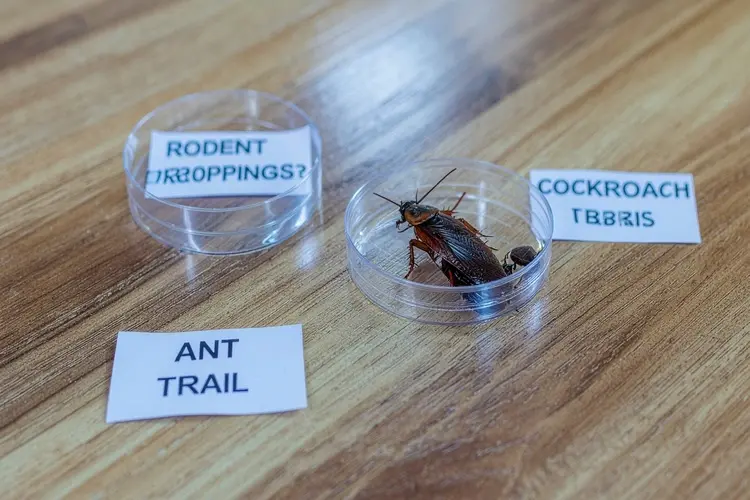
Finding pest droppings near the kitchen sink raises immediate questions for facility managers. Identifying which pest has invaded determines the response strategy and compliance requirements. Rodents, cockroaches, and ants each leave distinct evidence. This points trained observers toward the correct identification and appropriate control measures.
Accurate workplace pest identification prevents wasted effort on ineffective treatments. It ensures the actual pest threat is addressed before populations escalate. Understanding common business pests and their distinct evidence profiles is an essential skill. This applies to anyone responsible for commercial facility hygiene.
Trained technicians deliver comprehensive pest management. This service supports commercial facilities across the Perth metropolitan area and regional Western Australia. Through thousands of inspections, consistent evidence patterns emerge. These patterns distinguish rodent activity from cockroach infestations or ant invasions.
Physical Evidence: What Each Pest Leaves Behind
SWS Group approaches workplace pest identification systematically. Rodent indicators include droppings shaped like dark rice grains for mice. Rats leave larger capsule-shaped pellets. Fresh droppings appear moist and dark. They turn grey and crumbly within 48 hours. Gnaw marks on cables, cardboard, and structural timber show paired parallel grooves. These result from continuously growing incisors. Greasy rub marks appear along walls and baseboards. This happens where rodents repeatedly travel the same pathways. Nesting materials accumulate in secluded areas like ceiling voids or behind equipment. These materials include shredded paper, fabric, and insulation.
Cockroach evidence presents differently. Droppings resemble black pepper or coffee grounds. These scatter near food sources, in cupboards, and along wall-floor junctions. Irregular brown smear marks appear on walls near harbourage sites. Shed skins accumulate where cockroaches moult during development. A distinctive musty odour becomes noticeable in heavily infested areas. Brown egg cases measuring 8-10mm long attach to hidden surfaces. They may also drop in secluded corners.
Ant trails provide the clearest identification marker. Workers follow chemical pathways between food sources and nests. This creates visible lines of moving insects. Small piles of fine sawdust near wooden structures indicate carpenter ant activity. Soil mounds appear near building foundations or in landscaped areas. Unlike solitary pests, ants always indicate nearby colony presence.
Time Patterns: When Pest Activity Becomes Visible
Rodents operate primarily during darkness. Evidence appears overnight. Fresh droppings or new gnaw marks are discovered each morning. Security footage often captures movement between 10pm and 4am. Daytime sightings indicate severe infestation pressure. They may also indicate disturbance of established harbourage areas.
Cockroaches prefer nocturnal activity but respond to opportunity. Kitchen staff arriving early may encounter cockroaches near sinks. Switching on lights triggers rapid movement toward dark crevices. German cockroaches sometimes appear during daytime in heavily infested environments. This happens particularly near warmth sources like refrigeration motors or dishwashers.
Ant activity follows food availability rather than light cycles. Trails become visible whenever workers locate attractive food sources. Some species increase activity during warm weather. Others invade buildings during wet periods seeking shelter. Coastal brown ants often invade after rain. Black house ants maintain year-round activity in Perth.
Location Clues: Where Different Pests Concentrate
Rodents favour locations offering food, water, and shelter. Roof rats nest in ceiling voids, wall cavities, and upper building levels. Norway rats prefer ground-level harbourage. This includes subfloor areas, drainage systems, and outdoor burrows. Mice exploit both environments. All rodent species concentrate near consistent food sources. These include kitchens, storage areas, waste collection points, and staff break rooms.
Professional integrated pest management programs address these harbourage preferences. Technicians use targeted monitoring and exclusion strategies. Understanding where each pest concentrates allows technicians to place monitoring devices effectively.
Cockroaches require warmth, moisture, and food. German cockroaches concentrate in kitchens. They gather near dishwashers, ovens, and refrigeration equipment. American cockroaches prefer wet environments like drains and grease traps. Australian cockroaches often enter from outdoor harbourage sites. All species avoid light and prefer tight crevices during inactive periods.
Ants establish trails between outdoor nests and indoor food sources. Coastal brown ants typically nest outdoors but forage extensively inside buildings. Black house ants nest in wall cavities or subfloor areas. Singapore ants nest in extremely small cavities. They exploit minute entry points that other species cannot access.
Size and Appearance: Visual Identification Markers
Mouse droppings measure 3-6mm long with pointed ends. Rat droppings reach 12-18mm with blunt ends. Fresh rodent droppings glisten slightly. Aged specimens become dusty and grey. Roof rat pellets appear more curved than blockier Norway rat droppings. Accurate workplace pest identification relies on these size differences.
German cockroach adults measure 12-15mm. They feature two dark stripes behind the head. American cockroaches grow to 35-40mm with reddish-brown colouring. Australian cockroaches reach similar sizes but display yellow markings on the thorax. Nymphs appear smaller and darker without fully developed wings.
Coastal brown ants measure 2-3mm with brown colouring. Black house ants reach 2.5-3mm with glossy black bodies. Carpenter ants grow larger, reaching 6-12mm with distinctive heart-shaped heads. Singapore ants measure barely 1.5mm. This makes individual identification difficult without magnification.
Damage Patterns: How Each Pest Affects Materials
Rodent gnawing creates distinctive parallel grooves in materials. Electrical cables show stripped insulation with copper conductors exposed. Cardboard packaging displays torn edges and holes leading to contents. Timber framing exhibits fresh wood shavings near gnaw sites. Food packaging shows irregular holes with scattered contents.
Professional pest control programs prevent this structural and product damage. Early detection and targeted intervention occur before significant damage happens. This approach handles common business pests effectively.
Cockroaches contaminate rather than damage. Food products develop unpleasant odours and visible faecal spotting. Packaging shows smear marks but remains structurally intact. Paper products may exhibit surface feeding but rarely sustain significant damage. The primary concern involves contamination rather than destruction. This makes common business pests like cockroaches serious compliance risks.
Carpenter ants excavate smooth galleries in timber. This damage appears rougher than termite activity. Frass accumulates below activity sites. Structural timber weakens gradually over time.
Sound and Odour Indicators
Rodents produce scratching, gnawing, and movement sounds. These occur within wall cavities and ceiling voids. Scurrying becomes audible during quiet periods at night. Gnawing creates rhythmic scraping sounds. Vocal communication occasionally occurs during territorial disputes.
Cockroaches move silently. Mass movement when lights activate creates rustling sounds. Dozens of insects scatter simultaneously. Otherwise, cockroaches provide minimal audio indicators. Their primary identification signals are visual and olfactory.
Established rodent infestations develop a musky, ammonia-like odour from urine. Deceased rodents create decomposition odours. These smell initially sweet before becoming progressively unpleasant. Cockroach infestations generate characteristic musty, oily odours. These become noticeable when populations reach high densities.
Seasonal Patterns in Perth Workplaces
Rodent activity increases during autumn. Outdoor food sources diminish and temperatures drop. Buildings offer warmth, shelter, and consistent food availability. Breeding accelerates in favourable conditions. Mice produce litters every 21 days under optimal circumstances.
Cockroaches populations expand during warm months. German cockroaches maintain year-round activity in heated buildings. Reproduction accelerates above 25°C. Australian cockroaches invade from outdoor harbourage during summer. They retreat as temperatures cool.
Ant activity peaks during spring and summer for most species. Coastal brown ants invade after rain events regardless of season. Black house ants maintain activity year-round in Perth.
Facility managers must anticipate pest pressure and strengthen hygiene controls. Hotels and motels particularly require vigilant monitoring. Professional accommodation pest control prevents seasonal infestations from impacting guests.
Food Source Preferences: What Attracts Each Pest
Rodents consume diverse food types but prefer grains and seeds. Mice survive on 3-4 grams daily. They subsist on crumbs and minor spillage. Rats require 15-30 grams daily. Both species require water access.
German cockroaches consume virtually any organic material. This includes food residues, grease, paper, soap, and book bindings. American cockroaches prefer fermenting materials. They often inhabit drains and waste systems. All cockroach species can survive weeks without food. They do require regular water access.
Ants display species-specific preferences. Coastal brown ants favour sweet substances and protein sources. Black house ants prefer sugary materials. Singapore ants exploit microscopic food particles. Standard pest control programs prove less effective against this emerging pest. Food safety pest prevention requires understanding these specific dietary habits.
Professional Assessment: When Identification Requires Expertise
Ambiguous evidence requires professional evaluation. Mixed pest activity indicates multiple concurrent infestations. These situations demand coordinated responses. Unusual damage patterns suggest less common pests requiring specialist identification.
The food industry demands accurate identification for documentation. Providers offering HACCP compliant services specify pest species accurately. This occurs regularly in incident reports and control records. Professional identification ensures documentation accuracy and appropriate response protocols. Food safety pest prevention relies on accurate record keeping.
Emerging pest species occasionally appear in Perth workplaces. Similar threats occur in domestic settings, requiring expert residential pest control. Introduced species demand expert identification and specialised control approaches. Attempting standard treatments against unfamiliar pests wastes resources.
Pestpro technicians hold appropriate Western Australian licensing. Businesses must verify contractor licences and insurance certificates. Maintaining copies of these records supports compliance during health department audits.
Response Urgency: Which Pests Demand Immediate Action
Rodent sightings during business hours indicate severe infestation. This scenario requires an immediate response. Single rodent evidence warrants prompt professional assessment. Rodents reproduce rapidly and cause significant contamination. Proper workplace pest identification determines the correct urgency level.
Cockroaches in food handling areas demand immediate action. German cockroaches particularly require an urgent response. Populations double every 30-40 days under favourable conditions. Even single cockroach sightings warrant professional intervention.
Ant trails rarely constitute immediate health emergencies. They only require urgent action when contaminating sterile environments. Response timing depends on species, location, and operational impact.
Thorough sanitisation removes food debris and organic residue. This eliminates the pest attractants that allow populations to establish. Coordinated scheduling ensures cleaning protocols support monitoring device integrity.
Conclusion
Accurate workplace pest identification separates minor nuisances from significant compliance threats. Distinct evidence patterns point trained observers toward correct pest management solutions. SWS Group provides tailored integrated hygiene solutions. Not sure which services suit the business? Please call (08) 9336 6944 for an obligation-free consultation.