












Surface contamination represents a persistent challenge in commercial environments. High-touch areas like door handles, handrails, and shared equipment harbour bacteria and viruses despite regular cleaning. Traditional disinfection provides temporary pathogen reduction lasting only hours before recontamination occurs.
Antimicrobial surface protection technology offers extended defence against microbial growth. These treatments create protective barriers lasting up to 30 days on treated surfaces. However, understanding realistic capabilities and appropriate applications helps businesses make informed decisions about implementing this technology.
SWS Group provides antimicrobial surface treatments through Cleanpro's commercial cleaning division. These long-lasting protection systems complement regular cleaning protocols whilst reducing pathogen presence on high-touch surfaces across Perth workplaces.
The Science Behind 30-Day Antimicrobial Protection
Antimicrobial surface treatments function through molecular bonding with surface materials. The technology creates microscopic protective layers that mechanically disrupt bacterial cell walls and viral envelopes. This physical action differs fundamentally from chemical disinfectants that kill pathogens through toxic reactions then evaporate.
Protection durability depends on bonding strength and resistance to mechanical wear. Quality treatments form covalent bonds with surface molecules rather than simply coating surfaces. These chemical bonds withstand normal cleaning, hand contact, and environmental exposure whilst maintaining antimicrobial properties.
Pathogen reduction capabilities vary based on microbial type, surface conditions, and environmental factors. Laboratory testing demonstrates significant bacterial reduction on treated surfaces compared to untreated controls. However, no surface treatment eliminates all pathogens or replaces proper cleaning and hygiene practices in commercial environments.
How Antimicrobial Surface Treatments Work
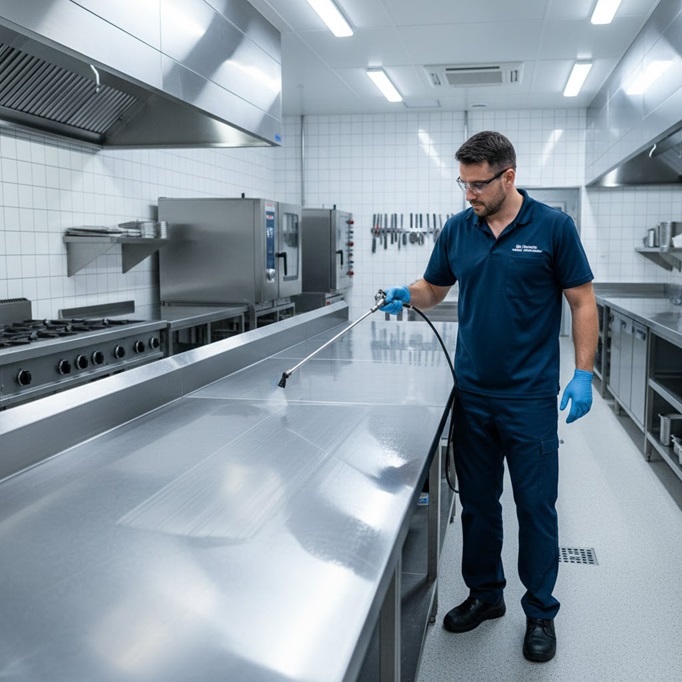
Application procedures begin with thorough surface cleaning removing existing contamination, oils, and debris. Clean surfaces ensure proper treatment adhesion and molecular bonding. Trained technicians apply solutions using electrostatic sprayers achieving consistent coverage across complex surface geometries and hard-to-reach areas.
Curing processes activate protection following application. Some formulations cure through air exposure whilst others require specific temperature or humidity conditions. Complete curing typically occurs within hours, after which surfaces resume normal use without special handling requirements or restrictions.
Coverage durability under normal use conditions reaches approximately 30 days on most surfaces. High-wear areas experiencing constant friction may show reduced protection duration. Environmental factors including cleaning chemical exposure, UV light intensity, and physical abrasion influence actual protection periods in real-world applications.
Industries and Applications Benefiting Most
Healthcare facilities gain significant value from antimicrobial surface treatments protecting patient rooms, examination areas, and common spaces. Extended protection reduces pathogen presence between cleaning cycles whilst supporting broader infection prevention strategies. Treatments complement hospital-grade cleaning standards required in medical environments.
Food service environments benefit from continuous antimicrobial action on food preparation surfaces, dining areas, and restroom facilities. Protection reduces cross-contamination risks whilst supporting HACCP compliance requirements. However, treatments supplement rather than replace mandatory cleaning and sanitisation procedures in food handling areas.
Education settings with high student populations experience constant surface contact throughout operating hours. Antimicrobial treatments on desks, door handles, and shared equipment provide ongoing protection between daily cleaning services. Schools implementing these technologies often report reduced illness-related absences during cold and flu seasons.
Comparing Traditional Cleaning to Long-Lasting Protection
Conventional disinfection requires frequent reapplication maintaining pathogen control in high-traffic environments. Healthcare facilities may disinfect critical surfaces multiple times daily. Office environments typically rely on nightly cleaning leaving surfaces vulnerable to contamination accumulation throughout business hours.
Labour cost implications of intensive cleaning protocols drive interest in extended protection technologies. Reducing disinfection frequency without compromising hygiene standards delivers operational efficiencies. However, antimicrobial treatments work best alongside regular cleaning rather than replacing it entirely.
Combined approaches maximise hygiene outcomes through complementary mechanisms. Regular cleaning removes visible soiling, organic matter, and gross contamination. Antimicrobial treatments provide continuous protection between cleaning cycles. This layered strategy addresses different aspects of surface hygiene creating comprehensive pathogen control.
Implementation Considerations for Perth Businesses
Surface compatibility assessment determines where antimicrobial treatments deliver optimal results. Most hard, non-porous surfaces including metals, plastics, glass, and sealed wood accept treatments effectively. Porous materials like unsealed timber, fabric, and some natural stones may show reduced bonding and shorter protection duration.
Initial application costs exceed traditional disinfection expenses but distribute across 30-day protection periods. Businesses should calculate cost-per-day rather than comparing single-application prices. When factoring reduced cleaning frequency and labour requirements, monthly costs often prove competitive with intensive traditional protocols.
Integration with existing cleaning schedules requires coordination between treatment providers and regular cleaning teams. Harsh cleaning chemicals or abrasive methods may degrade antimicrobial protection prematurely. Service providers should educate cleaning staff about compatible products and techniques preserving treatment effectiveness throughout protection periods.
Limitations and Realistic Expectations
Antimicrobial surface treatments cannot eliminate all pathogens or prevent disease transmission independently. These technologies reduce microbial populations on treated surfaces but do not create sterile environments. Businesses must maintain comprehensive hygiene programmes including hand washing, washroom services, and regular cleaning alongside surface protection.
Environmental factors affect protection duration in real-world applications. Surfaces exposed to direct sunlight, extreme temperatures, or chemical cleaning agents may experience shortened protection periods. High-traffic areas with constant physical contact show faster degradation than protected surfaces in low-contact zones.
Regulatory claims require evidence-based substantiation avoiding misleading marketing. Reputable providers base protection duration claims on standardised testing protocols demonstrating realistic performance. Businesses should request documentation supporting efficacy claims and understand testing conditions may differ from actual workplace environments.
Integrating Surface Protection with Comprehensive Hygiene
Effective workplace hygiene extends beyond surface treatments to encompass multiple preventive measures. Hand hygiene remains the single most important factor preventing pathogen transmission. Facilities combining antimicrobial surfaces with robust commercial cleaning services and employee education achieve superior outcomes.
High-traffic environments benefit from coordinated approaches addressing all contamination pathways. Entrance areas using floor mat rental services reduce tracked contamination whilst antimicrobial treatments protect door hardware and reception surfaces. This multilayer strategy creates cleaner environments through complementary interventions.
Sustainable hygiene programmes balance immediate pathogen reduction with long-term environmental responsibility. Technologies offering extended protection reduce cleaning chemical consumption and labour intensity. Combined with workwear rental preventing contamination spread and comprehensive facility management, businesses create healthier workplaces whilst advancing sustainability objectives.
Measuring Effectiveness and Programme Success
Objective measurement validates antimicrobial treatment effectiveness in specific environments. ATP testing quantifies organic contamination levels on treated versus untreated surfaces. Regular monitoring documents protection performance and identifies optimal reapplication timing based on actual conditions rather than arbitrary schedules.
Programme success extends beyond microbial counts to include operational outcomes. Businesses should track illness-related absences, cleaning labour hours, and chemical consumption before and after implementation. These metrics provide comprehensive assessment of treatment value beyond laboratory efficacy data.
Long-term programme management requires ongoing communication between treatment providers and facility managers. Surface conditions change as businesses renovate, add equipment, or modify operations. Regular reassessment ensures antimicrobial protection strategies evolve with facility needs whilst maintaining cost-effectiveness and hygiene standards.
Conclusion
Antimicrobial surface protection technology offers valuable tools for businesses seeking enhanced pathogen control in commercial environments. Understanding realistic capabilities, appropriate applications, and integration with comprehensive hygiene programmes helps Perth businesses make informed decisions. Professional implementation and ongoing management ensure treatments deliver maximum value whilst maintaining compliance with health and safety standards.
For information about long-lasting surface protection, contact SWS Group to discuss facility requirements. Call (08) 9336 6944 for expert guidance on commercial cleaning innovation.