











Factory floors present unique challenges that go beyond typical office environments. Dust accumulates in machinery, grease builds up on surfaces, and contaminants find their way into areas where workers spend hours each day. Understanding these risks helps facilities managers and operations managers protect both their teams and their production schedules.
SWS GROUP supports manufacturing businesses across Australia with integrated workplace hygiene services designed to address these exact challenges. This article explores the health, safety, and compliance risks that come with neglecting factory sanitation, and what you can do about them.
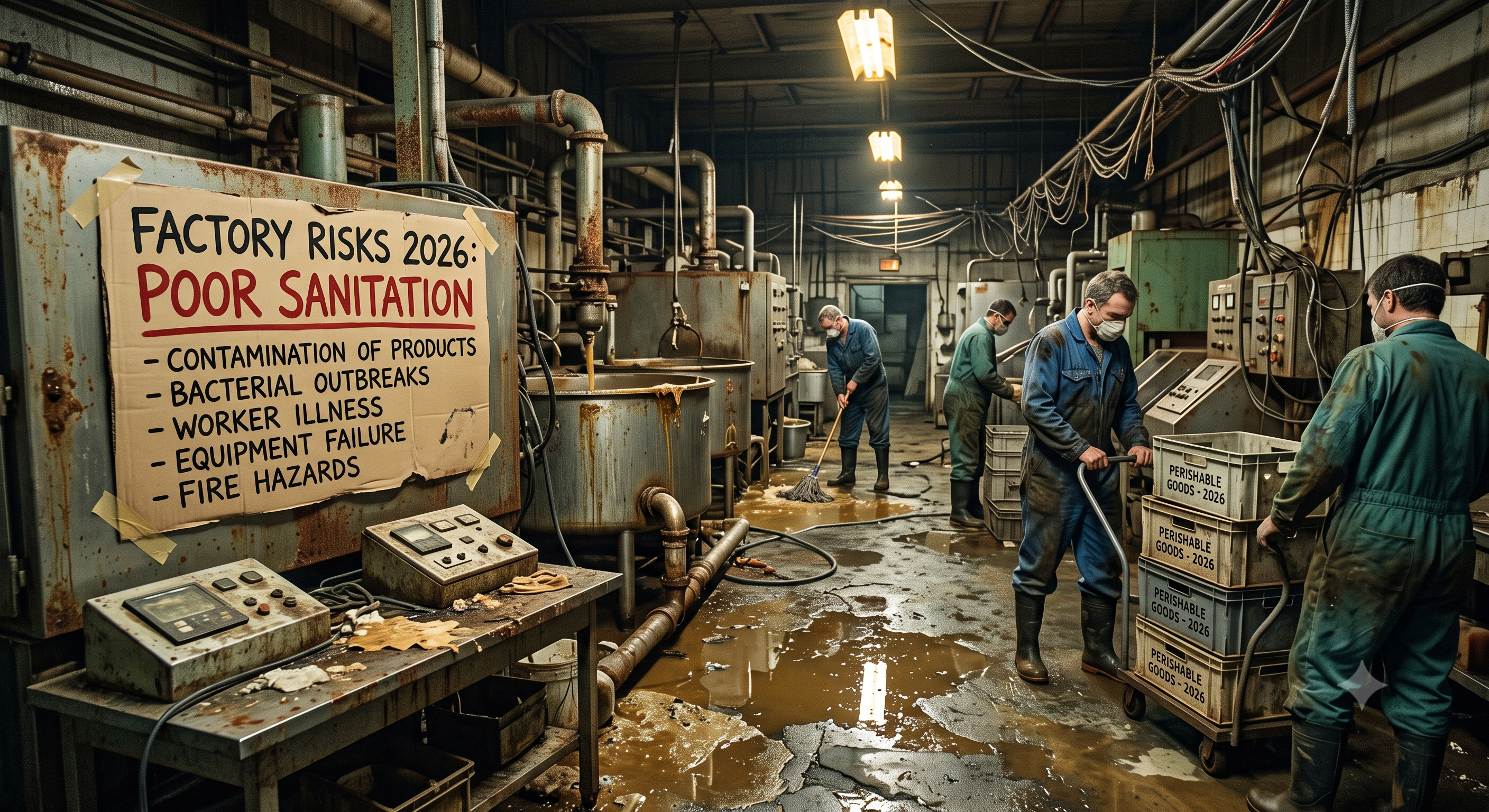
Key Takeaways: What Poor Factory Sanitation Risks in 2026
- Neglected factory sanitation increases worker illness rates and creates conditions for disease outbreaks across production floors.
- Equipment failures caused by dust and debris accumulation lead to unexpected downtime and potential injury hazards.
- Poor hygiene practices expose your business to WHS compliance violations, fines, and potential legal action.
- SWS GROUP delivers integrated industrial cleaning solutions that address health, safety, and compliance needs simultaneously.
- Regular professional cleaning reduces long-term maintenance costs while protecting your workforce and production timelines.
How Does Poor Factory Sanitation Affect Worker Health?
Your workers face direct health consequences when factory sanitation falls below acceptable standards. Dust particles, chemical residues, and biological contaminants accumulate on surfaces, equipment, and in the air they breathe throughout their shifts.
Respiratory conditions like asthma and bronchitis develop or worsen with prolonged exposure to airborne pollutants. According to research from the Industrial Safety & Hygiene News, private industry companies reported 460,700 workplace illnesses in 2022, representing a 26.1% increase from the previous year.
Take-home contamination represents another serious concern. Workers inadvertently transport hazardous substances like heavy metals, chemicals, and pathogens on their clothing, skin, and hair. This puts their families at risk and extends the impact of poor workplace hygiene beyond your factory walls.
What Safety Hazards Does Inadequate Factory Cleaning Create?
Dirty factory environments turn ordinary workspaces into hazard zones. Oil spills, leaked coolants, and accumulated debris create slip-and-fall risks that account for significant workplace injuries each year.
Equipment failures present another dangerous consequence. Dust and debris infiltrate sensitive machinery components, causing overheating and mechanical breakdowns. When equipment fails unexpectedly, workers face risks of burns, lacerations, and electrocution.
Pest infestations follow neglected cleaning practices. Rodents and insects establish themselves in areas where food residue, grease, and dirt accumulate. These pests carry diseases and create additional safety hazards for your workforce. Professional pest control programs work best alongside regular industrial cleaning.
Fire Risks from Accumulated Residues
Combustible dust and grease build-up create serious fire hazards in manufacturing environments. Many industrial materials become highly flammable when they accumulate in machinery, ventilation systems, and storage areas.
Regular deep cleaning removes these dangerous accumulations before they reach critical levels. This proactive approach protects your facility, equipment, and most importantly, your workers.
What Are the Compliance Consequences of Poor Factory Sanitation?
Australian Work Health and Safety regulations require employers to maintain clean and safe working environments. Safe Work Australia outlines specific requirements for workplace facilities and environmental conditions.
Failing to meet these standards exposes your business to inspections, citations, and financial penalties. More significantly, compliance failures indicate underlying risks that could result in serious worker injuries or fatalities.
Documentation matters as well. Regular cleaning schedules and maintenance records demonstrate your commitment to safety and can prove valuable during regulatory reviews. SWS GROUP provides detailed reporting and audit support through our customer portal, helping you maintain compliance documentation.
How Does Factory Sanitation Affect Production and Costs?
The financial impact of poor sanitation extends beyond fines and medical costs. Unexpected equipment downtime disrupts production schedules and costs more than planned maintenance. When machinery fails due to contamination, the repair costs often pale compared to lost production hours.
Worker absenteeism adds another cost layer. Sick employees cannot contribute to production, and illness spreads more rapidly in unsanitary environments. Studies show that sick leave rates reached a 10-year high recently, with improper sanitation accelerating disease transmission in industrial settings.
Equipment lifespan shortens when dust and debris accumulate on moving parts. Dirt acts as an abrasive, accelerating wear and requiring premature replacement of expensive components. Regular professional cleaning protects your capital investment and maximises equipment return on investment.
What Does Professional Industrial Cleaning Include?
Professional workplace hygiene services address sanitation challenges that internal teams often cannot manage effectively. Industrial-grade equipment and specialised cleaning agents tackle accumulated grime, grease, and contaminants on machinery, floors, and hard-to-reach areas.
SWS GROUP offers industrial cleaning programs tailored to manufacturing environments. Our local account teams understand the specific challenges facing Perth-area factories and deliver scheduled servicing that fits your production requirements.
Risk area identification forms part of comprehensive cleaning services. Trained professionals spot potential hazards during regular cleaning visits, from moisture accumulation to unidentified chemical residues. This early detection prevents small issues from becoming major problems.
High-Touch Surfaces and Equipment Sanitation
Control panels, door handles, and shared tools require frequent attention. These high-touch surfaces spread germs rapidly between workers and need sanitation with each shift change.
Non-product contact surfaces like walls, floors, and ceilings also require regular cleaning. These areas become breeding grounds for mould and pathogens when neglected, affecting air quality throughout your facility.
How Can You Create a Safety-First Sanitation Culture?
Building a culture where cleanliness becomes second nature requires management commitment and consistent practices. Clear sanitation policies set expectations for all employees, from production floor workers to supervisors.
Employee training reinforces proper hygiene practices. When workers understand the connection between sanitation and their own health, they become partners in maintaining clean workspaces rather than seeing cleaning as someone else's responsibility.
Partnering with professional cleaning providers ensures expert attention to areas that internal resources cannot adequately address. This combination of employee awareness and professional expertise creates the strongest defence against sanitation-related risks.
In Conclusion: Protect Your Factory with Professional Hygiene Services
Poor factory sanitation creates cascading risks that affect worker health, operational safety, regulatory compliance, and your bottom line. The consequences range from increased sick leave and workplace injuries to equipment failures and production disruptions.
Taking action now prevents these outcomes. SWS GROUP brings decades of experience in workplace hygiene services to manufacturing businesses throughout Western Australia. Our integrated approach addresses cleaning, pest control, and hygiene needs through one dedicated local team.
Your workers deserve a safe, clean environment. Your business deserves the efficiency and compliance that come with professional sanitation standards. Contact SWS GROUP to discuss how we can help protect your factory operations.
FAQs about What Poor Factory Sanitation Risks in 2026
What health problems can poor factory sanitation cause?
Poor factory sanitation leads to respiratory conditions like asthma and bronchitis from airborne dust and pollutants. Workers also face skin irritations, eye problems, and increased infection rates. Take-home contamination can extend these health effects to workers' families when they carry hazardous substances home on clothing and skin.
How often should factories schedule professional cleaning?
Cleaning frequency depends on your specific production environment and materials. Most manufacturing facilities benefit from daily surface cleaning, weekly deep cleaning of high-risk areas, and monthly comprehensive sanitation. SWS GROUP works with facilities managers to develop schedules that match your operational needs without disrupting production.
What regulations apply to factory sanitation in Australia?
Australian factories must comply with Work Health and Safety regulations that require clean and safe working environments. The WHS Act 2020 and related codes of practice outline specific requirements for workplace facilities, ventilation, and sanitation standards. SWS GROUP helps manufacturing clients maintain compliance through documented cleaning programs and regular audits.
Can poor sanitation damage factory equipment?
Yes, dust and debris accumulation damages machinery significantly. Contaminants cause overheating, increased friction, and premature wear on moving parts. Regular industrial cleaning extends equipment lifespan and reduces unexpected breakdown costs. Clean machinery also makes it easier to spot potential problems during maintenance inspections.
How does SWS GROUP support manufacturing hygiene needs?
SWS GROUP delivers integrated industrial cleaning that combines scheduled servicing with dedicated local account teams. Our programs include machinery cleaning, floor maintenance, and high-touch surface sanitation. We also offer complementary services like pest control, washroom hygiene, and workwear rental to address all aspects of factory sanitation through one provider.