













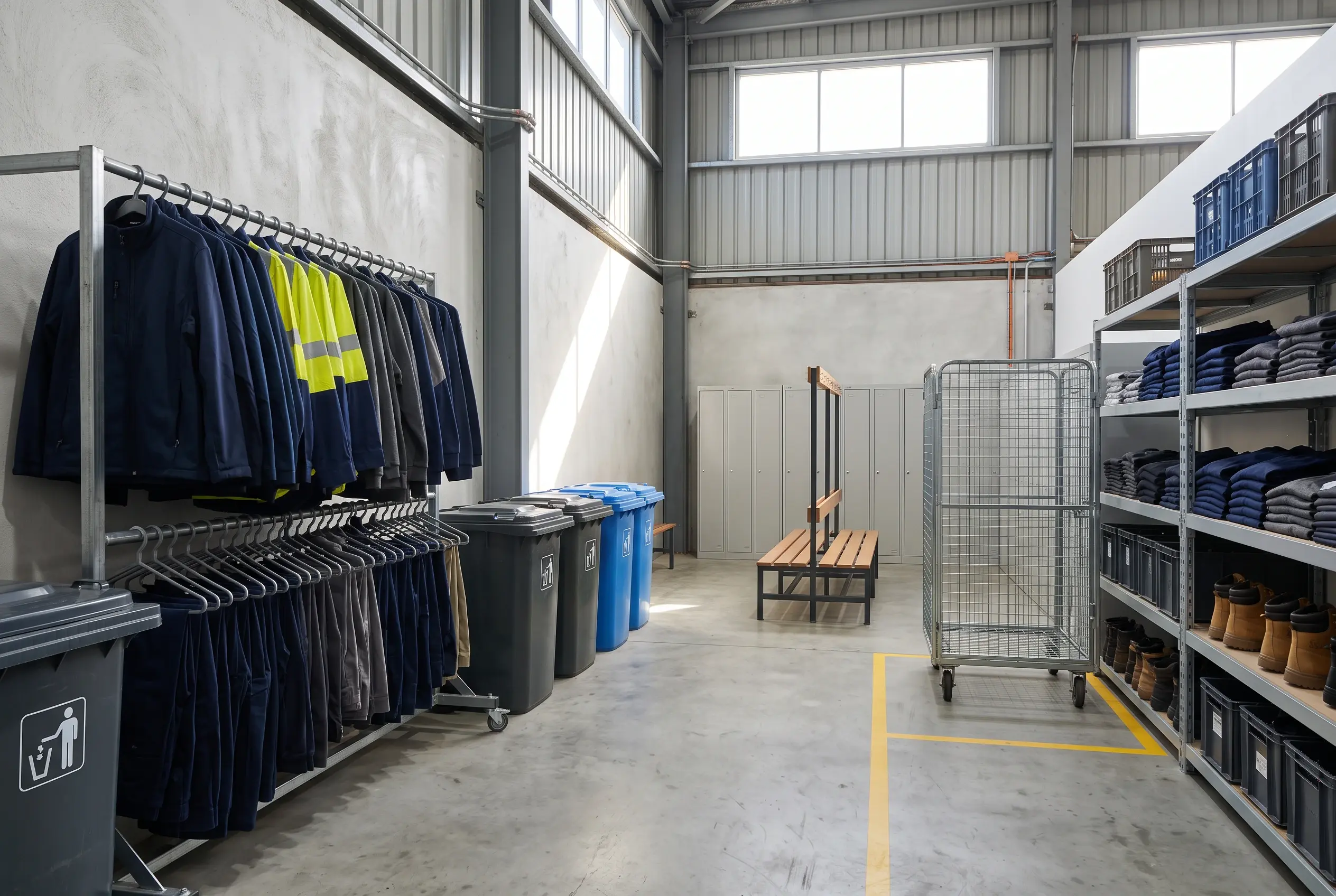
Workwear needs to be available when employees start their shifts, but keeping garments clean, accounted for and ready to use requires more than having enough uniforms on site. Businesses also need a clear process for collecting used garments, managing internal handovers and receiving clean workwear.
For Perth and other Western Australian businesses using a managed workwear service, the collection and delivery arrangement forms part of this process. When responsibilities and timings are understood, facilities can plan garment stock more effectively and reduce avoidable interruptions to daily operations.
Why Collection Rhythm Matters
A consistent collection arrangement helps businesses manage the movement of workwear between employees, the workplace and the laundry provider. Without clear procedures, used garments can be left in unsuitable areas, clean items may not reach the right teams, and available stock can become difficult to track.
These problems can affect different work areas in different ways. Production staff, front-of-house employees and specialist roles may require different garment types, quantities and internal distribution arrangements, even when they share the same external collection and delivery schedule.
A managed workwear arrangement can support this process through scheduled collection, professional laundering and the return of clean garments. The workplace still needs its own procedures for distributing uniforms, reporting issues and checking that sufficient stock is available.
Stock Gaps Often Begin With Timing
A shortage of clean workwear does not always mean a business has ordered too few garments. The issue may relate to how many items are in circulation, when used garments are made available for collection, or how clean stock is distributed after delivery.
For example, a team with several shifts may use more garments between deliveries than a team working standard office hours. Employees may also need replacement garments during a shift because of spills, heavy soiling or changes in work requirements.
Businesses should consider these patterns when deciding how much workwear to keep in circulation. The aim is to maintain enough usable stock to cover normal operations and foreseeable changes between scheduled services.
Cleantex's managed rental arrangements include weekly collection of soiled garments and delivery of clean garments for the coming week. Facilities should plan their internal stock levels around the agreed service schedule rather than assume that higher garment use automatically means more frequent provider collections.
Match Garment Requirements to Each Work Area
Different departments may need different workwear quantities, styles and handling arrangements. A production team, for instance, may require durable garments suited to its working environment, while front-of-house employees may need uniforms that maintain a consistent appearance throughout the day.
Healthcare settings have their own requirements. Clinics and day surgeries may use scrubs, lab coats and other garments suited to specific staff roles. These requirements should be considered when establishing garment allocations and internal distribution procedures.
Food-related workplaces also need to distinguish between different work environments. Food and beverage businesses may require uniforms such as chef wear and aprons, while food processing operations may have different garment and hygiene requirements. The appropriate workwear arrangement should reflect the actual activities carried out at the site.
Businesses can review the available healthcare workwear, industrial and automotive workwear and food and beverage workwear options when assessing garment requirements for their teams.
Make Collection Instructions Easy to Follow
Employees need to know where used garments should go and what to do when an item is damaged, missing or unsuitable for further use. Clear instructions help prevent garments from being left in changing areas, workspaces or other locations where they may be overlooked.
A practical procedure should explain:
- Where employees should place used workwear before collection.
- Who is responsible for checking collection points.
- How damaged, missing or unsuitable garments should be reported.
- What to do when an employee needs a replacement garment.
- Who should be notified if a collection or delivery is missed.
These responsibilities should be communicated during staff induction and reinforced when work areas, shifts or uniform arrangements change.
A damaged garment may require laundering, repair or replacement depending on its condition. Employees should follow the agreed reporting and handling process and confirm with the service provider whether the item can enter the normal collection cycle.
Design Practical Collection Points
Collection points should be easy for employees and service personnel to access without obstructing normal workplace activity. Their location should also make it clear where used garments belong and where clean items will be received.
Businesses should consider the number of employees using each collection point, the volume of garments generated and the available storage space. A single collection area may be suitable for a smaller workplace, while a larger site may need designated points for separate departments or buildings.
Used garments should be kept separate from clean workwear. Containers and storage areas should be appropriate for the garments being handled, and staff should follow the site's established hygiene and handling procedures.
Some managed workwear arrangements may also include locker facilities. Cleantex offers workwear locker rental, which can support the collection of used garments and delivery of clean workwear to designated lockers. The appropriate setup depends on the workplace and the service arrangement selected.
Account for High-Use and Specialist Garments
Garment requirements can vary according to the work being performed. Employees in industrial, automotive and food processing environments may use workwear that becomes soiled more quickly than uniforms worn in lower-soil settings.
Facilities should account for this when planning the number of garments in circulation. A higher-use team may need a larger working stock to cover garment changes between scheduled collections, particularly when employees work across multiple shifts.
Specialist garments also require appropriate care. Some protective clothing has specific cleaning, maintenance or handling requirements that differ from ordinary uniform laundering. Cleantex lists dedicated flame-retardant (FR) laundering within its industrial and automotive workwear offering, but facilities should confirm that the selected garment and service arrangement meet the relevant requirements.
WorkSafe WA's guidance on personal protective equipment (PPE) explains that PPE includes clothing designed to protect workers from particular hazards. It also distinguishes protective equipment from ordinary uniforms that are not intended to provide personal protection. Employers should ensure PPE is selected, maintained and used in accordance with the relevant workplace requirements.
Before placing unusual, contaminated or specialist protective garments into a routine laundry collection, the facility should confirm the applicable handling instructions and discuss the item's acceptance with the laundry provider. Cleantex's standard collection arrangements should not be assumed to cover every type of protective clothing or contamination. Employees should not open bags or attempt unapproved handling to identify an item.
Check the Full Garment Cycle
A reliable workwear process accounts for each stage of garment use, from distribution to collection and return. Looking at the full cycle can help facilities identify where items are being delayed, misplaced or removed from circulation.
Useful checks include:
- Garments issued: Confirm that employees have the correct types and quantities for their roles.
- Garments in use: Monitor whether teams have enough available workwear between scheduled services.
- Used garments awaiting collection: Check that items are placed in the correct designated areas.
- Clean garments received: Confirm deliveries are accounted for and moved into appropriate storage or distribution points.
- Damaged or missing items: Record issues and follow the agreed process for repair, replacement or investigation.
These checks can also help identify stock that is no longer needed or garment allocations that should be reviewed. Poor garment control can contribute to unnecessary replacements, duplicate orders and unused stock. Regular checks give facilities a clearer understanding of how workwear is being used.
Plan for Changes Before They Affect Operations
Changes in staffing, production levels and shift patterns can affect how much workwear a business needs. Seasonal demand, new employees, additional work areas and changes to operating hours may all affect garment use.
Facilities should review these changes before they create shortages. For example, a new shift may increase the number of garments required between weekly deliveries. A change in job responsibilities may also mean employees need different uniform types.
When introducing a new managed workwear arrangement, businesses should establish the initial garment quantities, collection points and internal responsibilities before the service begins. The first collection and clean delivery dates should be clear to the employees responsible for receiving and distributing workwear.
It is also useful to agree on who will communicate changes to the service provider. This gives the business a clear contact point for reporting missed collections, discussing stock requirements and reviewing service arrangements when operational needs change.
Review the Arrangement Regularly
A collection process should be reviewed when there are signs that it no longer supports the workplace. Repeated stock shortages, overflowing collection points, misplaced garments and frequent last-minute requests may indicate that internal procedures or garment allocations need attention.
Facilities can review collection records, employee feedback and stock levels to understand where problems are occurring. They should also check whether the agreed service schedule still suits the site's operating requirements.
Not every issue requires a change to the external collection frequency. In some cases, improving internal distribution, adjusting garment quantities or making collection instructions clearer may resolve the problem. Where the service arrangement itself needs to change, the business should discuss the available options with its provider.
Keep Workwear Moving Between Shifts
A clear collection rhythm connects clean workwear with the employees and shifts that need it. Businesses can support this by tracking garments by role and size, making internal handovers easy to follow, and reviewing stock levels before shortages become disruptive.
For workplaces using managed workwear rental, scheduled collection and delivery provide a structure for the laundry cycle. Clear responsibilities at the facility level help that arrangement work effectively, keeping garment movement organised and expectations understood across the site.