












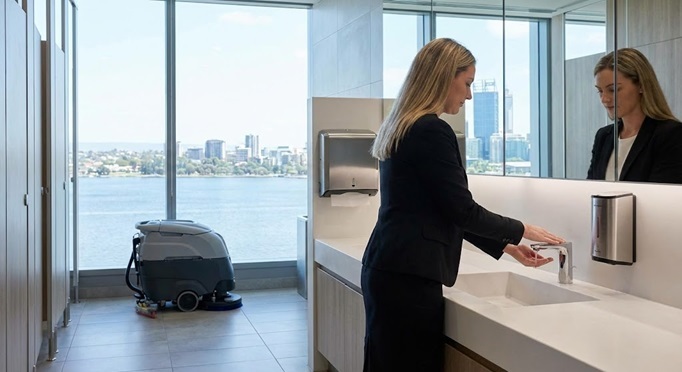
Commercial washroom hygiene has evolved beyond scheduled cleaning rounds and manual restocking. Perth businesses now face heightened expectations from staff, clients, and visitors who judge facility standards within seconds of entering a restroom. A poorly maintained washroom doesn't just create discomfort - it signals operational neglect, raises infection control concerns, and damages brand perception before a single business conversation begins.
Automated washroom hygiene systems address these challenges through technology-driven solutions that maintain consistent hygiene standards without relying solely on manual intervention. These systems combine sensor-activated hygiene equipment, scheduled sanitisation protocols, and real-time monitoring to ensure Perth commercial facilities meet workplace health and safety requirements whilst reducing labour costs and supply waste.
What Automated Washroom Hygiene Systems Actually Include
The term "automated washroom hygiene systems" encompasses several integrated technologies that work together to maintain restroom standards throughout operating hours.
Touchless Dispensing Technology forms the foundation through automated dispensing technology solutions. Sensor-activated soap dispensers, paper towel units, and toilet paper holders eliminate cross-contamination points where traditional manual dispensers spread bacteria. These units dispense controlled portions - typically 1.2ml of soap or 30cm of paper towel per activation - which reduces waste by 30-40% compared to manual systems where users take excessive amounts.
Scheduled Sanitisation Equipment includes automated toilet bowl cleaners that release hospital-grade disinfectant through scheduled sanitisation protocols at programmed intervals, typically every 50-100 flushes. Urinal sanitisers operate on similar principles, maintaining hygiene between cleaning visits. Air care systems dispense fragrance and odour neutralisers on timed schedules rather than relying on aerosol sprays that create inconsistent coverage.
Occupancy Monitoring Systems track restroom usage patterns through door sensors or infrared counters. This data identifies peak usage periods, enabling facilities teams to schedule cleaning rounds when they'll have maximum impact rather than following arbitrary timetables that may miss high-traffic periods.
Supply Level Monitoring represents the newest advancement in automated washroom hygiene systems. Smart dispensers transmit supply level data to facility management platforms, triggering restocking alerts before products run out. This eliminates the common scenario where visitors encounter empty soap dispensers or missing toilet paper - situations that immediately undermine hygiene standards regardless of how clean the physical space appears.
Industry-Specific Requirements Driving Automation Adoption
Different Perth sectors face distinct washroom hygiene challenges that make automated washroom hygiene systems particularly valuable.
Healthcare and Aged Care Facilities
Healthcare operations under stringent infection control protocols where manual touchpoints create unacceptable contamination risks require sensor-activated hygiene equipment. Automated washroom hygiene systems in these environments must meet hospital-grade standards, with dispensers constructed from antimicrobial materials and sanitisation equipment capable of eliminating pathogens including MRSA, C. difficile, and norovirus. The Western Australian Department of Health's infection prevention guidelines specifically recommend touchless fixtures in clinical settings, making automation a compliance requirement rather than an optional upgrade.
Food and Beverage Operations
Food and beverage businesses face HACCP requirements that mandate documented hand hygiene protocols for workplace hand hygiene compliance. Automated soap dispensers with usage counters provide verifiable data for health inspections, demonstrating that hand washing facilities remain functional and adequately supplied throughout service periods. Food and beverage businesses using automated dispensing technology solutions can generate compliance reports showing dispenser activation frequency, supply replacement dates, and system functionality checks - documentation that manual systems cannot provide.
Education Facilities
Education facilities contend with high-volume usage concentrated in short periods between classes. Traditional manual dispensers quickly empty during peak times, leaving students without proper hand hygiene access. Automated washroom hygiene systems with high-capacity reservoirs (holding 1,200-1,500ml of soap versus 400-600ml in manual units) maintain supply availability throughout the day whilst reducing the labour hours staff spend checking and refilling dispensers.
Accommodation and Hospitality Venues
Accommodation venues recognise that guest satisfaction correlates directly with restroom quality. Automated dispensing technology solutions ensure consistent presentation standards across all facilities, eliminating the variability that occurs when housekeeping teams manually restock supplies during rushed changeover periods. Sensor-activated fixtures also project a premium image that aligns with guest expectations in quality establishments.
Cost Analysis: Automation Versus Manual Approaches
Perth facility managers evaluating automated washroom hygiene systems typically focus on three cost factors: initial equipment investment, ongoing supply expenses, and labour allocation.
Equipment Investment varies significantly based on facility size and specification. A basic automated washroom hygiene system for a single commercial washroom (serving 20-30 daily users) costs approximately $1,200-$1,800 including touchless soap dispensers, paper towel units, toilet seat sanitiser dispensers, and air care equipment. Premium systems with antimicrobial housings, usage tracking, and smart monitoring capabilities range from $2,500-$4,000 per washroom.
These figures contrast with manual systems costing $300-$600 per washroom, creating an apparent cost barrier. However, the comparison becomes more nuanced when examining total operational expenses over a typical 5-year equipment lifecycle.
Supply Cost Reduction represents the most measurable benefit of automated washroom hygiene systems. Controlled dispensing reduces soap consumption by 35-45% and paper towel usage by 30-40% compared to manual dispensers where users take multiple pumps or handfuls. For a Perth office building with 100 employees, this translates to annual savings of approximately $800-$1,200 on hand hygiene supplies alone.
Automated toilet and urinal sanitisers reduce chemical usage through precise dosing that manual spray-and-wipe approaches cannot match. A commercial facility spending $2,400 annually on toilet bowl cleaners typically reduces this expense by 40-50% after implementing automated sanitisation systems through scheduled sanitisation protocols.
Labour Reallocation provides less obvious but equally significant value. Facilities staff spend an estimated 15-20 minutes per washroom per day checking supply levels, refilling dispensers, and addressing user complaints about empty units. Automated washroom hygiene systems with supply monitoring reduce this requirement to 5-8 minutes per washroom per day, primarily for scheduled restocking of high-capacity reservoirs that hold 3-5 times more product than manual dispensers.
For a Perth commercial property managing 8 washrooms, this represents 80-96 minutes of daily labour savings - approximately 7 hours per week that facilities teams can redirect toward higher-value maintenance tasks or commercial cleaning services that directly impact tenant satisfaction.
Integration With Broader Facility Management Systems
Automated washroom hygiene systems deliver maximum value when integrated with comprehensive facility service programs rather than operating as isolated solutions.
Coordinated Cleaning Schedules become possible when occupancy monitoring data informs cleaning round timing. Rather than cleaning all washrooms on fixed schedules regardless of actual usage, facilities teams can prioritise high-traffic restrooms during peak periods and adjust frequencies based on verified occupancy patterns. This data-driven approach typically reduces total cleaning labour by 12-18% whilst improving perceived cleanliness because cleaning occurs when and where it's most needed.
Preventive Maintenance Planning benefits from automated system diagnostics that identify equipment issues before they impact users. Smart dispensers transmit alerts when batteries require replacement, sensors need cleaning, or mechanical components show performance degradation. This enables scheduled maintenance during low-traffic periods rather than reactive repairs after users report malfunctions.
Hygiene Compliance Documentation becomes streamlined when automated washroom hygiene systems generate usage logs, supply replacement records, and maintenance histories. Perth businesses in regulated industries can produce comprehensive hygiene audit trails demonstrating continuous compliance with WHS requirements and industry-specific standards for workplace hand hygiene compliance.
Supply Chain Optimisation improves when facilities teams receive advance notice of supply requirements rather than discovering empty reservoirs during routine checks. Automated monitoring systems typically provide 3-5 days' notice before supplies run out, enabling consolidated ordering that reduces delivery frequency and associated logistics costs.
Cleanpro's washroom service model exemplifies this integrated approach by combining automated dispensing systems with scheduled supply delivery, equipment maintenance, and hygiene monitoring. Rather than managing multiple vendors for equipment, supplies, and service, Perth facilities receive a single coordinated solution with one point of accountability.
Implementation Considerations for Perth Commercial Properties
Successful deployment of automated washroom hygiene systems requires addressing several practical factors specific to Perth's commercial environment.
Power Supply Requirements vary by system type. Battery-powered dispensers offer installation flexibility without electrical modifications, making them ideal for heritage buildings or leased spaces where permanent fixtures require landlord approval. High-quality battery systems operate 12-18 months between replacements, though facilities should budget approximately $60-$80 annually per dispenser for battery costs.
Hardwired systems eliminate battery replacement but require licensed electrical work during installation. Perth facilities planning major renovations should specify electrical outlets in washroom locations to support hardwired systems, reducing total installation costs by 30-40% compared to retrofit projects.
Water Quality Factors affect equipment longevity in Perth's hard water environment. Automated toilet and urinal sanitisers contain components that can accumulate mineral deposits, reducing effectiveness over time. Systems designed for Australian water conditions include descaling features or specify quarterly maintenance procedures to address mineral buildup. Facilities using automated sanitisation equipment should verify that service agreements include descaling as part of routine maintenance rather than treating it as a billable repair.
Vandalism Resistance matters particularly in public-access facilities or venues serving intoxicated patrons. Commercial-grade automated dispensers feature tamper-resistant housings with hidden fasteners and impact-resistant materials. Perth venues with higher vandalism risk should specify commercial rather than light-commercial equipment specifications, accepting 25-35% higher initial costs in exchange for significantly longer service life and reduced replacement frequency.
Supply Compatibility requires attention during system selection. Some automated dispensers use proprietary cartridges or refills available only through specific suppliers, creating vendor lock-in that limits competitive pricing. Open-system dispensers that accommodate standard bulk soap or paper products provide greater flexibility and typically reduce supply costs by 15-25% compared to proprietary systems.
Technology Evolution and Future Capabilities
Automated washroom hygiene systems continue advancing as sensor technology, connectivity, and data analytics mature.
IoT Integration enables real-time facility management through cloud-based platforms that aggregate data from multiple locations. Perth businesses with distributed facilities can monitor washroom conditions across their entire property portfolio from a central dashboard, identifying performance patterns and optimising resource allocation. Current-generation systems provide basic supply level monitoring; next-generation platforms will offer predictive analytics that forecast supply requirements based on historical usage patterns and scheduled occupancy changes.
Hygiene Verification Systems represent an emerging category that moves beyond supply monitoring to measure actual hygiene outcomes. Prototype systems under development include ATP (adenosine triphosphate) sensors that detect biological contamination on surfaces, UV verification systems that confirm sanitisation effectiveness, and air quality monitors that measure odour compounds rather than simply masking them with fragrance. These technologies will enable facilities teams to demonstrate verified hygiene standards rather than relying on visual inspection and user feedback.
Water Conservation Features address Perth's ongoing water management challenges. Automated systems currently in development include greywater-compatible soap formulations, ultra-low-flow sensor taps that deliver effective hand washing with 40% less water than current models, and toilet sanitisation systems that reduce flush frequency requirements through more effective bowl coatings.
Accessibility Enhancements focus on ensuring automated washroom hygiene systems serve users with diverse physical capabilities. Voice-activated dispensers, adjustable-height fixtures with motorised positioning, and tactile feedback systems for vision-impaired users represent accessibility features that will become increasingly common as Perth facilities address universal design requirements.
Measuring Return on Investment Beyond Cost Savings
Whilst supply reduction and labour savings provide quantifiable financial benefits, automated washroom hygiene systems deliver additional value that facility managers should consider during evaluation.
Tenant and Employee Satisfaction improves measurably in facilities with automated washroom systems. Perth commercial properties that implemented touchless fixtures report 15-25% fewer tenant complaints about washroom conditions and 30-40% reduction in maintenance requests related to empty dispensers or malfunctioning equipment. Employee satisfaction surveys consistently rank washroom quality among the top five factors influencing workplace perception, with automated washroom hygiene systems scoring 20-30% higher than manual facilities in cleanliness and modernity ratings.
Brand Perception Impact matters particularly for client-facing businesses where washroom quality influences customer judgement about overall operation standards. Hospitality venues, professional services firms, and healthcare facilities recognise that clients form lasting impressions based on washroom experiences. Automated dispensing technology solutions signal attention to detail and investment in quality that extends beyond visible public spaces.
Risk Mitigation Value becomes apparent when considering the costs of hygiene-related incidents. A single norovirus outbreak in a Perth aged care facility costs an estimated $15,000-$30,000 in medical expenses, temporary staffing, deep cleaning, and reputation management. Automated hand hygiene systems that ensure continuous soap availability and touchless operation reduce infection transmission risks that can trigger these expensive incidents.
Competitive Positioning affects Perth businesses competing for quality-conscious customers or tenants. Commercial office buildings with automated washroom facilities achieve 8-12% higher tenant retention rates than comparable properties with manual systems, reducing turnover costs that typically equal 6-12 months of rental income per departing tenant.
Selecting the Right System for Specific Facility Requirements
Perth facilities vary dramatically in size, usage intensity, user demographics, and hygiene requirements. Effective system selection matches equipment capabilities to actual operational needs rather than simply choosing the most advanced (and expensive) available technology.
Small Commercial Facilities (1-3 washrooms serving under 50 daily users) typically achieve optimal value from battery-powered touchless soap and paper towel dispensers combined with scheduled air care systems. Total investment of $1,500-$2,500 delivers the primary benefits of touchless operation and controlled dispensing without the complexity of networked monitoring systems that provide limited value in small-scale applications.
Medium Commercial Properties (4-10 washrooms serving 50-200 daily users) benefit from supply monitoring capabilities that justify the additional equipment cost. Smart dispensers with low-supply alerts prevent the stockouts that become increasingly likely as facility size grows. These properties should also consider occupancy monitoring to optimise cleaning schedules across multiple restrooms with varying usage patterns.
Large Commercial Complexes (10+ washrooms serving 200+ daily users) require integrated facility management platforms that aggregate data across locations and enable coordinated service delivery. Enterprise-grade systems with predictive analytics, automated service scheduling, and comprehensive reporting capabilities deliver measurable ROI through labour optimisation and supply chain efficiency that smaller facilities cannot achieve.
High-Hygiene Environments (healthcare, food processing, childcare) should prioritise hospital-grade equipment with antimicrobial housings, frequent sanitisation cycles, and compliance documentation capabilities over cost considerations. These facilities face regulatory requirements and liability risks that make premium automated washroom hygiene systems essential rather than optional investments.
Conclusion
Automated washroom hygiene systems transform Perth commercial facilities from reactive maintenance models to proactive hygiene management that maintains consistent standards throughout operating hours. These systems reduce supply waste by 30-40%, decrease labour requirements by 40-50%, and eliminate the compliance gaps that occur when manual approaches fail during peak usage periods through sensor-activated hygiene equipment and scheduled sanitisation protocols.
The technology has matured beyond early-generation equipment that required frequent service and offered limited reliability. Current systems provide 3-5 year service life with minimal maintenance, making them practical solutions for Perth businesses across all sectors rather than premium options reserved for flagship properties.
Facilities considering automated washroom solutions should evaluate total operational costs rather than focusing solely on initial equipment investment. The labour savings, supply reduction, and risk mitigation benefits typically generate positive ROI within 18-24 months for medium and large commercial properties, with small facilities achieving payback in 24-36 months.
Cleanpro delivers comprehensive washroom solutions that integrate automated dispensing technology solutions with scheduled supply delivery, equipment maintenance, and hygiene monitoring. This coordinated approach ensures Perth businesses receive consistent washroom standards without managing multiple vendors or tracking separate service schedules.
Facility managers ready to implement automated washroom hygiene systems or evaluate current washroom service performance can get in touch for an obligation-free facility assessment. The evaluation identifies specific hygiene challenges, quantifies potential cost savings, and recommends equipment specifications matched to actual operational requirements rather than generic solutions.
Perth's commercial facilities deserve washroom standards that protect health, project professionalism, and operate reliably throughout demanding business conditions. Automated washroom hygiene systems deliver these outcomes whilst reducing the operational burden that manual approaches place on facilities teams.