













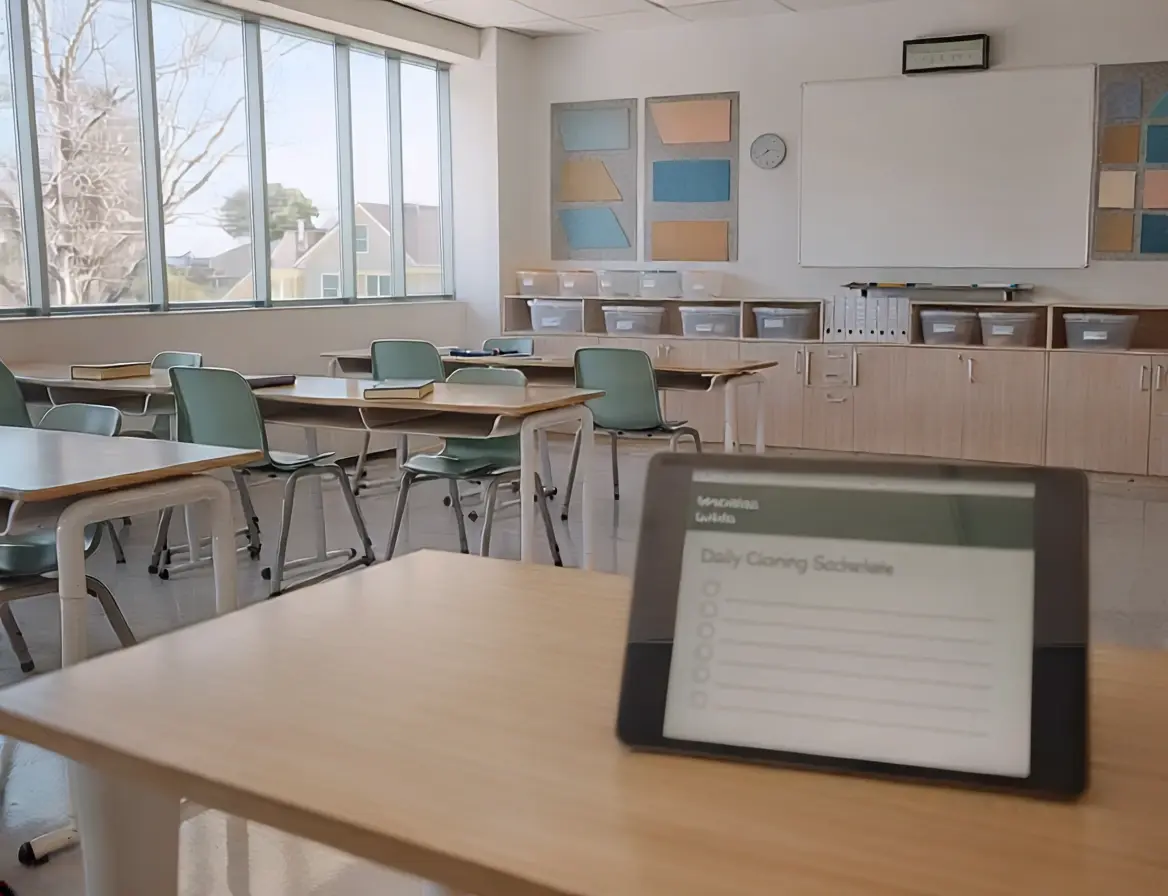
An education facility changes character repeatedly through the day. Students arrive in concentrated waves, rooms switch between classes, shared resources move between groups and outdoor conditions are carried into corridors and learning spaces. An office routine built around desks, meeting rooms and a stable adult workforce does not automatically account for that movement.
A useful education plan follows the timetable and the transitions within it. It considers what changes when one class leaves, another enters, an event takes over a hall or a holiday project opens areas that are normally occupied. Suitable access, clear responsibility for teaching resources and timely communication let facilities staff coordinate cleaning with teaching activity instead of forcing a stable office routine onto a changing campus.
Separate teaching transitions from office-style access
An office routine often assumes desks, corridors and meeting rooms become available in a predictable pattern. Education facilities change through class turnover, specialist lessons, assemblies and shared-space bookings. Start by marking the points when teaching activity releases a room, not simply the times when the building is open.
Use the timetable to distinguish three decisions an office specification cannot answer: which rooms retain teaching resources, which spaces change occupants between periods, and which events or term-calendar projects require a separate arrangement. Exam blocks, pupil-free days and shortened schedules belong in that decision record because they change access and room setup.
Describe room types by what changes inside them
General classrooms, libraries, computer rooms, practical learning areas, halls, administration offices and staff workrooms do not behave like interchangeable boxes. For each room type, note fixed surfaces, movable furniture, ordinary occupancy and what must be prepared for the next user group. This creates repeatable instructions without writing a different specification for every room number.
Administrative spaces can keep an office-style sequence where it suits their use, but teaching rooms need a transition-led view. Chairs may be rearranged, materials may remain on tables and equipment may be active. Cleanpro's dedicated school cleaning service should therefore be briefed on room types, release windows and the items retained by teaching or technical staff. These are the distinctions to test when comparing school cleaning services.
Plan around the change from one occupant group to the next
The interval between occupants may be only a few minutes, so the plan should distinguish a quick room reset from work that requires full access. A quick reset might address agreed presentation items that can be reached without moving teaching materials. Floor work, detailed furniture attention or tasks involving drying time may belong after the final class or in another vacant period.
Agree on a simple access signal. A room that appears empty may still contain equipment set up for the next lesson, while a booked room may become unexpectedly free. Teaching staff or the facilities contact should be able to release the space and state how long it will remain available. This reduces doorway negotiations and prevents short openings from being wasted.
Keep shared learning resources with the right owner
Books, devices, art materials, tools and practical teaching resources can move between rooms or users. A broad instruction to clean everything shared is unworkable and can interfere with storage, charging, preparation or subject-specific care. List the accessible fixed surfaces included in cleaning, then name the resources retained by teaching, library or technical staff.
The ownership map should cover trolleys, return points and temporary collections as well as individual items. If staff prepare a set of resources for attention during a holiday project, they can place it in an agreed location and describe the requested task. Clear preparation and return arrangements matter more than assuming every shared object follows one generic treatment.
Follow movement routes through each transition
Entrances, covered walkways, stairs, corridors and gathering areas can change rapidly when groups move together. Map the routes used at arrival, between classes, during breaks and at departure. Wet weather, outdoor activity and event setup may alter which path shows visible soil or litter first, so observation should follow the current movement pattern.
Place checks after predictable surges rather than during them. A quieter interval can be used to assess the route and address an agreed issue without competing with student movement. If one corridor repeatedly changes after a particular break, facilities staff can adjust the timing or route. This is a timetable decision, not evidence that the whole campus needs a heavier cleaning method.
Give amenities and common areas their calendar cues
Amenities, libraries, multipurpose rooms used as common spaces, halls and reception areas can experience concentrated demand at different moments. Their cleaning windows should reflect assemblies, break periods, visitor appointments and after-school activities. Where the facilities plan also covers supply and dispenser arrangements, a washroom consumables service is a separate option to define, including who monitors stock and how low quantities are reported.
Common spaces may also switch purpose. A hall can move from ordinary student use to an examination layout, performance setup or parent event. The plan should identify who releases it after setup or pack-down and what reset is expected before the next booking. That calendar cue is more reliable than assuming a fixed nightly task always finds the room in the same state.
Reserve holidays for defined projects, not a vague deep clean
Term breaks can provide longer access for periodic work where the task suits the site's surfaces and agreed scope. Choose projects from observed need rather than treating a quieter campus as a reason to add every possible service. Useful options to assess include:
- carpet work in rooms that can be cleared and released
- window cleaning around access and other contractors
- hard-floor attention with enough time before the area returns to use
- pressure washing for suitable external surfaces and routes
- detailed room projects prepared by teaching or facilities staff
Plan before the final teaching day. Confirm which buildings remain active, what furniture or resources staff will prepare, where maintenance teams are working and when completed areas return to use. Periodic commercial cleaning services such as carpet care, window cleaning, hard-floor attention or pressure washing can be scoped separately from the ordinary term routine and sequenced around other holiday work.
Treat events as temporary operating plans
Open days, performances, examinations, enrolment sessions and community bookings can redirect people into areas that are usually quiet. The event organiser should provide the location, setup period, expected attendance pattern, visitor routes and reset deadline. Facilities staff can then decide whether the normal sequence moves, a targeted check is added or no change is needed.
Include pack-down in the request. Cleaning immediately before staging, furniture movement or display removal may create avoidable repeat work. A temporary event plan should show when the area is released and which team owns decorations, equipment, packaging and furniture. Once the event is complete, close the exception rather than allowing it to become an unexplained permanent addition.
Give facilities staff one coordination view
Facilities staff need a concise picture of rooms available today, event changes, holiday projects and unresolved access issues. Bring those items together in one schedule or handover rather than collecting separate verbal requests from teachers and cleaners. Each entry should name the location, available window, requested action and person who can answer an access question.
Feedback should lead to a calendar or responsibility decision. A repeatedly unavailable classroom may need a different slot, while recurring marks after outdoor activity may require a route check at another time. The facilities contact can communicate the agreed change to teaching staff and the cleaning team, preserving a workable plan without turning every local issue into a campus-wide revision.
An education facility cleaning plan is easier to manage when the timetable, room function and campus calendar set the sequence. Teaching resources stay with the right owner, events receive temporary arrangements and term breaks are reserved for defined projects rather than a vague catch-all clean.
Before term-time service is finalised, identify the teaching resources that remain with staff, the signal that releases a room after class turnover and the holiday or event work that needs separate scope. Those three decisions turn an office-style routine into an education-facility plan without relying on one generic campus schedule.