













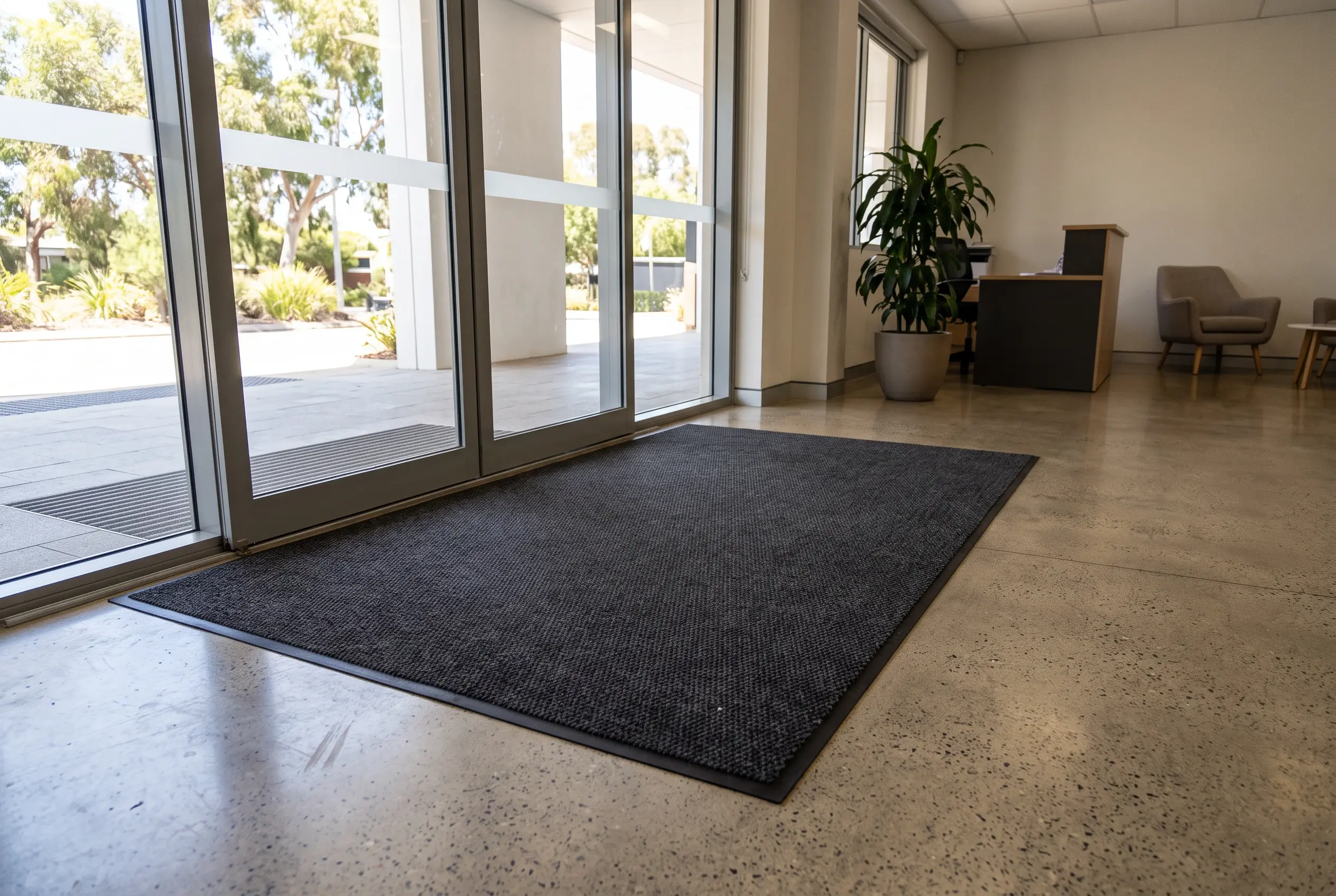
Entrance mats are exposed to dirt, moisture and regular foot traffic throughout the working day. In commercial buildings, they help collect some of the debris carried indoors on footwear before it reaches internal floors. Their effectiveness, however, depends on their condition, placement and suitability for the entrance.
For Perth businesses, managing entrance mats involves more than positioning one beside the doorway. Facilities teams need to consider how many people use each entrance, changing weather conditions, the surrounding flooring and how quickly mats become soiled.
Regular inspections and a suitable exchange arrangement can help keep entrance areas presentable while identifying problems before mats become heavily soiled or damaged.
Why Entry Mats Need a Service Rhythm
An entrance mat gradually collects dirt and moisture as people walk across it. The rate at which this happens varies according to foot traffic, weather and the activities taking place inside the building.
A busy reception area may experience more frequent use than a staff entrance or a doorway serving a restricted work area. As a result, one cleaning or replacement schedule may not suit every entrance across a commercial property.
Facilities teams should consider the condition of each mat alongside its daily use. Entrances exposed to heavier traffic may accumulate soil more quickly, while changes in weather can increase the amount of moisture brought indoors. Regular checks help establish whether the existing mat arrangements remain suitable for the conditions.
Soil Control Starts at the Doorway
People can carry dust, grit and other debris into a building on their footwear. Entrance mats provide an initial surface for collecting some of this material, helping limit how much reaches internal floors.
Their position and size influence how effectively they serve this purpose. A mat should provide sufficient coverage for the walking route without obstructing doors, narrowing access or creating difficulties for people using wheeled equipment.
Facilities teams should also consider the direction in which people approach and leave the entrance. A mat placed outside the main walking route may receive little use, even if its size appears suitable.
Regular checks can identify accumulated soil, movement or damage that affects the mat's position and condition.
Moisture Changes the Risk Profile
Rainwater and wet footwear can introduce moisture into entrance areas, making the condition of both mats and surrounding floors important. Although entrance mats can collect some moisture, they should not be treated as a complete solution to wet-floor conditions.
Facilities teams still need to monitor the flooring around each entrance and address moisture through their normal cleaning and hazard-response procedures. Suitable drainage and appropriate mat placement can also help manage water brought inside during wet weather.
Comcare's office floor safety guidance discusses considerations such as non-slip matting at wet entrances and checking entry drainage. These measures should form part of a wider approach to keeping access routes in suitable condition.
Matching Mat Types to Facility Use
Different entrances have different requirements. A reception area, warehouse access point and staff doorway may experience different levels of foot traffic and exposure to dirt or moisture.
Before selecting or positioning mats, facilities teams should consider:
- The number of people regularly using the entrance
- The type and amount of dirt or moisture likely to reach the area
- The available floor space and surrounding flooring
- Whether the mat can sit flat without interfering with doors or access routes
- Whether its dimensions provide suitable coverage for the walking path
Appearance is only one consideration. A mat also needs to suit the entrance's practical requirements and remain appropriately positioned during normal building use.
Office Entries Need Consistent Presentation
Reception areas and office entrances are often among the first parts of a building visitors encounter. Dirty, damaged or poorly positioned mats can affect the overall appearance of these spaces.
Facilities teams should check for visible soil, curled or raised edges, surface damage and movement. These issues can make a mat less suitable for its intended position and may require attention before the next scheduled exchange.
The surrounding floor also needs to be considered. A clean mat cannot compensate for dirty flooring, standing moisture or obstructed walkways. Mat inspections should therefore complement the building's regular cleaning routine rather than replace it.
Check Staff and Delivery Entrances
Staff and delivery entrances can connect outdoor areas with storage spaces, workrooms and production areas. Foot traffic through these doorways may bring in dirt, moisture and other debris that gradually spreads into the building.
The type of activity taking place near an entrance should influence mat placement and inspection routines. Delivery routes, for example, may introduce water from outdoor conditions or debris associated with incoming goods and packaging.
Facilities teams should check that mats remain appropriately positioned and that access routes have enough clear space for people, trolleys and other equipment. These checks help keep entrances organised without interfering with normal movement around the premises.
Setting the Right Exchange Frequency
The right exchange frequency depends on how quickly entrance mats collect dirt and moisture. A busy reception area may need closer monitoring than a staff entrance with relatively little foot traffic. Seasonal rainfall, delivery activity and changes in building use can also affect how quickly mats become soiled.
For businesses that prefer scheduled laundering rather than managing mat washing in-house, Cleantex provides commercial floor mat rental in Perth, with weekly or fortnightly exchanges. The arrangement includes collecting used mats and delivering freshly laundered replacements, with worn or damaged mats also replaced through the service. Businesses can review the available floor mat rental arrangements when assessing which exchange schedule suits their premises.
When reviewing an exchange schedule, facilities teams should consider:
- The volume of daily foot traffic through each entrance
- Seasonal rainfall and the amount of moisture brought indoors
- The type of activity taking place near the entrance
- How quickly mats collect visible dirt and debris
- The condition of each mat towards the end of its exchange period
If a mat is consistently heavily soiled before its next scheduled exchange, the arrangement may need to be reviewed alongside its positioning and the entrance's wider cleaning routine. Changes in visitor numbers, staffing or delivery patterns can also affect how well the existing schedule works.
Inspecting Mats Between Exchanges
A scheduled exchange does not remove the need to check mats between visits. Their condition can change throughout the week, particularly in entrances exposed to heavy traffic or changing weather.
Staff can include these checks in normal opening, cleaning or facilities routines. They should look for:
- Mats that have shifted from their intended position
- Raised, curled or damaged edges
- Visible dirt or accumulated moisture
- Movement that affects how securely the mat sits
- Moisture or debris on the surrounding floor
Recording the date, entrance location, condition and any action taken can help facilities teams identify recurring issues. These records also provide a clearer picture of whether mat placement and the existing exchange schedule remain appropriate.
Respond to Problems Between Exchange Visits
Mats that become displaced, wet or damaged may need attention before the next scheduled exchange. Leaving a problem in place can affect the condition of the entrance and the suitability of the walking route.
Where it is safe to do so, staff should reposition a displaced mat or remove one that is damaged or no longer suitable for use. Wet flooring should be addressed through the building's established cleaning and hazard-response procedures, with access routes kept clear while the issue is managed.
Safe Work Australia's guidance on slips, trips and falls explains how workplace conditions can contribute to these incidents. Keeping mats secure, monitoring their condition and responding to hazards promptly are practical parts of managing entrance areas.
Coordinate Mats With the Wider Cleaning Plan
Entrance mats are one part of a building's wider cleaning arrangements. They can collect some of the dirt and moisture brought in on footwear, but they do not replace the need to clean and maintain the surrounding floors.
Cleaning teams remain responsible for routine floor care, removing accumulated debris and responding to spills. Facilities teams should also ensure that access routes remain clear and that problems affecting the entrance are reported and addressed.
Clear responsibilities help prevent gaps between scheduled mat exchanges and everyday housekeeping. They also make it easier to identify whether an issue relates to mat condition, placement, surrounding flooring or another part of the cleaning routine.
Keep Entry Areas in Better Condition
Maintaining cleaner entry areas requires suitable mat placement, regular condition checks and a cleaning routine that accounts for the surrounding floors. Exchange arrangements should reflect how each entrance is used and how quickly its mats become soiled.
For Perth businesses, treating mat laundering as part of the wider facilities plan helps keep entrance areas presentable while ensuring that day-to-day inspections and hazard responses remain in place. Consistent attention to these details supports better-managed access areas throughout the working week.