













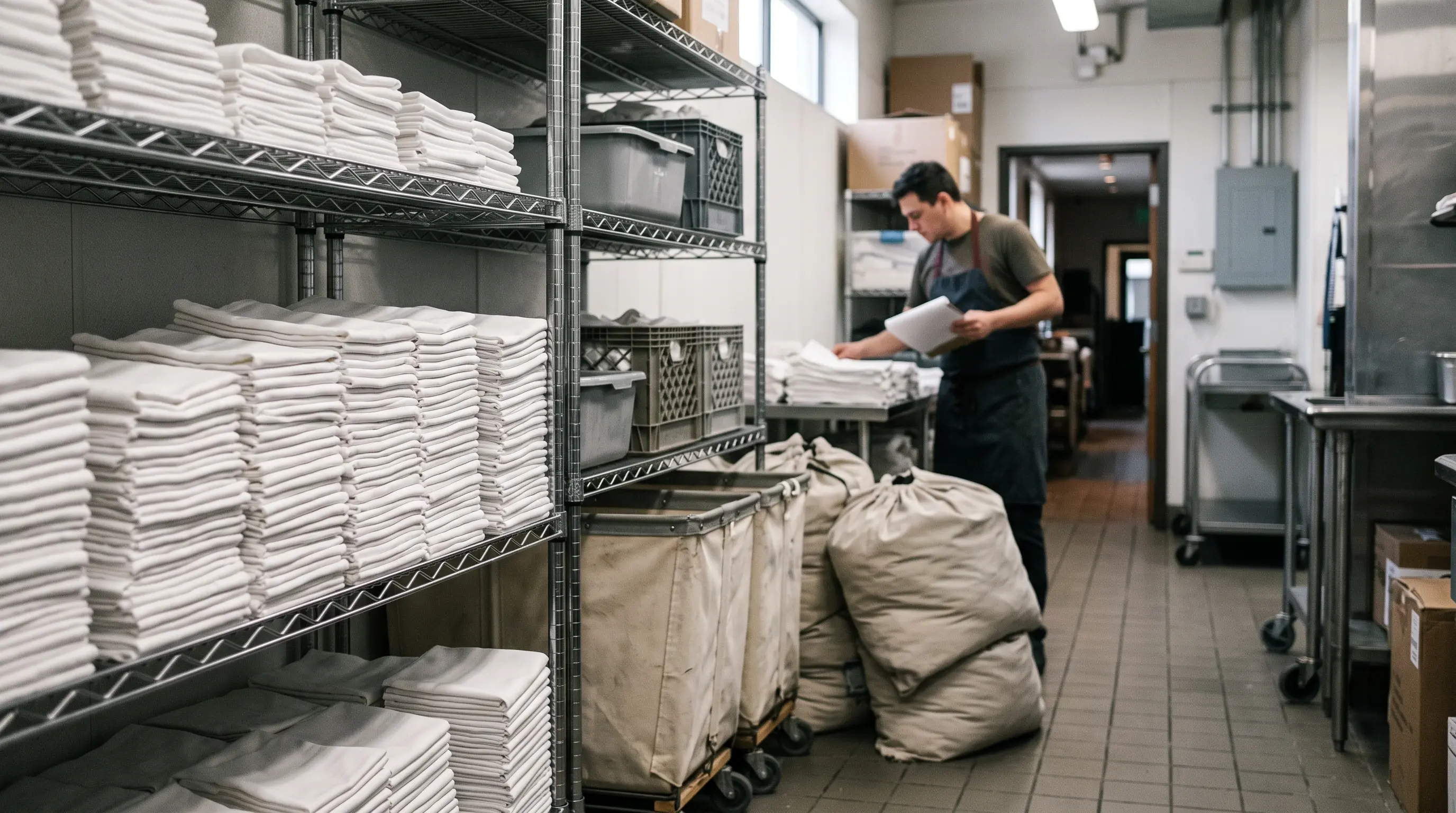
A regular napkin pickup and delivery arrangement works best when its timetable is treated as an operating agreement rather than a loose instruction to collect or deliver linen each week. The schedule should establish which day the exchange takes place, when the handover can happen, where access is available and who can confirm a change. When these details are clear, staff can prepare for each exchange without having to rely on previous conversations or informal instructions.
For Perth restaurants using a table linen hire and laundry service, the pickup and delivery timetable is also part of the arrangement for supplying clean napkins and returning used linen. The starting point is understanding how many napkins the restaurant uses between exchanges and how much clean and used linen it can store. These factors help determine a suitable collection interval and the quantity needed to maintain an adequate supply. The proposed schedule must also account for opening preparations, busy service periods and any restrictions on access to the premises.
Treat the Schedule as a Standing Operating Agreement
A regular schedule establishes the expected arrangement under normal operating conditions. It should identify the usual exchange day, the preferred arrival window and the agreed handover point. This gives restaurant staff a consistent reference for preparing linen and receiving deliveries.
A schedule that simply says "deliver during the week" leaves too much open to interpretation. The delivery team may arrive when the receiving area is inaccessible, the relevant staff member is unavailable or the restaurant is preparing for a busy service. These situations can often be avoided by agreeing on a more specific arrangement in advance.
The schedule should be stable enough to become part of the restaurant's routine. However, it should also distinguish between the normal arrangement and occasional exceptions. A temporary closure, public holiday or special event may require a separate adjustment without necessarily changing the regular exchange day.
Keep the ordinary schedule easy to find and communicate any agreed changes to the people responsible for preparing and receiving linen. This reduces the likelihood of different shifts working from outdated instructions.
Choose an Exchange Interval That Matches Napkin Use
The interval between collections should reflect how quickly the restaurant uses its napkins and how much clean linen it needs before the next exchange. A venue with several dining periods may use considerably more napkins than one with a shorter or less frequent service schedule.
Review a representative trading week to establish typical usage. Consider:
- The number of tables and usual seating capacity.
- The number of services or sittings each day.
- How frequently napkins are replaced during service.
- Changes in demand between quieter and busier trading days.
- The quantity of clean napkins needed before the next exchange.
The restaurant should also account for linen that is temporarily unavailable because it has been collected for laundering. The quantity needed is not limited to what is used in a single service. It must cover ongoing use while previously collected napkins are being processed and returned.
Australian hospitality stock-control guidance includes monitoring stock levels and adjusting reorder cycles. Applying the same general principle to linen means reviewing actual usage rather than assuming that a standard delivery frequency will suit every restaurant. The Australian Government's SITXINV008 unit on stock control provides relevant guidance on monitoring stock and maintaining suitable stock levels.
Once the restaurant understands its normal consumption and storage capacity, it can discuss a suitable exchange schedule and quantity with its linen supplier, subject to the supplier's available service arrangements. These two decisions should be considered together. Increasing the time between deliveries without reviewing the quantity available may leave the restaurant short of clean napkins before the next exchange.
Account for Clean and Used Linen Storage
Storage capacity affects how much linen a restaurant can comfortably manage between collections. The available space needs to accommodate clean napkins awaiting use as well as used linen that has been gathered for collection.
Clean stock should be kept in a designated area where it can remain separate from used linen. This makes it easier for staff to identify available supplies and reduces unnecessary handling during busy service periods.
Used napkins also need a consistent holding location before collection. Consider whether the area has enough capacity for the expected quantity between exchanges and whether staff can access it without disrupting food preparation, customer areas or other operations.
A restaurant with limited storage may need to review its exchange interval rather than simply increasing the amount delivered each time. Conversely, a larger storage area does not automatically mean that longer intervals are appropriate. Napkin consumption, collection arrangements and the quantity required for each service still need to be considered.
These practical details should inform the agreed supply arrangement. They also help identify whether changes in trading patterns or premises layout could affect the existing schedule.
Define the Handover Point Before the First Scheduled Exchange
A timetable is incomplete without a clear handover location. The schedule should identify where used linen will be made available for collection and where clean linen should be received.
For some restaurants, the same entrance may be suitable for both activities. Others may operate from shared buildings, shopping centres or premises with separate loading and receiving areas. In these situations, the collection and delivery points should be recorded separately.
Consider the physical conditions at the premises before confirming the arrangement:
- Are there locked gates or doors that restrict access?
- Are deliveries permitted only during certain hours?
- Is there a shared loading area with competing delivery schedules?
- Does the driver need to use a particular entrance or service corridor?
- Is the receiving area accessible during the proposed handover window?
If building management imposes access or sign-in requirements, include the relevant instructions in the schedule record. A delivery time that appears suitable on paper may not work if the required entrance is unavailable or the receiving area cannot be accessed.
The receiving responsibility should also be clear. Identifying a role, such as the duty manager or site coordinator, can make the arrangement easier to maintain when individual staff members change. Any current contact details can be recorded alongside that role.
Keep Collection and Delivery Instructions Distinct
Collection and delivery may take place during the same appointment, but the two activities have different requirements. Collection concerns outgoing linen that has already been gathered and prepared. Delivery concerns incoming clean linen that needs to be received and placed in the appropriate storage area.
Separate instructions help staff understand what needs to happen in each case.
For collection, establish:
- Where used napkins will be held.
- When they need to be ready.
- Which access point applies.
- Who can assist if access is unavailable.
For delivery, establish:
- Where clean napkins should be received.
- Who is responsible for accepting the delivery.
- Where the incoming linen should be placed.
- Whether any receiving or quantity checks are part of the restaurant's internal procedure.
The same person or location may apply to both activities, but this should be stated rather than assumed. For example, used linen may be accessible before the restaurant's receiving contact is available to accept clean stock. Agreeing on how this situation will be handled avoids conflicting instructions.
The purpose is to make each part of the exchange straightforward. Staff should not have to work out where outgoing linen belongs or where incoming supplies should go each time a collection takes place.
Prepare a Schedule Brief Staff Can Follow
A written schedule provides a reference for employees who may not have been involved in the original arrangement. It should contain enough information for someone familiar with the premises to prepare for the exchange without searching through previous emails or messages.
A practical schedule brief can include:
- The regular collection and delivery day.
- The agreed exchange interval and quantity.
- The preferred arrival window, if agreed with the supplier, and any fixed access restrictions.
- The usual collection location.
- The usual delivery location.
- The role responsible for receiving clean linen.
- Relevant building access instructions.
- The contact responsible for requesting or confirming schedule changes.
Keep the information concise and accessible to the staff who need it. A long procedure document is unnecessary if a short, accurate record covers the recurring arrangements.
Review the brief when the restaurant changes its opening hours, storage areas, access arrangements or receiving responsibilities. Outdated instructions can cause the same problems as having no written schedule at all.
It is also useful to identify which details are permanent and which are preferences. A fixed building access restriction must be respected, whereas a preferred delivery window may allow some flexibility if both parties agree. Recording the distinction makes the schedule easier to interpret.
Make Responsibilities Clear on Both Sides
A regular linen exchange depends on the restaurant and supplier understanding their respective responsibilities. The restaurant needs to prepare used linen and maintain any agreed access arrangements. Where the handover arrangement requires someone to receive incoming supplies, the restaurant should make sure the appropriate person is available. The supplier needs the current schedule and relevant handover instructions to organise the agreed collection and delivery arrangement.
Within the restaurant, responsibilities should be assigned to the appropriate staff roles. The opening or closing shift may be responsible for preparing used napkins, while the duty manager may oversee receiving arrangements. The exact allocation will depend on the restaurant's operating structure.
Staff should also know what to do when the expected arrangement cannot be followed. If the receiving area is inaccessible, the nominated contact is absent or a scheduled exchange needs to change, employees should know who to notify.
Any permanent change to the standing schedule should be confirmed by the appropriate contacts on both sides. This helps prevent an informal request or temporary preference from being mistaken for an agreed change to the regular arrangement.
Clear responsibilities do not require additional layers of administration. They simply ensure that the people involved know what they need to prepare, who they should contact and which instructions remain current.
Review the Arrangement When Operating Conditions Change
A schedule that works during ordinary trading may become unsuitable after a change in the restaurant's operations. Longer opening hours, increased seating capacity, new service periods or changes in storage space can all affect the amount of linen needed and the time available for collection.
Review the arrangement when a lasting change affects:
- The number of napkins used during a typical trading week.
- The quantity of clean linen required between exchanges.
- The space available for clean and used stock.
- Opening hours and preferred delivery windows.
- Building access or loading arrangements.
- The staff roles responsible for collection and receiving.
Consider whether the existing exchange interval and quantity still match the restaurant's requirements before changing the schedule. A temporary event or one-off closure may need a separate arrangement, while a lasting change in demand may justify reviewing the regular supply.
A useful way to assess the schedule is to ask whether a staff member who has not previously handled the exchange could follow the written instructions. If the answer is no, the record may need clearer timing, location or contact details.
The arrangement should remain practical as the restaurant changes. Reviewing it periodically helps ensure that the collection and delivery routine continues to match actual napkin use, available storage and site access.
Keep the Regular Exchange Practical and Consistent
A workable napkin collection and delivery schedule brings together several decisions: how often linen is exchanged, how much is needed between deliveries, where clean and used napkins are stored, and how the handover takes place.
These decisions should be based on the restaurant's actual usage and operating conditions rather than a standard timetable applied to every venue. Clear instructions and agreed responsibilities also help staff maintain the routine when shifts, contacts or premises arrangements change.
By reviewing the schedule when conditions change and keeping the agreed details accessible, restaurant operators can make regular linen exchanges easier to coordinate and maintain.