













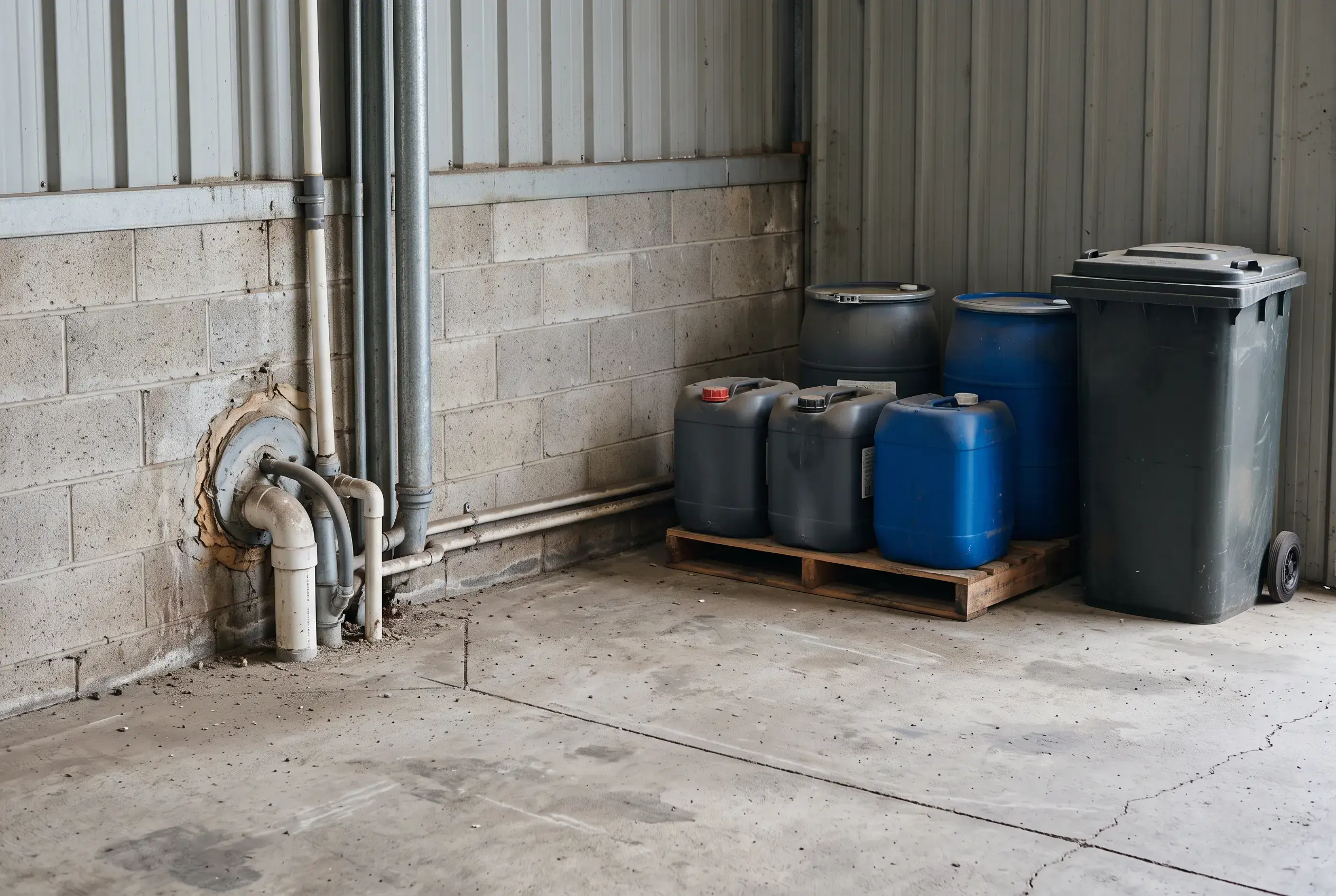
A report of scratching or droppings gives a rodent assessment a starting point. Before choosing treatment, the technician needs to examine the signs, possible entry routes, shelter and accessible food sources. A manager can help by making those locations identifiable and available for inspection, without having to diagnose the infestation.
A pre-treatment rodent inspection works best when it separates evidence from assumptions. Current signs, potential access points, nesting locations, waste containment and accessible food sources each answer a different question. Together, they help establish the assessment brief. They do not decide whether traps, baits or another response will be appropriate, and they do not replace the treatment decision that follows.
Begin with signs that show current activity
The first part of a commercial rodent assessment is to identify what has actually been observed. HealthyWA lists signs such as droppings, squeaking, gnawing or scratching sounds, rub marks, burrows, damaged materials and items disturbed by rodents. Any one sign may need interpretation in context. A scratching sound, for example, can have another cause, while older damage may not show that activity is current.
The useful assessment question is therefore not simply whether a site has ever had rodents. It is whether there is recent, repeatable evidence in a particular area. A manager can explain what was seen or heard, where it occurred, when it was noticed and whether the sign has changed.
Current evidence also helps distinguish an isolated observation from a pattern worth investigating. Fresh droppings in one location, regular noises above a ceiling void or repeated gnawing on the same material may point the inspection towards different areas. The assessment should retain that distinction rather than treating every sign as proof of the same problem.
Trace possible routes into the premises
Once activity has been described, the next question is how rodents may be reaching that part of the building. When discussing rodent control, ask the assessor to connect any suspected route with the signs found, rather than treating every visible opening as an active entry point.
Potential routes can include gaps around building penetrations, damaged sections of the structure, openings around doors or other points where a small animal could move from an external area into a concealed part of the premises. The assessment should note the relationship between the sign and the route. A possible gap on its own is not the same as evidence that rodents are using it, but it may become more relevant when nearby activity, rub marks or damage are also present.
Record the route, its condition and its proximity to current signs. Leave the assessor to establish whether it is being used and what response is appropriate. Do not enter a void or open equipment simply to complete the inspection notes.
Look for locations that offer shelter or nesting conditions
Rodents often use protected, less-disturbed areas. HealthyWA notes that rats and mice may be found in walls, ceilings and under floors, as well as behind stored materials, machinery and furniture. In a commercial setting, that makes the layout of the affected area important. The assessment should consider not only what is visible in an open space, but also which adjacent locations provide quiet cover or a route between sheltered areas.
A nesting-location review is not a request to dismantle a site or remove every stored item before an inspection. It is a way to identify areas where access is limited, visibility is poor or material has accumulated in a way that could conceal activity. The assessor may need to understand whether a void, a rarely moved item or a protected edge sits close to the signs already reported.
The most useful descriptions are specific but measured. “Noise near the rear ceiling line after closing” gives more direction than “there may be rodents somewhere above”. “Gnawing found beside equipment that remains in place for long periods” is also more useful than a generic statement about clutter. The assessment is stronger when it records the relationship between the evidence and the sheltered location.
Assess waste containment as part of site conditions
Keeping rats and mice under control recommends a treatment plan that assesses entry points, nest locations, waste containment and removal of food sources alongside pesticide selection. For waste containment, note whether lids close, containers are emptied and accumulated material is near the affected area. These conditions help define what the assessor should inspect.
This does not require a broad waste-management programme. A pre-treatment assessment needs enough detail to identify practical conditions that could be relevant to rodent activity. That might include a lid that does not close properly, accumulated material around an external waste point, or a container location close to a suspected route. Record where each condition sits in relation to the signs already reported.
A useful discussion also separates containment from cleanup. At this stage, the focus remains on site conditions before a method is selected. Handling dead rodents, droppings or contaminated material is a different safety matter with its own controls. Keeping those questions distinct makes the assessment brief clearer and prevents a manager from treating an operational observation as a cleanup instruction.
Identify accessible food sources without guessing the cause
Rodents are attracted to available food and shelter, and HealthyWA recommends reducing these sources as part of control. During a pre-treatment rodent inspection, accessible food sources should be assessed as a site condition rather than assumed to be the sole cause of activity. The relevant issue is whether stored supplies, pet feed, organic waste or another accessible material gives rodents a reliable reason to remain near the affected area.
The assessment is more useful when it considers access as well as the material itself. A sealed container, for example, presents a different question from an open or damaged container. Stock held close to a suspected entry route may need to be considered differently from stock held in a separate secured area. Record the container condition and its location rather than assuming that stored material caused the activity.
Note whether access to a material is persistent or occasional. In a warehouse or manufacturing setting, include how deliveries and stock movement change that access. Record which storage areas are affected and when deliveries change access for inspection; do not assume all stock is exposed.
Bring the five assessment areas into one brief
The value of a pre-treatment assessment comes from how the observations fit together. A commercial manager does not need a long narrative. The brief should make it possible to understand the current evidence, the routes worth inspecting, the sheltered locations nearby, the waste-containment conditions and the accessible sources that may be relevant.
A concise brief can be organised around five questions:
- What current signs have been observed, and where?
- Which potential access points sit near those signs?
- Where could rodents be sheltering or nesting nearby?
- Does waste containment create a condition that needs examination?
- What accessible sources could be supporting activity in that area?
Keep the brief factual. Separate confirmed signs from locations that still need inspection, and identify any areas that cannot be accessed during the planned visit.
Connect the findings before treatment is chosen
Where several areas are involved, note possible connections between them: signs in one room may sit near a route or sheltered location in an adjacent area. Mark those connections for the assessor to investigate.
Before leaving the assessment stage, ask for the findings to distinguish confirmed activity, suspected routes and site conditions needing action. Those distinctions make the proposed treatment easier to evaluate and give maintenance staff a clear basis for any separate repair work.
A practical next step for commercial managers
The assessment is useful when it links the signs to places that need attention and explains why the recommended response fits. Ask which entry or shelter conditions the site should address, which need further inspection and how the findings will be reviewed. That turns the visit into a specific plan for the affected premises rather than a method chosen before the evidence is examined.