













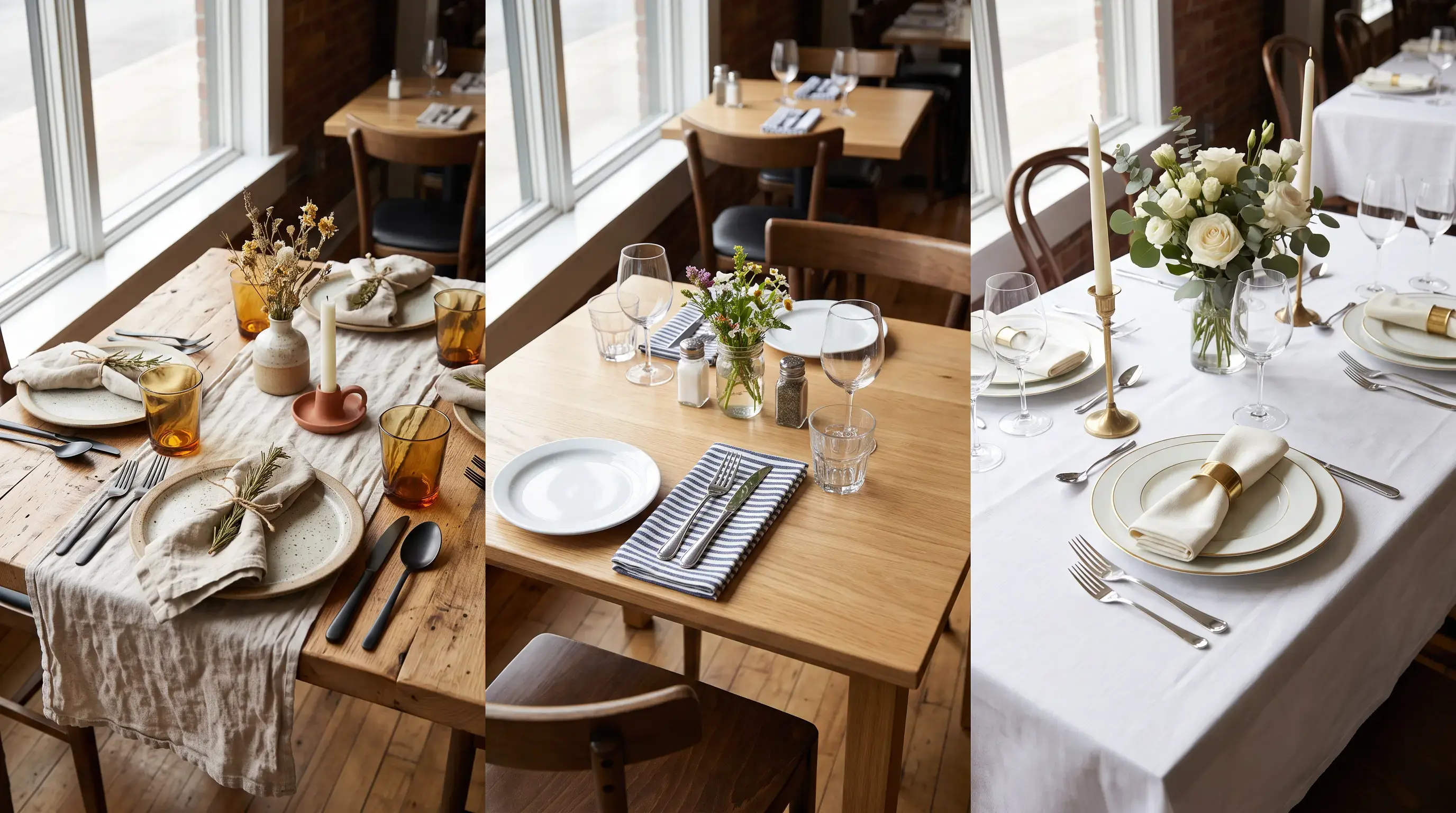
Before comparing napkin options, decide what the table should feel like. Rustic, casual and elegant describe an overall visual direction, not a product specification. A short style brief helps everyone choosing the setting work towards the same result, instead of approving individual details that compete when brought together.
For restaurants in Perth considering table-linen rental, including napkins, compare the available sizes, materials and colours with the intended setting. A style brief helps narrow those choices. It should name the intended atmosphere, the napkin's role and one or two details that would pull the setting in the wrong direction.
Treat the Style Word as a Decision, Not a Label
A style word is useful only when it changes what the group is trying to achieve. "Rustic" should not simply mean informal, and "elegant" should not be used as shorthand for adding more detail. Each direction needs a plain description of the visual outcome the table should create.
A rustic direction usually asks for an assembled, natural-looking setting with visible character rather than a highly controlled finish. A casual direction aims for ease and clarity. It should look deliberate, while avoiding an over-styled or ceremonial impression. An elegant direction calls for restraint, order and a more composed visual line. Those descriptions are not rules about any particular napkin. They are a way to decide what the napkin needs to support.
Look at the table without the napkin first. Timber, crockery, glassware and the room itself may already establish a strong direction. The napkin can reinforce that character or add a deliberate contrast; it does not have to carry the entire style on its own.
Use Rustic When Character Matters More Than Polish
A rustic table style can work when the desired impression is settled rather than highly formal. The point is not to make the table look unfinished. It is to allow texture, variation and a less rigid arrangement to contribute to the overall character.
For the napkin brief, describe visual warmth and ease. Ask whether the napkin should sit quietly beside textured crockery, soften a strongly grained timber table or add a simple finishing detail. These are design choices to assess within the setting, rather than rules that tie rustic styling to one fibre or colour.
Use Casual When Clarity and Comfort Are the Priority
Casual is often treated as the absence of a decision, but it is a specific direction. A casual table should look easy to approach and visually clear. That still requires choices to relate to one another. The table does not need to appear elaborate to look considered.
A casual napkin brief can therefore focus on simplicity. It may ask for an uncomplicated visual contribution, a clear relationship with the rest of the table and no detail that makes the setting feel more formal than intended. The decision is not about choosing the least expensive option or reducing the number of items. It is about keeping the visual message direct.
Use Elegant When Restraint Needs to Be Visible
An elegant table style is not necessarily ornate. In many cases, elegance comes from control: a limited number of visual ideas, a deliberate hierarchy and a consistent level of formality. The napkin should support that discipline rather than compete with it.
A useful elegant brief describes the intended degree of restraint. It may call for a napkin that reads as a quiet finishing element, that gives each place setting a clean visual boundary, or that supports a more composed whole. It should not rely on broad claims such as "luxury" or "premium", because those terms do not tell an approver what they should actually see.
One person may picture elegance as high contrast and another as a nearly seamless palette. Resolve that difference in the style brief: should the napkin define each place setting, blend into the table or add a restrained focal point? The later comparison of available options can then answer a specific question.
Check the Style Direction at Full-Table Scale
A napkin is repeated across the table, which means the style choice becomes more visible with every place setting. The WA School Curriculum and Standards Authority describes repetition as a way to create pattern or emphasis. Try the proposed napkin treatment across several places to judge its effect on the whole table, rather than assessing one arrangement in isolation.
Place a simple napkin treatment at several settings and step back. Does repetition support the intended atmosphere or make the table busier than planned? A prominent fold may look balanced once but dominate when repeated along the whole table.
A rough layout or reference image can help settle the direction before a final option is selected. Use it to agree the overall mood, then assess the actual napkin later. Keep the reference focused on the table, not on decorative details that are outside the rental choice.
Separate the Style Choice from the Later Specification
The style brief establishes the visual direction. The next step is a separate specification: colour, material, dimensions and the treatment used at each place setting. Keep the brief beside that specification so later product comparisons can be judged against the same intent.
Write a Brief That Another Person Can Use
A practical brief should be short enough to guide a conversation and specific enough to stop the table style drifting. Start with the chosen direction. Add the atmosphere the table should communicate. Then record the visual boundary that must be protected.
For a rustic setting, the brief might say: "Create a relaxed, natural-looking table with visible character. The napkins should support the settled, textured direction and should not introduce a highly formal focal point."
For a casual setting: "Create a clear, approachable table with a simple visual rhythm. The napkins should reinforce the uncomplicated direction without making the setting feel ceremonial."
For an elegant setting: "Create a restrained, composed table with a controlled sense of formality. The napkins should support the ordered visual line rather than compete for attention."
Keep the chosen statement with a reference photograph or sketch. When available options are compared, ask which one supports that direction, rather than which one each person likes in isolation.
Complete the Style Brief Before Discussing Rental Options
Use the brief to compare rental napkins within a complete table setting. Carry the selected direction into the colour-and-material specification, and retain the reference when reviewing other available options. The brief has done its job when different approvers can explain why the same option fits.