













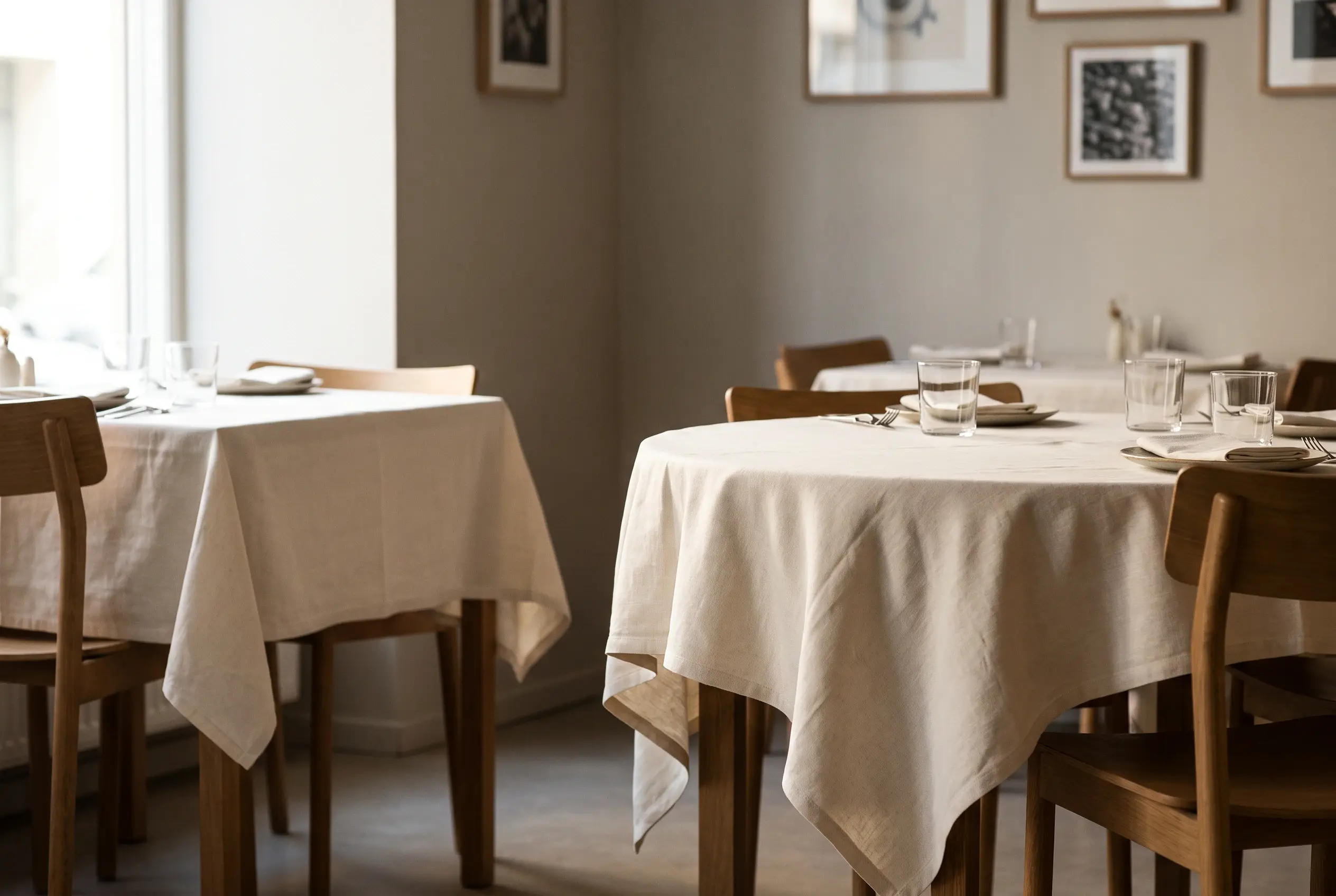
A tablecloth size chart is useful, but it is only the first part of the decision. A cloth can match the tabletop measurements and still look wrong once chairs are pushed back, place settings are laid out, centrepieces are added and staff need room to move. The better approach is to treat restaurant tablecloth sizes as a specification exercise. Start with the table shape and dimensions, decide how far the cloth should fall, then test that choice against the way the room will be used.
That order helps prevent a mismatch between a sample-table calculation and a busy dining floor. A long communal table, a compact two-top beside a wall and a round table used for a formal dining layout each create different considerations for the cloth's edges, seating clearance and presentation. Finish and colour also matter: they should complement the dinnerware and surrounding furnishings while working with the venue's lighting. The aim is not to find one universally correct cloth, but to make a repeatable choice that suits each dining layout.
Start with the table, not the room photograph
Measure the table at the point where the cloth will sit. For a rectangular or square table, record the length and width. For a round table, record the diameter. Measure a representative example of each table type rather than relying only on a catalogue description or an old floor plan. Tables described as the same size may have different edges, folding mechanisms or bases that affect how a cloth falls.
Next, decide on the drop. The drop is the distance from the tabletop edge to the finished edge of the cloth. A shorter drop can suit a casual setting or a layout where table edges need to remain visually light. A deeper drop creates a more formal look, but it also needs to work with chair movement, aisle width and the table base.
For a rectangular table, add the intended drop twice to both the length and the width. A table measuring 180 cm by 75 cm with a 25 cm drop on each side needs a cloth approximately 230 cm by 125 cm. For a round table, add twice the intended drop to the diameter. These calculations provide a starting point, but the desired drop should be chosen for the actual setting rather than copied from another venue.
Choose the drop around seating and service clearance
The cloth edge should look intentional from a seated guest's perspective, while the overall table arrangement preserves access for customers and service personnel. Pull chairs out to their normal positions before confirming a deeper drop. If the cloth gathers under chair legs, brushes against shoes or interferes with a route through the dining area, shorten the drop or reconsider the arrangement.
This is particularly important for tables placed against banquettes, walls or pillars. One open side may need a different treatment from the side facing the room. Rather than forcing the same solution onto every table, identify where a symmetrical appearance matters and where clearance is the priority. A room can still look cohesive when the specification accounts for its practical constraints.
For large shared tables, consider the visual effect of the cloth arrangement. A single long cloth can make a table read as one setting, while separate cloths can help distinguish seating zones or support individual table arrangements. Neither approach is automatically better. The useful question is whether the arrangement suits the way guests, staff and table settings will use the surface.
Treat shape changes as a new specification
A rectangular cloth placed on a round table can be a deliberate styling choice, but it should not be treated as the same sizing decision as a round cloth. The corners create a longer drop than the sides, which may suit a formal setting but become awkward in a tighter room. An overlay can also change the visible layers and should be checked from the dining position rather than only from above. Confirm that the required overlay size and style are available before including it in the final specification.
When square tables are turned within the room, the cloth dimensions stay the same, but the corners may sit differently beside chairs or a narrow aisle. Check the dressed table in its intended position rather than assuming that a layout photograph proves there is enough clearance.
Mixed dining rooms need the same discipline. Record the dimensions and preferred drop for each table type, then identify whether any available cloth sizes could suit more than one table type without compromising appearance or clearance. This is more useful than planning around an average table size, because averages rarely account for the tables that create the most noticeable fitting problems.
Finish and colour should be tested in the room
Different table linen finishes can change how a dining setting looks under restaurant lighting. When comparing available options, consider how the fabric appears alongside the dinnerware, centrepieces and surrounding furnishings. Colour and texture can contribute to the overall presentation, but they should not compete with patterned crockery, menus or other prominent elements on the table.
If the venue has access to a sample cloth, place a prepared setting on it and view it at the times the room is busiest. Look at it from the entrance, from a seated position and along the main service route. The same colour can appear cooler near a window, darker under evening lighting or more prominent beside timber, stone or upholstered seating. A swatch examined away from the room is therefore not a final decision.
Keep the test focused on the choices that affect the dining experience. Check whether glassware remains easy to see, whether the cloth makes the table setting look crowded or sparse, and whether a centrepiece leaves enough visual space for plates and shared items. Record the result in clear terms, such as a preferred colour, finish and drop for each table type, rather than relying on a general preference for something elegant.
Plan for overlays and irregular tables
Overlays can distinguish a focal table or add a colour layer above a base cloth. Check the combined drop and the position of both layers with the table fully set. The overlay should leave enough usable space for place settings and shared items without creating loose corners that could interfere with movement around the table.
Measure irregular tables, including those with curved ends, narrow extensions or substantial bases, individually. Their dimensions may not fit standard rectangular or round calculations. Record any unusual measurements and check the cloth's fit in the intended position before confirming the specification.
For tables that serve a different purpose from guest dining tables, assess their requirements separately. A cloth suitable for a dining table may not be appropriate for another surface, where access to equipment and a practical edge may matter more than a formal drop. Keeping these requirements separate helps prevent the dining table specification from being applied where it does not fit.
Turn the specification into a usable brief
A useful linen brief does not need to be long. For each table type, list the tabletop dimensions, preferred cloth dimensions, intended drop, colour and finish. Include the table's usual position and any overlay requirements. Add separate notes for unusual tables or surfaces that need a different treatment. This gives the person setting the room a practical reference and makes later reviews easier if the layout changes.
Keep the approved specification with a photograph of the dressed table. A later layout change can then be checked against a clear reference. Record stock quantities separately from the size and finish specifications so that ordering and room setup requirements remain distinct.
For Perth restaurant operators, use the measured dimensions to compare requirements with Cleantex's restaurant linen options, which includes tablecloths, overlays and napkins in a range of sizes, colours and finishes. Check the available options against the measurements rather than assuming that every calculated dimension will be available. If an exact match is not available, compare the dimensions of the closest suitable option and calculate its actual drop before deciding whether it will work for the layout.
Make one final walk-through before confirming the set
Use the final walk-through to resolve exceptions, not to repeat every earlier test. Focus on wall-side tables, unusual shapes and any layout that may move. Record the agreed treatment for each exception and update the brief if a different cloth size or drop is needed.
That final walk-through completes the decision that a size chart cannot make on its own. The right tablecloth choice is the one that gives the intended visual finish while respecting the real dimensions and movement of the dining layout. When those details are recorded before the room is set, table linen becomes a considered part of the dining experience rather than a last-minute compromise.