












Perth businesses face specific legal obligations when managing sanitary waste disposal. The Occupational Safety and Health Regulations 1996 mandate that workplaces provide adequate sanitary facilities, including proper disposal systems for feminine hygiene products through appropriate feminine hygiene waste management systems. Non-compliance exposes organisations to WHS penalties, employee complaints, and potential discrimination claims under the Equal Opportunity Act 1984.
Beyond basic legal compliance, inadequate sanitary disposal creates workplace hygiene risks that affect employee wellbeing, visitor experience, and brand reputation. A 2023 workplace facilities survey found that 67% of female employees considered restroom hygiene standards when evaluating employer quality, making this a retention and attraction issue for Perth organisations.
Legal Framework Governing Sanitary Disposal in Western Australia
The primary legislation affecting sanitary disposal services Perth businesses must follow includes multiple regulatory layers. WorkSafe WA enforces the Occupational Safety and Health Act 1984, which requires employers to provide safe working environments, including adequate sanitary facilities establishing WHS sanitary facility requirements. Section 19 specifically mandates that employers maintain workplace conditions that don't expose employees to health hazards.
The Occupational Safety and Health Regulations 1996 provide detailed requirements. Regulation 3.30 stipulates that workplaces must provide sufficient sanitary conveniences based on the number of employees. For workplaces with female staff or visitors, this includes appropriate disposal facilities for sanitary products through professional disposal unit servicing.
Food and beverage businesses face additional requirements under the Food Act 2008 and Australia New Zealand Food Standards Code. Standard 3.2.2 mandates that food handling premises maintain sanitary facilities that prevent contamination risks. Improper sanitary waste disposal creates potential cross-contamination pathways that can result in closure orders from local health authorities.
Healthcare facilities operate under stricter protocols. The Health (Miscellaneous Provisions) Act 1911 and associated regulations classify certain sanitary waste as clinical waste requiring specialised handling and disposal procedures. Aged care facilities, medical centres, and hospitals must implement waste segregation systems that separate sanitary waste from general refuse.
What Constitutes Compliant Sanitary Disposal Services
Compliant sanitary disposal extends beyond simply providing bins in restrooms. The system must address hygiene, odour control, infection prevention, and environmental management through comprehensive feminine hygiene waste management. A comprehensive service includes specialised disposal units, regular servicing schedules, and proper waste treatment.
Sanitary disposal units should be hands-free, leak-proof, and designed to contain odours between services. Units must be constructed from materials that withstand regular cleaning and disinfection. Perth's climate creates additional challenges - high summer temperatures accelerate bacterial growth in improperly maintained units, creating health hazards and unpleasant odours.
Service frequency requirements depend on facility type and usage patterns. High-traffic venues like shopping centres, universities, and hospitality establishments typically require weekly or twice-weekly professional disposal unit servicing. Corporate offices might manage with fortnightly services, whilst lower-traffic facilities can operate on monthly schedules. However, these are guidelines - actual requirements depend on usage volume, seasonal variations, and facility-specific factors.
Cleanpro's washroom services address the full spectrum of restroom hygiene requirements, including sanitary disposal management integrated with hand hygiene supplies, cleaning protocols, and odour control systems. This integrated approach ensures all restroom hygiene elements work together rather than creating gaps between separate service providers.
Industry-Specific Requirements and Compliance Considerations
Different Perth industries face distinct sanitary disposal challenges based on their operational characteristics and regulatory frameworks establishing workplace restroom compliance obligations.
Food and Beverage Operations must maintain strict separation between food handling areas and sanitary waste. The Food Standards Code requires that sanitary facilities don't create contamination pathways to food preparation or service areas. This means dedicated handwashing facilities, proper disposal unit placement, and regular professional servicing to prevent pest attraction through integrated feminine hygiene waste management systems.
HACCP-compliant operations incorporate sanitary disposal into their critical control point analysis. Staff handling sanitary waste must follow hand hygiene protocols before returning to food handling duties. Food and beverage operations benefit from integrated hygiene solutions that address cleaning, pest control, and sanitary services through coordinated protocols.
Healthcare and Aged Care Facilities classify sanitary waste based on contamination risk. Standard sanitary products from healthy individuals typically qualify as general waste, but products from patients with infectious diseases may require clinical waste protocols. Facilities must implement waste segregation systems that staff can navigate reliably under pressure.
The Health (Miscellaneous Provisions) Act 1911 requires healthcare facilities to maintain records of waste disposal, including sanitary waste volumes and disposal methods. Healthcare hygiene solutions must address infection control standards that exceed general workplace requirements, including hospital-grade cleaning protocols coordinated with sanitary disposal services Perth providers deliver.
Education Facilities face unique challenges managing sanitary disposal across multiple buildings with varying usage patterns. Student facilities experience high-volume usage concentrated around class changeover periods, whilst staff facilities have steadier demand. Education facilities must also address accessibility requirements - sanitary disposal units must be available in accessible restrooms at appropriate heights.
The Disability Discrimination Act 1992 requires that facilities accessible to people with disabilities include appropriate sanitary disposal options. Education sector solutions must account for diverse user needs, from primary school students to adult education participants.
Hospitality and Accommodation providers must maintain guest-facing restrooms to standards that reflect their brand positioning. Premium establishments require discreet, odour-free sanitary disposal that maintains the guest experience through professional disposal unit servicing. High turnover rates mean disposal units require frequent servicing to prevent capacity issues during peak occupancy periods.
Accommodation industry solutions typically integrate sanitary disposal with linen services, cleaning protocols, and pest management to create comprehensive guest experience protection.
Corporate Offices and Commercial Buildings must provide sanitary disposal in women's restrooms, accessible facilities, and increasingly in gender-neutral restrooms. Building managers balancing multiple tenants need service schedules that don't disrupt business operations. Discrete servicing during low-traffic periods maintains professional presentation whilst meeting WHS sanitary facility requirements.
Office hygiene solutions address the full spectrum of workplace facility requirements, from reception areas to back-of-house spaces, ensuring consistent standards throughout the premises.
Environmental and Waste Management Obligations
Perth businesses must comply with the Waste Avoidance and Resource Recovery Act 2007, which establishes waste management hierarchies prioritising avoidance, reuse, recycling, and recovery before disposal. Whilst sanitary products present limited recycling opportunities with current technology, businesses must ensure proper waste classification and disposal through licensed facilities.
Local government regulations add another compliance layer. Perth councils enforce waste management bylaws that specify acceptable waste streams for commercial collection. Sanitary waste must be contained in appropriate receptacles, collected at prescribed frequencies, and transported to licensed facilities. Improper disposal - such as placing sanitary waste in recycling streams - creates contamination issues that can result in collection refusal and penalty fees.
The Environmental Protection Act 1986 establishes duty of care principles requiring businesses to ensure waste is properly managed throughout the disposal chain. This means verifying that service providers hold appropriate licenses and dispose of waste at approved facilities. Documentation requirements include waste transfer certificates and disposal records that demonstrate compliance.
Risk Management and Liability Considerations
Inadequate sanitary disposal creates multiple risk categories that Perth businesses must address through proper service arrangements.
Health and Safety Risks: Improperly maintained sanitary disposal units become bacterial breeding grounds. Staphylococcus aureus, E. coli, and other pathogens proliferate in warm, moist environments. Staff or contractors handling overflowing or improperly maintained units face infection risks, creating potential workers' compensation claims and WHS liability.
Odour issues from inadequate servicing affect indoor air quality, potentially triggering respiratory complaints from employees with asthma or chemical sensitivities. This creates additional WHS obligations to investigate and remediate workplace health hazards.
Pest Attraction: Sanitary waste attracts flies, cockroaches, and rodents when disposal units aren't properly maintained or serviced frequently enough through professional disposal unit servicing. Pest infestations create compounding problems - health code violations, employee complaints, customer experience damage, and additional costs for pest control interventions. Integrated approaches combining professional cleaning services with regular sanitary disposal and preventative pest management address these interconnected risks.
Discrimination and Workplace Culture: The Equal Opportunity Act 1984 prohibits discrimination based on sex. Courts have found that inadequate sanitary facilities can constitute indirect sex discrimination by creating workplace conditions that disproportionately disadvantage female employees. This extends beyond simply providing facilities - maintenance standards matter. Consistently overflowing disposal units, unpleasant odours, or inadequate servicing create conditions that reasonable people would find unacceptable.
Reputational Impact: In Perth's connected business community, facility standards affect brand perception. Visitors, clients, and potential employees form impressions based on restroom conditions. Social media amplifies negative experiences - a single complaint about poor restroom hygiene can reach thousands of potential customers or job candidates within hours.
Selecting Appropriate Sanitary Disposal Service Providers
Perth businesses should evaluate service providers against specific criteria that ensure compliance and operational reliability.
Licensing and Compliance: Verify that providers hold appropriate waste management licenses issued by the Department of Water and Environmental Regulation. Request evidence of public liability insurance covering waste handling and disposal activities. Confirm that waste is disposed at licensed facilities rather than through general refuse streams.
Service Reliability and Responsiveness: Missed services create immediate compliance and hygiene problems. Evaluate provider track records for on-time service delivery and responsiveness to urgent requests. Perth-based providers typically offer faster response times than national chains operating from eastern states, particularly for urgent situations requiring immediate attention.
Integrated Service Capabilities: Businesses managing multiple facility service contracts face coordination challenges and accountability gaps. Providers offering integrated solutions across cleaning, washroom supplies, sanitary disposal, and pest management create single-point accountability and coordinated service delivery. SWS Group operates through three specialised divisions - Cleantex, Cleanpro, and Pestpro - delivering coordinated facility services that address the interconnected nature of workplace restroom compliance obligations.
Hygiene Standards and Technology: Modern sanitary disposal units incorporate hands-free operation, odour neutralisation technology, and leak-proof construction. Service providers should use hospital-grade disinfectants during servicing and follow documented cleaning protocols. Request information about the specific products and processes used during service visits.
Documentation and Reporting: Compliance verification requires documentation. Service providers should supply service completion records, waste disposal certificates, and compliance reports that demonstrate regulatory adherence. This documentation becomes critical during health department inspections, WHS audits, or dispute resolution.
Implementation Considerations for Perth Businesses
Establishing compliant sanitary disposal requires planning beyond simply engaging a service provider.
Facility Assessment: Conduct a comprehensive assessment of current facilities identifying all restrooms requiring sanitary disposal services Perth providers deliver. Consider usage patterns, accessibility requirements, and special considerations like food handling proximity or clinical waste classification. This assessment informs service frequency requirements and unit placement decisions.
Staff Communication: Employees need to understand proper sanitary disposal use and what to do if units become full or malfunction. Clear signage, induction training, and accessible reporting channels ensure staff can identify and escalate issues before they become compliance problems.
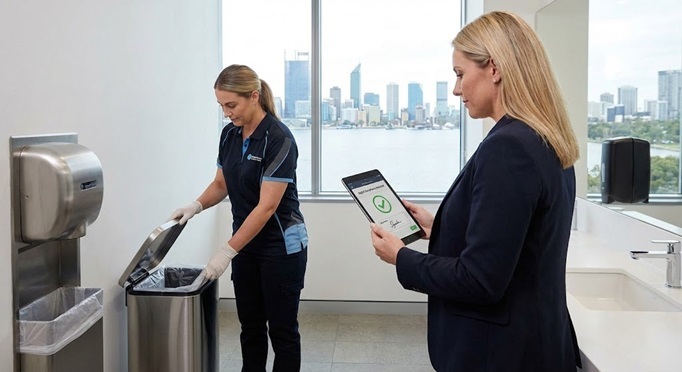
Service Schedule Integration: Coordinate sanitary disposal servicing with other facility maintenance activities to minimise disruption. Many Perth businesses schedule services during low-traffic periods or outside business hours to maintain professional presentation and avoid operational interference.
Contingency Planning: Develop protocols for service failures, unit malfunctions, or capacity issues during peak periods. Identify backup providers or emergency response procedures that maintain compliance during disruptions.
The Business Case Beyond Compliance
Whilst legal compliance provides the baseline requirement, effective sanitary disposal delivers broader business benefits that justify investment in quality services.
Employee Satisfaction and Retention: Workplace facilities significantly influence employee satisfaction. Providing well-maintained restrooms with reliable sanitary disposal demonstrates respect for employee wellbeing and dignity. In Perth's competitive employment market, facility standards affect recruitment and retention, particularly for industries employing predominantly female workforces.
Visitor and Customer Experience: First impressions matter. Visitors, clients, and customers judge businesses partly on facility standards. Premium sanitary disposal maintained to high standards contributes to positive brand perception and customer confidence.
Operational Efficiency: Integrated facility services reduce the administrative burden of managing multiple service contracts, coordinating access, and reconciling invoices. Single-provider solutions streamline procurement, reduce coordination complexity, and create clear accountability when issues arise.
Risk Mitigation: Proactive facility management prevents problems before they escalate into complaints, regulatory actions, or reputational damage. The cost of quality sanitary disposal services Perth businesses invest in represents a fraction of potential liability exposure from WHS violations, discrimination claims, or health code enforcement actions.
Conclusion
Perth businesses face clear legal obligations regarding sanitary disposal through proper feminine hygiene waste management, but compliance represents just the starting point. Effective sanitary disposal services Perth providers deliver protect employee wellbeing, enhance visitor experience, prevent pest attraction, and demonstrate organisational professionalism. The interconnected nature of facility hygiene means sanitary disposal works best as part of integrated solutions addressing cleaning, washroom supplies, floor mat services, and pest management through coordinated protocols.
Selecting appropriate service providers requires evaluating licensing, reliability, hygiene standards, and documentation capabilities. Perth-based providers offer responsiveness advantages and understanding of local WHS sanitary facility requirements that national operators may lack. Businesses benefit from partnering with providers offering integrated solutions that address multiple facility service requirements through coordinated delivery whilst meeting workplace restroom compliance obligations.
For Perth organisations seeking to ensure compliance whilst optimising facility management efficiency, professional consultation identifies specific requirements based on industry sector, facility characteristics, and operational patterns. Talk to our team to arrange an obligation-free facility assessment and discuss integrated hygiene solutions tailored to business requirements.