













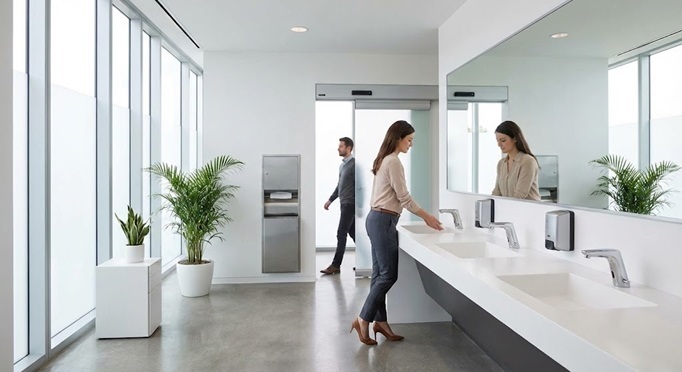
Workplace washrooms remain one of the most significant transmission points for bacteria and viruses in commercial facilities. Every door handle, tap, soap dispenser and hand dryer surface touched by hundreds of employees creates potential contamination pathways that traditional washroom systems struggle to address through conventional hands-free contamination prevention approaches.
Touchless washroom solutions eliminate these high-risk contact points entirely, reducing cross-contamination by up to 80% compared to conventional fixtures through infrared proximity sensor fixtures and automatic soap dispensing systems. For Perth businesses navigating heightened hygiene expectations and WHS compliance requirements, transitioning to hands-free washroom technology represents one of the most effective facility upgrades available.
The shift toward touchless systems accelerated dramatically following recent global health challenges, but the benefits extend far beyond pandemic response. These solutions address fundamental workplace hygiene concerns that affect employee health, facility maintenance costs, and professional presentation across every commercial sector.
Why Traditional Washroom Fixtures Create Hygiene Vulnerabilities
Manual taps, soap dispensers, paper towel dispensers and door handles require direct physical contact from every user. Research from the Australian Department of Health confirms that frequently-touched surfaces in shared washrooms harbour significantly higher bacterial loads than most other workplace areas.
The contamination cycle works like this: An employee uses washroom facilities, then touches the tap to wash hands. After washing, they touch the same tap again to turn off water - recontaminating their hands immediately after cleaning. They then touch the soap dispenser, paper towel dispenser, and door handle on exit. Each surface transfers bacteria and viruses to the next user.
Traditional dispensers present additional challenges. Manual soap pumps require users to press contaminated hands against the dispenser before washing. Paper towel dispensers with manual levers or cranks become contaminated immediately after hand washing, undermining the entire hygiene process through inadequate hands-free contamination prevention.
These contact points create particular concerns for industries with stringent hygiene requirements. Healthcare facilities, food service operations, educational institutions and hospitality venues face regulatory scrutiny and reputational risk when washroom hygiene falls short of expected standards.
How Touchless Technology Eliminates Contamination Pathways
Sensor-activated fixtures remove physical contact from the washroom experience entirely through infrared proximity sensor fixtures. Infrared or proximity sensors detect hand presence and trigger water flow, soap dispensing, paper towel release or hand drying without requiring users to touch any surface.
The technology operates through passive infrared sensors that detect heat signatures from approaching hands. When hands enter the detection zone (typically 5-15cm from the fixture), the sensor activates the mechanism for a preset duration or until hands are removed through cross-contamination reduction technology.
Modern touchless washroom solutions incorporate antimicrobial materials in sensor housings and surrounding fixtures. These materials contain silver ion technology or copper alloys that actively inhibit bacterial growth on any surfaces that might be touched accidentally.
Battery-powered and mains-powered options accommodate different facility requirements. Battery systems offer installation flexibility without electrical modifications, whilst hardwired systems eliminate battery replacement maintenance. Solar-charging options now provide sustainable power alternatives for facilities prioritising environmental performance.
Washroom services incorporating touchless technology deliver measurable hygiene improvements across diverse commercial applications. Cleanpro specialises in integrated washroom management solutions that combine sensor-activated fixtures with professional maintenance protocols.
Comprehensive Touchless Washroom Components
Sensor-Activated Taps: Automatic taps eliminate the most frequently-touched washroom surface through automatic soap dispensing systems integration. Sensor taps activate water flow when hands approach the basin, delivering preset water volume or continuous flow whilst hands remain in position. Temperature mixing valves maintain consistent water temperature, preventing scalding whilst optimising hygiene.
Commercial-grade sensor taps feature adjustable detection ranges, flow rates and shut-off delays. These settings accommodate different user behaviours and facility requirements. Vandal-resistant designs with concealed fixings and robust construction withstand high-traffic environments.
Water efficiency represents a significant secondary benefit. Sensor taps reduce water consumption by 30-70% compared to manual taps by eliminating unnecessary flow and preventing taps being left running.
Touchless Soap Dispensers: Automatic soap dispensing systems deliver measured soap quantities without physical contact. Foam soap systems provide superior coverage with reduced product volume, extending supply intervals whilst improving hand washing effectiveness.
Bulk-fill systems with large reservoirs reduce refill frequency and eliminate individual cartridge waste. Transparent reservoirs allow visual monitoring of soap levels, whilst some advanced systems incorporate low-product alerts.
Adjustable dispensing volumes accommodate different soap types and user preferences. Commercial systems typically dispense 0.5-1.5ml per activation, sufficient for thorough hand washing without waste.
Automatic Paper Towel Dispensers: Sensor-activated paper towel dispensers release preset towel lengths when hands approach the unit. This eliminates contact with dispenser levers or cranks after hand washing, maintaining hand hygiene through the complete drying process.
Advanced systems incorporate tear-off sensors that prevent paper waste by detecting when users remove the dispensed towel before releasing additional paper. This feature reduces paper consumption by up to 25% compared to manual dispensers.
Some facilities opt for touchless hand dryers instead of paper systems. High-speed jet dryers remove water in 10-15 seconds using focused airstreams, eliminating paper waste entirely. HEPA-filtered dryers remove 99.97% of airborne particles, addressing concerns about bacteria dispersal.
Automatic Flush Systems: Sensor-activated toilet and urinal flushing removes another high-contact surface from the washroom environment. Infrared proximity sensor fixtures detect when users leave the fixture and trigger flushing automatically.
Dual-flush systems with occupancy sensors optimise water usage based on facility requirements. Adjustable flush delays prevent premature activation whilst users remain at the fixture.
Touchless Waste Receptacles: Motion-activated waste bins with automatic lids complete the touchless washroom solutions. Sensor-activated lids open when hands approach, allowing waste disposal without touching contaminated surfaces.
These systems prove particularly valuable for sanitary disposal units, where maintaining hands-free operation throughout use significantly improves hygiene outcomes through comprehensive cross-contamination reduction technology.
Industry-Specific Applications and Benefits
Healthcare Facilities: Medical centres, hospitals, aged care facilities and allied health practices face the highest hygiene standards. Infection control protocols mandate minimising cross-contamination risks wherever possible.
Touchless washroom solutions support compliance with National Safety and Quality Health Service Standards. Sensor-activated fixtures reduce healthcare-associated infection transmission, protecting vulnerable patient populations.
Healthcare hygiene solutions require integration with broader infection control protocols. Hospital-grade cleaning combined with touchless technology creates comprehensive protection.
Food Service and Processing: Restaurants, cafes, commercial kitchens and food manufacturing facilities operate under strict HACCP requirements. Hand hygiene represents a critical control point in food safety management systems.
Touchless washroom solutions support HACCP compliance by eliminating recontamination risks after hand washing through automatic soap dispensing systems. Automatic soap and water activation encourages thorough hand hygiene among food handlers.
Food processing facilities benefit from touchless systems in staff amenities and production area washrooms. Food processing solutions that incorporate sensor-activated fixtures reduce contamination transfer between washroom facilities and production zones.
Educational Institutions: Schools, universities, childcare centres and training facilities serve high-traffic populations with varying hygiene awareness. Touchless systems remove the responsibility for proper fixture operation from users, ensuring consistent hygiene outcomes regardless of individual behaviour.
Young children particularly benefit from automatic fixtures that activate without requiring understanding of manual controls. This supports independent washroom use whilst maintaining hygiene standards.
Education sector solutions address the unique challenges of facilities serving diverse age groups and managing high daily usage volumes.
Corporate Offices: Professional office environments increasingly prioritise employee health and workplace presentation. Touchless washrooms demonstrate commitment to staff wellbeing whilst projecting a modern, hygiene-conscious image to clients and visitors.
Premium washroom amenities contribute to employee satisfaction and retention. Facilities that invest in touchless technology signal organisational values around health, safety and quality workplace environments.
Office hygiene solutions that incorporate sensor-activated fixtures align with contemporary workplace expectations and WHS obligations.
Hospitality and Accommodation: Hotels, motels, serviced apartments and short-term accommodation properties face direct guest scrutiny of washroom standards. Guest reviews frequently reference washroom cleanliness and amenity quality.
Touchless fixtures elevate perceived hygiene standards whilst reducing maintenance requirements. Sensor-activated systems eliminate wear on manual fixtures caused by high guest turnover.
Accommodation industry solutions benefit from touchless technology that enhances guest experience whilst supporting operational efficiency.
Implementation Considerations and Technical Requirements
Successful touchless washroom solutions implementation begins with comprehensive facility assessment. Professional evaluation identifies existing fixture compatibility, plumbing configuration, electrical infrastructure and structural constraints.
Retrofit installations work with most existing washroom layouts. Sensor taps typically replace manual taps using existing plumbing connections. Soap dispensers and paper towel systems mount to walls using standard fixings.
New construction or major renovations allow optimal touchless system integration. Purpose-designed layouts accommodate sensor placement, power supply routing and maintenance access.
Power Supply Options: Battery-powered systems offer installation flexibility without electrical modifications. Commercial-grade batteries typically last 12-24 months depending on usage frequency. Some facilities prefer battery systems to avoid electrical compliance requirements.
Hardwired systems eliminate battery replacement maintenance. Mains-powered fixtures require qualified electrical installation but deliver uninterrupted operation. These systems suit high-traffic facilities where battery replacement frequency becomes burdensome.
Hybrid systems incorporate battery backup for mains-powered fixtures. This configuration ensures continued operation during power interruptions whilst maintaining the convenience of hardwired systems.
Maintenance and Servicing: Touchless systems require regular maintenance to ensure reliable operation. Sensor cleaning, battery replacement, soap and paper refilling, and mechanical component inspection maintain optimal performance.
Professional commercial cleaning services incorporate touchless fixture maintenance within broader washroom management programs. Cleanpro's integrated approach combines fixture servicing with comprehensive washroom cleaning and supply management.
Preventative maintenance schedules address potential issues before they affect user experience. Sensor calibration, solenoid valve inspection, and dispensing mechanism servicing extend fixture lifespan and maintain consistent operation.
Cost-Benefit Analysis and Return on Investment
Initial investment in touchless washroom solutions typically ranges from $3,000-$8,000 per washroom depending on facility size and fixture selection. This includes sensor taps, soap dispensers, paper towel or hand dryer systems, and automatic flush mechanisms.
Operational savings offset initial costs through multiple pathways. Water consumption reductions of 30-70% deliver immediate utility savings. Reduced soap and paper usage through controlled dispensing cuts supply costs by 20-40%.
Maintenance efficiency improves through reduced fixture wear. Touchless taps eliminate washer and valve damage caused by excessive force on manual fixtures. Automatic flush systems prevent damage from vandalism or misuse.
Health-related cost avoidance represents significant but difficult-to-quantify value. Reduced illness transmission lowers absenteeism, maintains productivity and demonstrates organisational commitment to employee wellbeing through effective hands-free contamination prevention.
Most commercial facilities achieve return on investment within 2-4 years through combined water savings, reduced maintenance, lower supply costs and improved hygiene outcomes.
Integration With Comprehensive Facility Management
Touchless washroom solutions deliver maximum value when integrated within broader facility management strategies. Isolated fixture upgrades provide benefits, but comprehensive approaches combining multiple hygiene systems create synergistic improvements.
SWS Group provides integrated workplace hygiene solutions that coordinate touchless washroom systems with complementary services. Combining sensor-activated fixtures with professional cleaning protocols, floor mat services and first aid services creates end-to-end facility management.
This integrated approach simplifies vendor management whilst ensuring consistent service standards across all facility hygiene functions. Single-point accountability eliminates coordination challenges between multiple service providers.
Perth businesses benefit from working with locally-owned providers who understand regional requirements and maintain responsive service delivery. Independent operators like SWS Group function as stakeholder partners rather than transactional vendors, aligning service delivery with client success.
Conclusion
Touchless washroom solutions transform workplace hygiene by eliminating the contact points where bacteria and viruses transfer between users through infrared proximity sensor fixtures and automatic soap dispensing systems. Sensor-activated taps, soap dispensers, paper towel systems and flush mechanisms reduce cross-contamination by up to 80% compared to traditional fixtures through comprehensive cross-contamination reduction technology.
The technology addresses fundamental hygiene vulnerabilities that affect employee health, regulatory compliance and professional presentation through effective hands-free contamination prevention. Healthcare facilities, food service operations, educational institutions, corporate offices and hospitality venues all benefit from hands-free washroom systems that maintain hygiene standards regardless of individual user behaviour.
Implementation requires careful facility assessment, appropriate fixture selection and integration with professional maintenance protocols. Initial investment delivers return within 2-4 years through water savings, reduced maintenance, lower supply costs and improved health outcomes.
Maximum value emerges when touchless technology integrates within comprehensive facility management strategies. Combining sensor-activated fixtures with professional cleaning, supply management and complementary hygiene services creates systematic improvements across the entire workplace environment.
Perth businesses seeking to implement touchless washroom solutions benefit from working with experienced providers who understand commercial hygiene requirements across diverse industries. Connect with us to arrange an obligation-free washroom assessment and discover how touchless technology can elevate hygiene standards whilst simplifying facility management.