












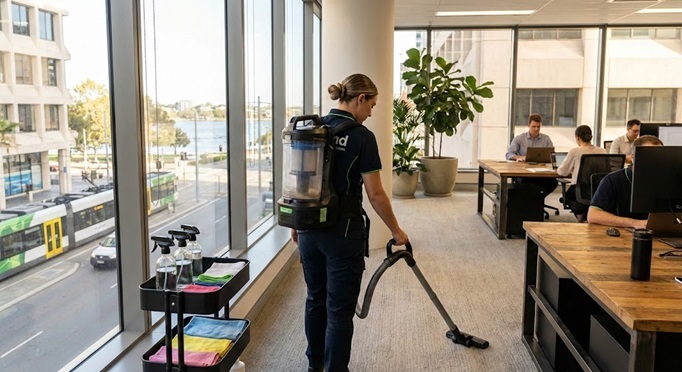
Perth businesses face mounting pressure to reduce environmental impact while maintaining impeccable hygiene standards. The commercial cleaning sector has responded with innovations that deliver hospital-grade cleanliness without compromising ecological responsibility - a shift driven by both regulatory requirements and stakeholder expectations.
The transformation extends beyond swapping products. Forward-thinking Perth organisations now integrate sustainable cleaning practices Perth operations through systemic changes: closed-loop chemical systems, microfibre cleaning technology that eliminates disposable materials, and data-driven resource management that cuts waste by 60% compared to traditional approaches.
The Business Case for Sustainable Cleaning Operations
Financial performance and environmental stewardship align more closely than many facility managers recognise. Perth organisations implementing comprehensive sustainable cleaning practices Perth protocols report average cost reductions of 23% within the first 18 months - savings generated through reduced chemical consumption, lower water usage, and decreased waste disposal fees.
The regulatory landscape reinforces this direction. Western Australia's updated Workplace Health and Safety requirements now mandate documentation of chemical exposure risks, pushing businesses toward lower-toxicity alternatives. Food processing facilities face particularly stringent standards, where HACCP compliance intersects with environmental reporting obligations.
Employee retention data tells an equally compelling story. Perth workplaces that prioritise environmental responsibility experience 31% lower staff turnover in facility management roles - a significant advantage given current labour market constraints. Workers increasingly evaluate employers based on sustainability commitments, particularly in sectors competing for skilled personnel.
Client expectations have evolved in parallel. Corporate tenants now include environmental performance metrics in lease negotiations, while accommodation providers face direct guest feedback on sustainability initiatives. The hospitality sector reports that 68% of business travellers consider environmental practices when selecting Perth accommodation - making washroom services and cleaning protocols visible differentiators.
Chemical Innovation Transforming Perth Cleaning Standards
The chemical composition of commercial cleaning products has undergone radical reformulation. Modern sustainable cleaning agents achieve hospital-grade disinfection using plant-derived surfactants and enzymatic cleaning formulations rather than harsh synthetic compounds - a shift that maintains efficacy while reducing environmental persistence.
Perth healthcare facilities demonstrate this evolution clearly. Aged care operators have transitioned to hydrogen peroxide-based disinfectants that decompose into water and oxygen, eliminating residual chemical exposure for vulnerable residents. These formulations meet Therapeutic Goods Administration standards while reducing chemical waste by 40% compared to traditional quaternary ammonium compounds.
Concentrated chemical systems represent another significant advancement. Cleanpro utilises dilution control technology that eliminates pre-mixed products, cutting packaging waste by 85% and reducing transport emissions through decreased product volume. The precision dosing prevents chemical overuse - a common issue that wastes resources and increases environmental loading.
The food and beverage sector benefits particularly from enzymatic cleaning formulations that break down organic matter without harsh alkalis or acids. These biological formulations maintain HACCP compliance while protecting Perth's wastewater systems from chemical stress. Restaurant operators report improved drain performance and reduced grease trap maintenance when switching to enzyme-based protocols.
Microfibre Technology Eliminating Disposable Waste
Microfibre cleaning technology has revolutionised resource efficiency in Perth commercial facilities. These engineered textiles remove 99.7% of bacteria using only water - eliminating both chemical dependency and disposable paper products that generate ongoing waste streams.
The mathematics prove compelling: a single microfibre cloth replaces approximately 3,000 paper towels over its 500-wash lifespan. For a mid-sized Perth office building, this translates to diverting 180 kilograms of paper waste annually while cutting consumable costs by $2,400. The environmental impact extends beyond waste reduction - microfibre cleaning technology eliminates the manufacturing emissions and water consumption associated with disposable product production.
Commercial cleaning services now integrate colour-coded microfibre systems that prevent cross-contamination while maintaining sustainability standards. Blue cloths for general surfaces, red for sanitary areas, yellow for food preparation zones - this protocol ensures hygiene integrity while maximising textile reuse.
Perth education facilities have embraced microfibre cleaning technology with particular enthusiasm. Schools report 90% reductions in paper towel consumption after implementing comprehensive microfibre programs, while simultaneously improving surface hygiene outcomes. The durability proves essential in high-traffic environments where disposable products create constant waste streams.
The laundering infrastructure supporting microfibre systems has evolved to match environmental objectives. Commercial laundries now process cleaning textiles using ozone treatment that disinfects at lower temperatures, cutting energy consumption by 35% compared to traditional hot-water sanitisation. This closed-loop approach extends microfibre lifespan while reducing operational environmental impact.
Water Conservation Through Advanced Equipment
Water scarcity defines Perth's environmental reality - making efficient cleaning equipment essential rather than optional. Modern extraction cleaning systems recover 95% of applied water, transforming carpet maintenance from a water-intensive process to a conservation-aligned practice through advanced water conservation systems.
The contrast with traditional methods proves stark. Conventional carpet cleaning applies 40-60 litres per 100 square metres with recovery rates around 60%, leaving substantial moisture that extends drying times and risks mould development. Advanced low-moisture water conservation systems apply just 15 litres while recovering 14 litres - achieving superior cleaning outcomes with 75% less water consumption.
Perth's industrial and manufacturing facilities benefit particularly from water-reclamation systems integrated into pressure cleaning equipment. These closed-loop units filter and recycle water through multiple cleaning cycles, reducing consumption by 80% compared to single-pass systems. The technology proves essential for automotive workshops and food processing operations where regular washdowns generate significant water demand.
Restroom cleaning protocols have similarly evolved. Touchless dispensing systems and sensor-activated fixtures reduce water waste while improving hygiene outcomes. When combined with sustainable washroom services that optimise supply replenishment, Perth facilities achieve 30-40% water savings in high-traffic amenities.
Energy-Efficient Equipment Reducing Carbon Footprint
Cleaning equipment electrification has accelerated dramatically, with battery-powered machines replacing petrol and diesel units across Perth commercial facilities. The transition eliminates direct emissions while reducing noise pollution - a dual benefit particularly valuable in occupied spaces like healthcare facilities and educational institutions.
Modern battery technology delivers runtime sufficient for full-shift operation. Lithium-ion powered floor scrubbers clean 5,000 square metres on a single charge, matching or exceeding the productivity of traditional equipment while eliminating exhaust emissions and reducing operational noise by 65 decibels.
The energy efficiency extends beyond propulsion. LED work lights, brushless motors, and intelligent power management systems reduce electricity consumption by 40% compared to previous-generation equipment. For Perth facilities operating 24-hour cleaning schedules, these efficiencies generate measurable cost savings alongside environmental benefits.
SWS Group has invested in equipment fleets that prioritise energy efficiency without compromising performance standards. The transition reflects broader industry recognition that environmental responsibility and operational excellence reinforce rather than contradict each other.
Solar-powered equipment charging represents the next evolution. Perth's abundant sunshine makes photovoltaic systems particularly viable for facilities with daytime equipment storage. Several large commercial properties now charge cleaning equipment fleets using rooftop solar arrays, effectively eliminating grid electricity consumption for facility maintenance operations.
Waste Reduction Through Systematic Approaches
Comprehensive waste management transforms cleaning operations from linear consumption models to circular systems. Perth businesses implementing zero-waste cleaning protocols divert 85-90% of facility maintenance waste from landfill through systematic source separation, composting, and recycling programs.
The approach requires rethinking procurement fundamentals. Bulk chemical systems eliminate packaging waste, concentrated products reduce transport emissions, and reusable microfibre systems replace disposable materials. These changes compound - a typical Perth office building reduces cleaning-related waste by 200 kilograms monthly through integrated sustainable cleaning practices Perth protocols.
Organic waste management proves particularly impactful for food service operations. Composting programs divert kitchen waste from landfill while producing soil amendments for landscaping - closing nutrient loops within facility operations. Perth restaurants implementing comprehensive composting report 60% reductions in waste disposal costs alongside environmental benefits.
The accommodation sector demonstrates circular economy principles through linen and textile management. Rather than disposing of worn items, progressive Perth hotels partner with recycling services that convert old linens into industrial wiping cloths, insulation materials, and other secondary products. This approach extends material lifespan while reducing virgin resource consumption.
Indoor Air Quality Benefits of Sustainable Cleaning
The health implications of cleaning products extend beyond surface hygiene to atmospheric impact. Traditional cleaning chemicals release volatile organic compounds that degrade indoor air quality - a concern particularly acute in sealed commercial buildings where ventilation systems recirculate contaminated air.
Perth healthcare facilities prioritise low-VOC cleaning protocols to protect vulnerable populations. Aged care residents with respiratory conditions show measurable health improvements when facilities transition to plant-based cleaning agents - with incident reports of respiratory distress declining by 35% following chemical reformulation.
The education sector experiences parallel benefits. Schools implementing sustainable cleaning practices Perth programs report 20% fewer student absences related to respiratory conditions and allergic reactions. Teachers note improved classroom air quality, particularly in spaces cleaned during occupied hours where traditional chemical odours previously caused discomfort.
Green cleaning certification programs provide frameworks for systematic improvement. Perth facilities pursuing environmental accreditation through green cleaning certification programs adopt comprehensive protocols addressing chemical selection, equipment efficiency, waste management, and staff training - creating integrated systems rather than isolated initiatives.
Training and Cultural Change Supporting Sustainability
Technology and products enable sustainable cleaning, but human practices determine actual outcomes. Comprehensive staff training proves essential for realising efficiency gains and environmental benefits from new systems and protocols.
Perth cleaning teams now receive education covering chemical dilution accuracy, microfibre handling procedures, equipment optimisation, and waste segregation protocols. This knowledge prevents common errors that undermine sustainability objectives - like excessive chemical application or improper microfibre laundering that reduces textile lifespan.
The cultural dimension extends beyond technical training. Organisations that successfully embed sustainable practices create ownership among cleaning staff, recognising their role in environmental stewardship rather than treating them as passive equipment operators. This engagement drives continuous improvement as frontline workers identify efficiency opportunities and process refinements.
Performance metrics have evolved to reflect sustainability priorities. Rather than measuring only cleanliness outcomes, progressive Perth facilities track water consumption per square metre, waste diversion rates, and chemical usage intensity. These metrics create accountability while highlighting improvement opportunities.
Industry-Specific Sustainable Cleaning Applications
Different sectors face unique sustainability challenges requiring tailored approaches. Healthcare hygiene solutions must balance infection control imperatives with environmental responsibility - a tension resolved through hospital-grade products that achieve disinfection using lower-impact chemistry.
The food and beverage sector navigates HACCP compliance requirements alongside sustainability objectives. Enzymatic cleaners and hydrogen peroxide sanitisers maintain food safety standards while reducing chemical environmental loading. Perth restaurants implementing these systems report improved health inspection outcomes alongside reduced operating costs.
Office workplace environments benefit from sustainable practices that enhance employee experience. Low-odour cleaning products, quiet battery-powered equipment, and improved indoor air quality contribute to workplace satisfaction - factors increasingly important for Perth businesses competing to attract and retain talent.
The accommodation industry faces direct guest scrutiny of environmental practices. Perth hotels implementing comprehensive sustainable cleaning programs leverage these initiatives in marketing communications, attracting environmentally conscious travellers while reducing operational costs through efficiency gains.
Integrated Solutions Maximising Environmental Performance
Isolated sustainability initiatives deliver limited impact compared to integrated approaches addressing multiple facility services simultaneously. Perth businesses achieve optimal environmental outcomes by coordinating cleaning protocols with waste management, pest control, and facility maintenance operations.
The synergies prove substantial. Sustainable commercial cleaning services combined with effective floor mat rental reduce overall facility maintenance requirements by preventing soil and moisture ingress. This upstream intervention cuts cleaning chemical consumption, water usage, and labour hours - multiplying environmental benefits.
Pest management integration offers similar advantages. Preventive approaches emphasising sanitation and exclusion reduce reliance on chemical treatments, supporting both environmental and occupational health objectives. Perth facilities implementing integrated pest management alongside sustainable cleaning protocols achieve superior outcomes compared to siloed approaches.
The administrative efficiency of consolidated service delivery reinforces environmental benefits. Single-vendor accountability streamlines communication, reduces coordination overhead, and enables systematic optimisation across facility services. This integration proves particularly valuable for Perth businesses managing multiple locations where consistency and scalability determine program success.
The Path Forward for Perth Commercial Cleaning
Sustainable cleaning practices have transitioned from niche differentiation to mainstream expectation across Perth commercial sectors. The trajectory points toward continued innovation in chemistry, equipment, and operational methodology - driven by regulatory requirements, stakeholder expectations, and demonstrated business benefits.
Emerging technologies promise further advancement. Electrostatic disinfection systems reduce chemical consumption while improving coverage, autonomous cleaning robots optimise resource utilisation through precision operation, and real-time monitoring systems enable data-driven efficiency improvements. Perth facilities adopting these innovations position themselves at the forefront of environmental performance.
The business case for sustainability strengthens as environmental costs become increasingly visible through carbon pricing, waste disposal fees, and water charges. Perth organisations implementing comprehensive sustainable cleaning practices Perth protocols today build resilience against future regulatory and market shifts while realising immediate operational benefits.
Facility managers evaluating sustainable cleaning options should prioritise integrated approaches over isolated initiatives. Comprehensive programs addressing chemistry, equipment, training, and waste management deliver superior environmental and financial outcomes compared to piecemeal adoption. Partnering with providers offering end-to-end solutions ensures consistency and accountability across all facility services.
For Perth businesses ready to advance environmental performance while maintaining impeccable hygiene standards, speak with SWS Group to discuss customised sustainable cleaning solutions aligned with specific operational requirements and industry compliance obligations call us at (08) 9336 6944.