












Food processing facilities, commercial kitchens, and hospitality venues face a critical challenge: maintaining linen hygiene standards that protect both food safety and business reputation. In Western Australia, where the food industry contributes over $6 billion annually to the state economy, HACCP-compliant laundry services have become non-negotiable for operators managing health department inspections and customer safety obligations.
HACCP (Hazard Analysis Critical Control Points) compliance in commercial laundry operations means more than washing linen at high temperatures. It requires documented processes, contamination prevention protocols, and verifiable thermal disinfection that meets Food Standards Australia New Zealand (FSANZ) requirements. For facility managers and business owners, understanding what distinguishes genuine HACCP-compliant services determines whether linen becomes a food safety asset or a contamination risk.
The complexity of compliance requirements and the critical role linen plays in food safety make provider selection a strategic business decision rather than a commodity purchasing decision.
What HACCP Compliance Means for Commercial Laundry
HACCP compliance in laundry services addresses biological, chemical, and physical hazards that can compromise food safety. Unlike standard commercial washing, HACCP-compliant processes follow the seven principles established by Codex Alimentarius—the international food standards body recognised by FSANZ.
These principles require laundry providers to identify critical control points where contamination could occur, establish monitoring procedures, and maintain verification records. For food industry operators, this means every chef jacket, apron, and kitchen towel undergoes documented processing that prevents pathogen survival and cross-contamination.
The thermal disinfection standard for food-grade textiles requires washing at minimum 71°C for 3 minutes, or alternative time-temperature combinations that achieve equivalent pathogen reduction. This specification eliminates common foodborne pathogens including Salmonella, E. coli, and Listeria monocytogenes—organisms that survive lower-temperature washing and pose serious health risks in food preparation environments.
Western Australian food and beverage services operating under the Food Act 2008 must demonstrate due diligence in preventing food contamination. Using non-compliant laundry services creates documented liability during health department inspections, particularly when investigating foodborne illness outbreaks.
Critical Components of Food Grade Laundry Systems
Segregated Processing Workflows
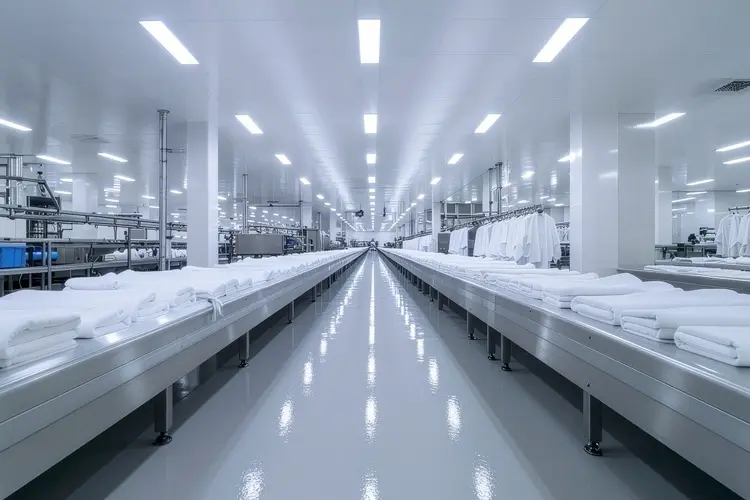
HACCP-compliant laundry facilities maintain physical separation between soiled and clean textile zones. This barrier system prevents airborne contamination and cross-contact between incoming food-soiled items and processed linen ready for distribution. Processing workflows follow a linear path—soiled goods enter through dedicated receiving areas, move through washing and thermal disinfection zones, then proceed to clean-side finishing and packing areas. Staff cannot move between contaminated and clean zones without hygiene protocols including handwashing and protective equipment changes.
For commercial kitchens and food processing facilities, this segregation extends to linen categories. Heavily soiled items from raw protein preparation areas undergo separate processing from front-of-house dining linen, preventing cross-contamination between high-risk and lower-risk textile categories.
Chemical Control and Residue Management
Food-grade laundry operations use EPA-approved detergents and sanitisers formulated to leave no harmful residues on textiles contacting food preparation surfaces. Chemical dosing systems maintain precise concentrations that achieve soil removal and disinfection without creating new contamination risks. Rinse cycle specifications ensure complete chemical removal before textiles return to food service environments.
HACCP documentation tracks chemical batch numbers, dosing rates, and rinse verification—creating traceable records if contamination issues arise. Some commercial kitchens require fragrance-free processing to prevent odour transfer to food products. HACCP-compliant providers accommodate these specifications through dedicated processing runs with modified chemical programs.
Temperature Monitoring and Verification
Every wash cycle in HACCP-compliant operations includes continuous temperature monitoring with automated recording. These systems verify that thermal disinfection parameters (71°C for 3 minutes minimum) are achieved and maintained throughout the disinfection phase. Temperature deviations trigger automatic alerts and quarantine protocols. Affected loads undergo reprocessing before release, with incident documentation added to quality records.
Leading providers operate thermal disinfection systems with redundant monitoring—primary temperature sensors with backup verification and independent data logging. This redundancy ensures no processing failures go undetected, providing the documented verification health inspectors require during audits.
Industry-Specific Applications in Western Australia
Restaurant and Commercial Kitchen Services
Perth's hospitality sector—spanning over 2,400 food service businesses—requires consistent linen supply that supports both food safety and customer presentation standards. Restaurant cleaning programs often coordinate with linen services to maintain comprehensive hygiene protocols.
Chef uniforms, kitchen towels, and apron programs designed for commercial kitchens include stain removal processes that eliminate food residues and grease without compromising fabric integrity. High-turnover venues require daily linen exchange with sufficient inventory depth to maintain operations during peak service periods. HACCP-compliant providers offer colour-coded textile systems that prevent cross-contamination between kitchen zones.
Food Processing and Manufacturing Facilities
Western Australia's food processing sector—including meat processing, seafood handling, and packaged food production—operates under stringent HACCP requirements that extend to all facility textiles. Processing plant uniforms, cleaning cloths, and floor mats require documented laundering that prevents pathogen introduction.
These facilities often require daily or twice-daily linen exchanges to support continuous production schedules. Laundry providers must coordinate delivery timing with production shifts, minimising operational disruption whilst maintaining textile availability. Some food manufacturers require garment tracking systems that verify each uniform's processing history—RFID-enabled linen management provides item-level traceability, documenting every wash cycle and inspection point for individual garments.
Healthcare Food Service Operations
Hospital kitchens and aged care food preparation areas face dual compliance requirements—food safety standards plus infection control protocols. Healthcare linen services meeting AS/NZS 4146 standards often extend to food service textiles in these environments.
Patient meal service requires linen processing that eliminates both foodborne pathogens and healthcare-associated organisms including MRSA and VRE. This elevated standard demands thermal disinfection verification plus microbiological testing to confirm pathogen elimination. Dietary departments serving immunocompromised patients may specify additional processing requirements including extended rinse cycles and dedicated textile inventories that never process non-healthcare items.
Compliance Documentation and Audit Support
Required Record-Keeping Systems
HACCP-compliant laundry providers maintain comprehensive documentation including:
Daily temperature logs with time-stamped verification; Chemical batch records and dosing calculations; Equipment calibration certificates and maintenance logs; Staff training records and hygiene compliance audits; Non-conformance reports and corrective action documentation; Microbiological testing results (quarterly minimum).
These records become critical during health department inspections and food safety audits. Facilities using non-compliant laundry services cannot produce this documentation, creating significant compliance gaps. The absence of verifiable records can trigger regulatory action ranging from corrective action notices to operational restrictions.
Third-Party Verification and Certification
Independent auditing provides additional assurance for food industry operators managing supply chain risks. HACCP-certified laundry operations undergo regular third-party audits verifying process controls, documentation systems, and contamination prevention protocols.
Some providers maintain ISO 9001 quality management certification alongside HACCP compliance, demonstrating systematic approaches to process control and continuous improvement. These quality systems create traceable accountability when investigating potential contamination incidents.
Microbiological testing by NATA-accredited laboratories (National Association of Testing Authorities, Australia) provides objective verification that thermal disinfection achieves pathogen elimination. Quarterly testing programs sample processed textiles for indicator organisms and specific pathogens relevant to food safety.
Service Delivery Models for Food Industry Operators
Rental Programs with Managed Inventory
Full-service linen rental eliminates capital investment in textile inventory whilst ensuring consistent quality and availability. Providers own, process, and maintain all textiles, replacing worn items without additional charges. This model suits high-volume operations including hotel kitchens, contract catering facilities, and multi-site restaurant groups.
Rental programs include inventory management systems that track usage patterns and adjust supply levels to match operational demands. Weekly or bi-weekly service frequencies suit most commercial kitchens, though high-volume venues may require daily exchanges. Emergency delivery protocols accommodate unexpected demand spikes during special events or seasonal peaks.
Processing Services for Customer-Owned Textiles
Some food businesses prefer owning their textile inventory—particularly operations with specialised uniform requirements or branded chef wear. Processing-only programs allow businesses to supply textiles and receive HACCP-compliant laundering. This approach requires larger initial capital investment but provides long-term cost advantages for stable operations with predictable linen requirements.
Processing services still include full HACCP documentation, providing the compliance records health inspectors require regardless of textile ownership structure.
Integrated Facility Service Coordination
Food industry operators managing multiple hygiene service contracts benefit from integrated providers coordinating all facility requirements. Pest control programs designed for food facilities often coordinate with laundry schedules to minimise operational disruption. Single-provider accountability streamlines compliance management, reduces vendor coordination overhead, and creates unified documentation systems for health department audits.
Cost Considerations and ROI Analysis
Direct Cost Components
HACCP-compliant laundry services typically cost 15–25% more than standard commercial laundering due to specialised processing requirements, documentation systems, and quality verification programs. However, this premium prevents significantly larger costs associated with food safety failures.
A single foodborne illness outbreak can cost food businesses $75,000–$150,000 in health department responses, product recalls, and reputational damage—far exceeding annual laundry service investments. Service pricing typically includes per-piece processing charges for rental programs, weight-based pricing for processing-only services, delivery fees (often waived for minimum order volumes), inventory management and replacement costs (rental programs), and documentation and compliance reporting.
Indirect Value Creation
Beyond direct cost comparisons, HACCP-compliant laundry services create operational value through reduced labour costs (eliminating in-house laundry operations and associated staffing), improved staff presentation (consistent, professionally processed uniforms enhance brand image), simplified compliance management (comprehensive documentation ready for health inspections), risk transfer (professional liability coverage protects against contamination claims), and operational reliability (guaranteed textile availability prevents service disruptions).
Food businesses operating in-house laundry facilities rarely achieve true HACCP compliance due to equipment limitations, documentation requirements, and staff training needs. Converting to professional services often reduces total cost of ownership whilst improving compliance outcomes.
Selecting HACCP-Compliant Providers in Western Australia
Essential Qualification Criteria
When evaluating laundry service providers, food industry operators should verify HACCP certification through third-party audit certificates and review scope of certification. Confirm thermal disinfection parameters meet FSANZ requirements (71°C for 3 minutes minimum). Review sample processing records, temperature logs, and chemical tracking documentation. Visit processing facilities to observe segregation protocols and equipment capabilities. Request recent NATA-accredited laboratory results confirming pathogen elimination. Verify professional liability and product liability insurance adequate for food industry applications. Check references from similar food industry operations regarding delivery consistency and emergency response.
Geographic Service Coverage
Perth metro and regional Western Australian food businesses require providers with distribution networks supporting reliable delivery schedules. Multi-site restaurant groups and food processors operating across Western Australia benefit from single-provider coverage eliminating the complexity of managing regional service contracts. Consistent processing standards across all locations simplify compliance management and staff training.
Emergency Response Capabilities
Food industry operations occasionally face urgent linen requirements—equipment failures, unexpected health inspections, or special events creating demand spikes. HACCP-compliant providers should offer emergency processing and delivery services, typically within 24–48 hours for Perth metro locations. These capabilities become critical during food safety incidents when health departments may require complete textile replacement as corrective action.
Implementation and Transition Planning
Service Startup Process
Converting to HACCP-compliant laundry services requires structured implementation. Evaluate current textile inventory, usage volumes, and specific food safety requirements. Define textile types, quantities, exchange frequencies, and delivery schedules. Phase out non-compliant textiles and establish rental inventory or processing protocols. Educate kitchen and service staff on proper textile handling, sorting, and storage procedures. Incorporate laundry service records into facility HACCP documentation systems. Monitor service performance, delivery reliability, and textile quality during initial 30–60 days.
Most food businesses complete transitions within 2–4 weeks, coordinating with existing service contracts to minimise disruption.
Ongoing Quality Management
After implementation, regular performance reviews ensure service quality and compliance maintenance. Monthly delivery accuracy and timeliness assessments; Quarterly textile quality evaluations (staining, wear, replacement rates); Annual compliance documentation reviews; Periodic facility audits of laundry provider operations; Continuous communication regarding operational changes affecting linen requirements.
Strong provider relationships include proactive communication about processing improvements, regulatory updates, and operational optimisation opportunities.
Conclusion
HACCP-compliant laundry services represent essential infrastructure for Western Australia's food industry—not optional enhancements but fundamental requirements for safe operations and regulatory compliance. The documented thermal disinfection, contamination prevention protocols, and verifiable processing records these services provide create defensible food safety systems that protect both public health and business viability.
For facility managers and business owners evaluating laundry service providers, HACCP certification and demonstrated compliance capabilities must drive selection decisions. The marginal cost premium for compliant services disappears when compared against foodborne illness risks, health department penalties, and reputational damage from contamination incidents.
Western Australian food businesses benefit from integrated facility service providers coordinating HACCP-compliant laundry with pest management, commercial cleaning, and washroom hygiene programs. SWS Group delivers HACCP-compliant commercial linen services across Perth metro and regional Western Australia through the Cleantex division, with thermal disinfection systems, documented quality controls, and microbiological verification supporting food industry compliance requirements. Combined with floor mat rental programs and facility hygiene services, SWS Group provides integrated solutions addressing the complete spectrum of food safety and workplace hygiene obligations under single-provider accountability.
Food industry operators requiring HACCP-compliant laundry services should contact (08) 9336 6944 to discuss specific facility requirements, compliance documentation needs, and service implementation timelines. Technical team assessment provides facility evaluations, specification development, and transition planning ensuring seamless conversion to compliant processing systems.