













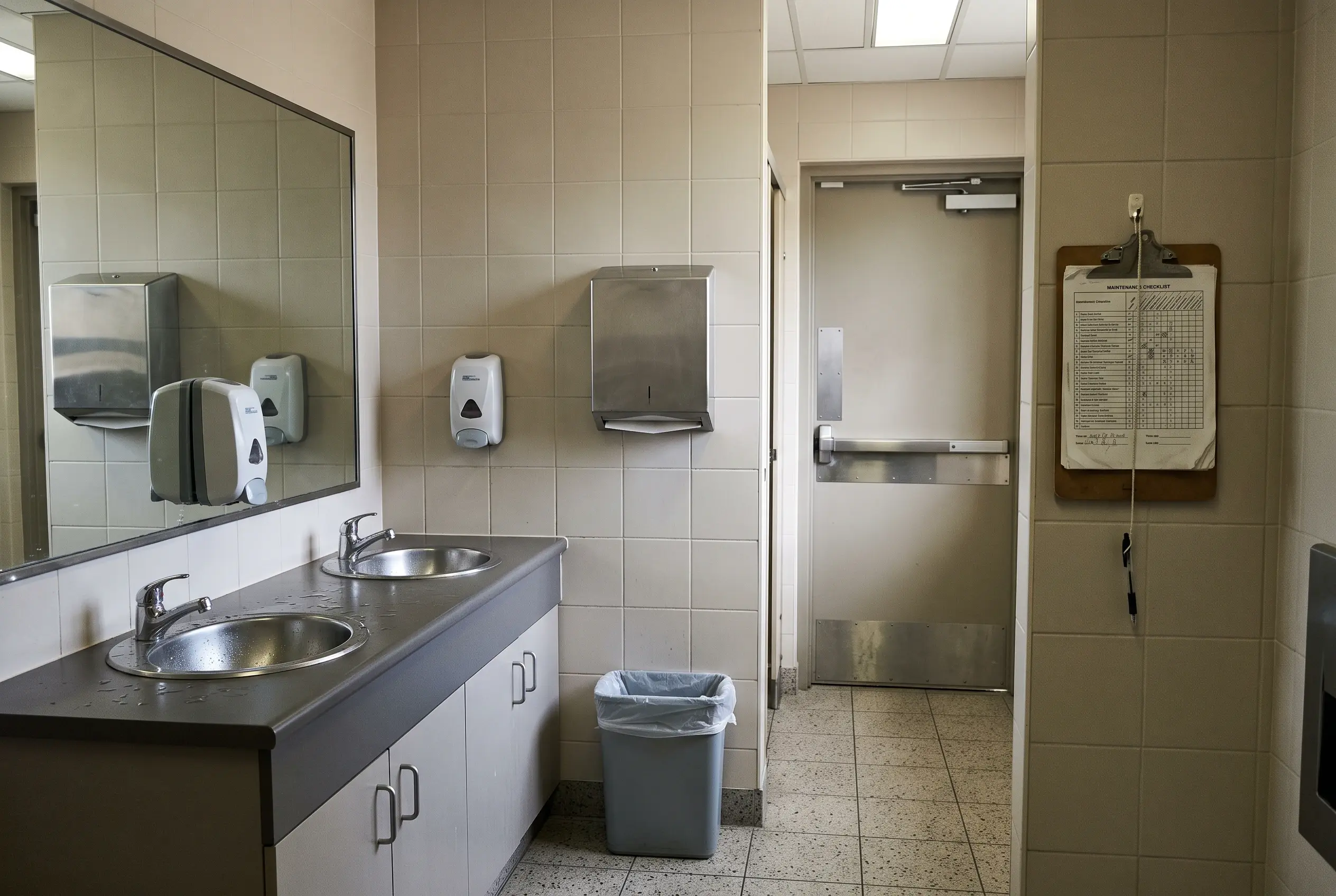
A washroom can be cleaned regularly and still generate complaints. Dispensers may run empty between visits, bins may become full during busy periods, or maintenance issues may remain unresolved because nobody is responsible for following them up.
These problems are not always caused by insufficient cleaning. They can also reflect a mismatch between the service schedule and the way people use the facilities.
A practical schedule accounts for more than cleaning frequency. It sets out which tasks need attention, when they should happen, who is responsible and how problems are reported. When these arrangements reflect actual site conditions, facility managers have a clearer way to prevent recurring issues and respond when something goes wrong.
Assess How Each Washroom Is Used
The first step is to understand demand across the site. Applying the same schedule to every washroom may be convenient, but it does not necessarily reflect differences in occupancy, opening hours or usage patterns.
A small staff bathroom, a public-facing facility and amenities serving a warehouse workforce can experience very different levels of use.
Identify Busy Periods and High-Use Areas
Look beyond the number of people working at a site. Consider when they use the facilities and whether demand increases at particular times.
Useful factors to review include:
- Occupancy: The number of employees, visitors, contractors and other users who regularly access the facilities.
- Operating hours: Whether the washroom is used during standard business hours, extended shifts or overnight operations.
- Peak periods: Break times, shift changes, meetings, training sessions and other periods when several people may use the same facilities.
- Location: Whether the washroom is near reception, shared work areas, production floors or public access points.
- Usage changes: Temporary increases in occupancy, changes to work patterns or events that place additional demand on the facilities.
These details help identify where checks may need to be more frequent or timed differently. They also prevent low-use and high-use facilities from being treated as though they have identical requirements.
Establish a Baseline Before Changing Frequencies
Avoid setting a new schedule based on assumptions alone. Review existing cleaning records, stock usage, maintenance requests and complaint history to understand how the facilities currently perform.
Where records are incomplete, observe the washrooms at different times of the day. Note when dispensers become depleted, when bins approach capacity and when cleaning issues are most likely to be reported.
This initial assessment provides a more useful starting point than simply increasing the number of service visits. It can also reveal whether the problem is related to timing, insufficient stock, access restrictions or an unresolved maintenance issue.
Define Tasks and Assign Responsibility
Once usage patterns are understood, separate the work into tasks. A schedule that only lists cleaning visits may overlook the smaller checks and follow-up actions that keep a washroom functional between visits.
Distinguish Routine Checks From Specialist Servicing
Routine cleaning and inspection should be identified separately from replenishment, waste collection and specialist maintenance.
For example, a routine check may involve looking for empty dispensers, visible spills, overflowing bins or obvious damage. Replenishment involves replacing consumables, while specialist servicing may require a suitably qualified technician or an agreed maintenance provider.
The appropriate interval depends on the task, equipment, site conditions and applicable requirements. WorkSafe WA's Managing the Work Environment and Facilities Code of Practice recommends that cleaning arrangements take account of the work performed, potential contamination and the number of workers, including shift workers.
This guidance can inform routine cleaning arrangements, but it should not be treated as a universal timetable for every washroom or as a substitute for equipment-specific maintenance instructions.
Make Ownership Clear
Every recurring task needs an assigned responsibility. Without clear ownership, facility managers may assume that a cleaning team is checking consumables, while the cleaning team may expect replenishment to be handled by another person or provider.
A responsibility record should identify:
- The washroom or area covered by the task.
- The task to be completed and its required frequency.
- The person or team responsible for carrying it out.
- Any access requirements or equipment needed.
- Who should be notified when a fault or shortage is found.
- Who is responsible for confirming that the issue has been resolved.
Also establish who covers checks during staff absences, outside normal operating hours and when access is restricted.
The objective is not to create unnecessary administration. It is to make sure that routine work, service-provider responsibilities and follow-up actions do not fall between different teams.
Coordinate Replenishment and Waste Collection
Cleaning frequency alone does not determine whether a washroom remains suitable for use. Consumables and waste need their own arrangements because their requirements can change independently of the cleaning schedule.
Set Stock and Replenishment Requirements
Start by identifying the consumables required in each washroom. These may include toilet tissue, hand towels, hand soap and other products used by the installed dispensers.
Record the products, compatible refill types, storage location and person responsible for ordering or replenishment. Where an external supplier manages delivery or refilling, document the agreed scope and how shortages are reported. The washroom consumables arrangements should be considered alongside the site's own stock-control responsibilities.
It is also important to distinguish reserve stock from dispenser capacity. Keeping additional products in a storeroom does not prevent an empty dispenser if nobody is assigned to check and refill it.
Reorder points should reflect recorded consumption, delivery lead times and available storage. Review them when occupancy or usage patterns change rather than relying on an arbitrary stock level.
Match Waste Arrangements to Actual Demand
Waste requirements should be assessed separately for each washroom. Consider the type of waste generated, the number and capacity of bins, how quickly they fill and the route used to remove them.
Sanitary waste, general rubbish and any specialist waste stream may require different containers and collection arrangements. They should not automatically be treated as interchangeable or assigned the same servicing frequency.
Check whether collection can take place without disrupting site operations or leaving waste in areas used by employees and visitors. Where specialist disposal is required, confirm the applicable handling and collection arrangements with the responsible provider.
Review bin capacity and collection records together. Repeated overflow may indicate that a collection interval, bin size or internal waste route needs to change. Simply adding more cleaning visits may not resolve the underlying problem.
Plan for Access and Service Disruptions
A schedule can be well designed on paper but fail when service teams cannot reach the facilities or complete their assigned work.
Restricted areas may require inductions, escorts, sign-in procedures or access during specific operating windows. These requirements should be confirmed before service times are agreed.
Facility managers should also identify how work will be handled when a scheduled visit cannot proceed. Establish who must be notified, how missed tasks are recorded and whether an alternative visit or temporary arrangement is needed.
Changes to opening hours, building access, staffing or site operations should trigger a review of the schedule. This helps prevent outdated arrangements from continuing after the conditions they were designed for have changed.
Use Complaint Records to Improve the Schedule
Complaints are useful when they reveal a recurring problem rather than being treated as isolated requests. Recording the type, location and timing of each issue helps facility managers identify where the existing arrangements may be falling short.
Record the Cause, Not Just the Complaint
A report that a washroom is unsatisfactory does not explain what needs to change. Record the specific issue wherever possible.
For example:
- An empty soap dispenser may indicate that replenishment is not aligned with peak usage.
- Repeatedly full bins may point to unsuitable capacity or collection timing.
- Persistent odours may require investigation of the fixture, drainage or cleaning arrangements.
- Missed service tasks may indicate an access problem or unclear responsibility.
The response should address the likely cause rather than automatically adding more cleaning visits or supplies.
Maintenance-related complaints also need to be distinguished from routine cleaning issues. A recurring problem with a fixture or installed unit may require inspection and specialist attention rather than another routine check.
Review Patterns and Adjust the Relevant Task
Review complaint records alongside cleaning logs, stock usage, waste collection records and maintenance reports. Look for repeated issues in the same location or at similar times.
If a dispenser repeatedly runs empty before the afternoon break, consider whether the check needs to take place earlier or whether stock arrangements need to change. If bins regularly reach capacity before collection, reassess their size and the collection interval.
Changes should be recorded so that the facility team can assess whether they resolve the problem. If complaints continue, investigate other possible causes rather than repeatedly changing the same task.
A schedule should also be reviewed after significant changes to occupancy, operating hours, facility layout or the type of work carried out at the site.
Keep the Schedule Relevant to Site Conditions
An effective washroom service schedule is not simply a list of cleaning visits. It coordinates routine checks, consumable replenishment, waste arrangements, access requirements and maintenance responsibilities around the way each facility is used.
Facility managers should use site observations and service records to identify where the arrangements are working and where adjustments are needed. Clear task ownership makes follow-up easier, while complaint records help distinguish between cleaning, replenishment, waste and maintenance issues.
Regularly reviewing these details gives facilities teams a practical basis for improving washroom conditions and reducing complaints without adding unnecessary visits or tasks.