













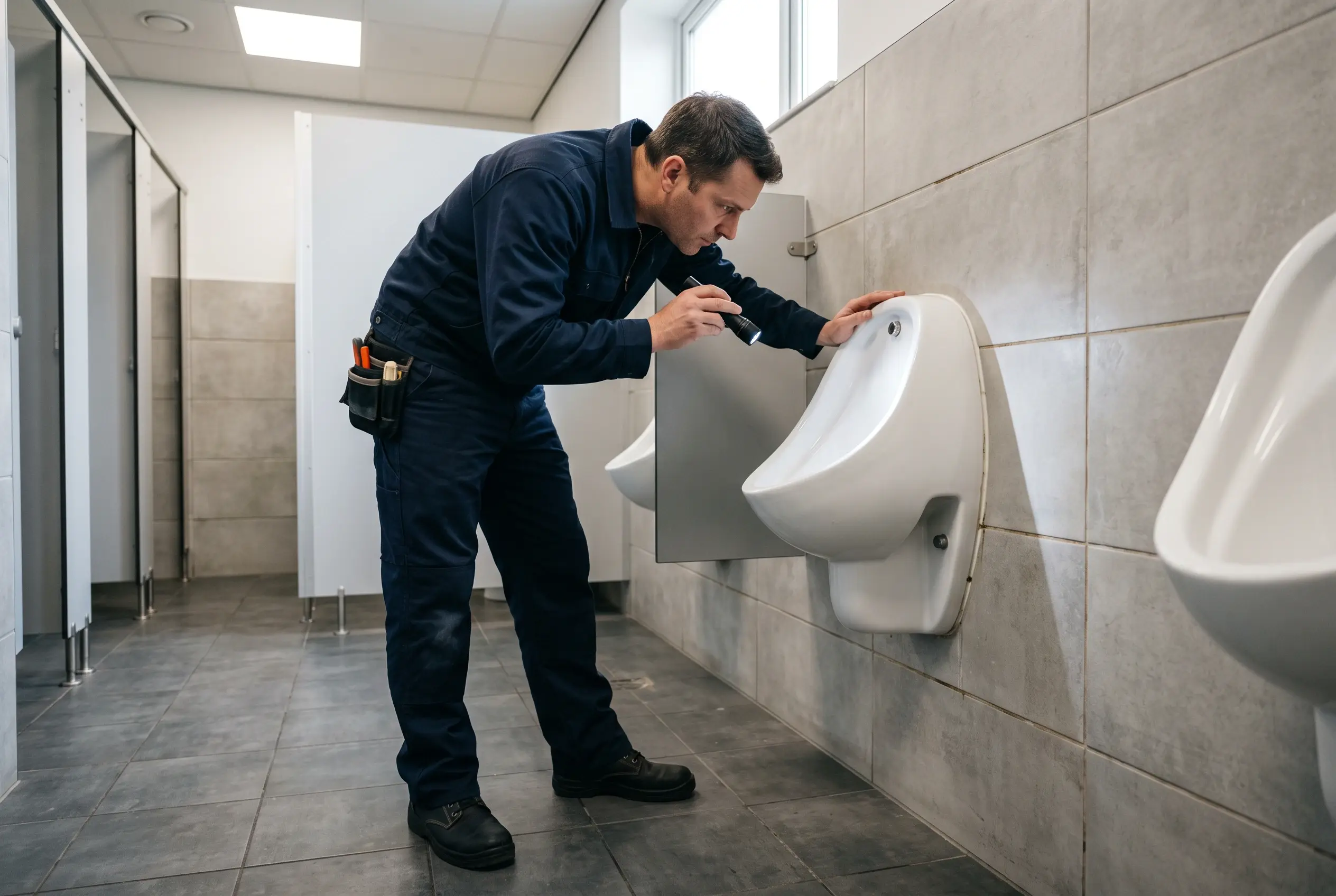
Waterless urinals do not require conventional flushing, but their operation still depends on components that need cleaning, inspection and periodic replacement. The sealing mechanism, cleaning method and condition of the waste pipework all affect how the fixture performs over time.
A recurring odour or drainage problem should not automatically be treated as a failed cartridge. Different faults can produce similar symptoms, so maintenance needs to start with the installed system and the condition of the individual fixture.
What Needs Attention During Maintenance?
The parts requiring attention depend on the type of waterless urinal installed. Some systems use replaceable cartridges, while others use different sealing arrangements. Replacement parts and servicing procedures are therefore not interchangeable across all models.
Identify the make, model and sealing mechanism before establishing a maintenance routine. The manufacturer's instructions should specify the compatible cleaning method, replacement components and any precautions that apply to the system.
AS 1172.7:2025 is the current Australian Standard for waterless and limited-flush urinals with integral sealing devices. It sets out requirements for design, performance, materials and finish. Day-to-day cleaning and servicing should still follow the manufacturer's instructions for the installed model.
Cartridges and sealants should be inspected and replaced according to the installed system's requirements, rather than through a universal timetable. Where servicing is contracted out, the agreed scope for waterless urinal maintenance should identify who is responsible for inspecting and replacing these components.
Why Cleaning and Fault Investigation Must Be Separate
Daily cleaning removes visible soil from the urinal bowl and surrounding surfaces. It does not confirm that the sealing mechanism is functioning correctly or that the waste pipework is clear.
Cleaning personnel should follow the instructions for the specific fixture, including restrictions on cleaning products and application methods. Using unsuitable chemicals or applying conventional urinal-cleaning procedures without checking compatibility may interfere with the installed system.
Odour also needs to be investigated rather than treated as proof of cartridge failure. Check whether the smell comes from one fixture or affects the wider washroom. A problem isolated to one urinal may warrant inspection of its cartridge, seal and service history. An odour affecting the room more broadly may also involve floor wastes, bins or ventilation.
Drainage problems require a separate assessment. Struvite can accumulate inside pipework carrying waterless urinal discharge and contribute to blockages. In Western Australia, the 2025 edition of AS/NZS 3500.2 took effect on 1 May 2026 as part of the adoption of the 2025 Plumbing Code of Australia. Clause 13.24 adds provisions to increase the diameter and grades of discharge pipes to allow for struvite build-up that can cause blockages. The changes are outlined in the Western Australian plumbing standards update.
Replacing cartridges will not resolve a blockage in the waste pipework. Work on sanitary or drainage plumbing can fall within regulated plumbing activities, so check the applicable licensing requirements and engage a licensed plumber where required. The Western Australian plumbing licensing guidance explains the relevant requirements and exceptions.
How Usage and Service History Shape the Routine
A suitable maintenance routine should account for the manufacturer's instructions, fixture usage and previous service history. Urinals in heavily used facilities may need closer monitoring than those in low-traffic areas, but this does not automatically mean their cartridges need more frequent replacement.
Daily cleaning and technical servicing should have clearly defined responsibilities. Cleaning staff should follow the approved cleaning procedure and report changes such as recurring odour, visible residue or slower drainage. Component inspection and replacement should be handled by the person responsible for servicing the installed system.
Service records can help distinguish recurring faults from isolated problems. Keep each fixture's model and location together with inspection dates, replaced components, reported symptoms and outstanding work. These details help determine whether a recurring problem requires another component replacement, a change in cleaning practice or a plumbing investigation.
Review the routine when usage patterns change or when the same fault keeps returning. Repeated complaints may indicate that the current procedure is not addressing the underlying issue, even if individual service visits have been completed.
Effective waterless urinal maintenance depends on identifying whether a problem involves cleaning, the sealing mechanism or the waste pipework. Treating these as separate areas of responsibility helps facility teams investigate recurring faults and avoid unnecessary component replacement.