












Every Australian workplace faces clear legal obligations regarding the provision of first aid equipment and trained personnel. In Western Australia, these requirements are governed by a robust legislative framework designed to protect employees across all sectors. Maintaining compliant first aid kits is a critical component of this duty of care. However, the logistical reality of managing these supplies often proves challenging for busy business owners and facility managers.
Compliance involves more than a one-time purchase of medical supplies. It requires a continuous cycle of auditing, restocking, and updating items to reflect current workplace risks. Many organisations in Perth struggle to maintain these standards while simultaneously focusing on their core commercial activities. A lack of oversight can lead to expired bandages, empty antiseptic bottles, and a dangerous gap in emergency readiness.
SWS Group addresses these operational hurdles through Cleanpro’s managed first aid kit services. This professional management model ensures that every kit remains fully stocked and compliant with Western Australian regulations. By transitioning to a managed service, businesses can eliminate the administrative burden of safety maintenance while providing a higher standard of care for their workforce.
Understanding WHS First Aid Compliance Requirements in Perth
The Work Health and Safety Act 2020 (WA) serves as the primary legislation for workplace safety in the state. Under this Act, a Person Conducting a Business or Undertaking (PCBU) must ensure the provision of first aid equipment. This obligation is not a suggestion but a legal requirement that carries significant weight during regulatory inspections. Employers must provide adequate facilities for the administration of first aid and ensure that workers have access to them at all times.
A compliant approach begins with a comprehensive risk assessment tailored to the specific Perth workplace. Factors such as the nature of the work, the presence of hazardous substances, and the total number of employees influence the required provisions. For instance, a warehouse in Canning Vale will have vastly different requirements compared to a boutique retail outlet in the Perth CBD. Proximity to emergency medical services also plays a role in determining whether additional specialized equipment is necessary.
The Western Australian Code of Practice for First Aid in the Workplace provides detailed guidance on meeting these legislative goals. It outlines the minimum requirements for kit contents and the ratio of trained first aiders to staff members. Failing to meet these standards can result in substantial fines and legal liability. Moreover, inadequate first aid provision can complicate workers' compensation claims and damage the reputation of a business as a responsible employer.
Integrating professional WHS compliance protocols into daily operations is the most effective way to manage these risks. Expert providers understand the nuances of the WA legislation and help businesses maintain documentation that proves ongoing compliance. This proactive stance ensures that if an incident occurs, the business is prepared to respond effectively and can demonstrate its commitment to safety standards.
Components of a Compliant Workplace First Aid Kit
A standard workplace first aid kit must contain a range of essential supplies designed to treat common injuries. These typically include adhesive dressings, sterile eye pads, triangular bandages, and non-conforming rollers. Antiseptic swabs, disposable gloves, and a resuscitation mask are also fundamental components. However, the specific contents must be adjusted based on the unique hazards identified during the risk assessment process.
Specialised modules are often required for higher-risk environments. For example, kitchens and workshops in Perth frequently require dedicated burn modules containing hydrogels and specialized dressings. Sites where chemical splashes are possible must have saline eye wash stations positioned within easy reach. Outdoor work crews, common in the Western Australian construction and landscaping sectors, require portable kits equipped with snake bite bandages and sunscreen to address local environmental hazards.
Managing the shelf-life of these components is a significant challenge for internal staff. Medical supplies such as antiseptic liquids and sterile dressings have specific expiry dates. Once these dates pass, the items may no longer be sterile or effective for a workplace injury response. A managed service eliminates the risk of using expired stock by tracking every item and replacing it before it becomes non-compliant.
Placement and accessibility are equally important for compliance. First aid kits should be clearly labelled with a white cross on a green background. They must be located in areas that are easily accessible to all workers, particularly in high-risk zones. In large industrial facilities, multiple kits are often required to ensure that help is never more than a few moments away. Regular site audits by professional technicians verify that these kits remain in their designated locations and are clearly visible.
Managed First Aid Kit Services vs In-House Management
Many Perth businesses initially choose to manage their first aid kits in-house. This DIY approach involves purchasing kits from a retail supplier and tasking a staff member with monthly inspections. While this might seem cost-effective initially, it often leads to compliance gaps. Internal staff members are frequently distracted by their primary roles, leading to missed audits and incomplete restocking.
Transitioning to a first aid kit rental model provides a structured and reliable alternative. Professional providers take full responsibility for the inventory and compliance of the kits. This shift in liability offers peace of mind to business owners who may not have the technical expertise to evaluate medical supplies. A managed service ensures that the right items are always available, regardless of how busy the internal team becomes.
Cost efficiency is another major factor when comparing these models. Outright purchase involves upfront capital expenditure and the ongoing cost of buying individual replacement items at retail prices. Conversely, a managed service typically operates on a predictable monthly fee. This model often includes the cost of all replacement stock, meaning businesses do not face unexpected spikes in safety spending after a minor incident requires kit usage.
For small businesses in suburbs like Fremantle or Osborne Park, the administrative time saved by professional management is substantial. Managers no longer need to research current standards or source specialized medical supplies from different vendors. The provider acts as a single point of contact for all first aid needs. This streamlined approach allows the business to maintain a high safety standard without the need for a dedicated health and safety officer on the payroll.
Key Benefits of Professional First Aid Kit Rental
The primary benefit of managed first aid kit services is the guarantee of emergency readiness. When an accident occurs, there is no time to discover that the antiseptic bottle is empty or the bandages have been used and not replaced. Professional technicians ensure that every kit is ready for immediate use. This level of reliability is essential for maintaining a safe working environment and protecting the health of employees.
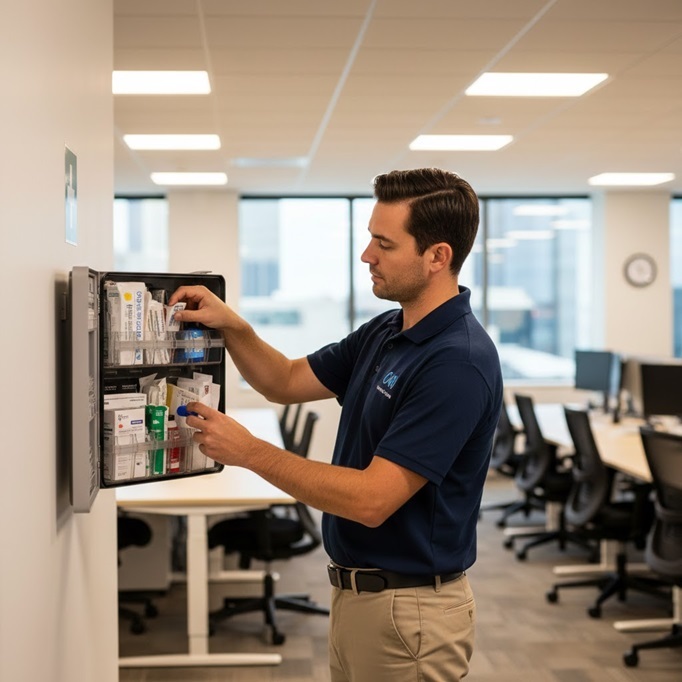
Automatic restocking is a core feature of the rental model. During regular site visits, technicians perform a comprehensive inventory check. They replace any used items and proactive swap out any stock approaching its expiry date. This system ensures that the kit is always at 100% capacity. It also prevents the common issue of "cannibalised" kits, where items are borrowed for personal use and never returned to the safety station.
Documented audit trails provide essential proof of compliance for insurance and regulatory purposes. After every service visit, the business receives a report detailing the status of each kit and the actions taken. This documentation is invaluable during WHS audits or in the event of a legal claim. It demonstrates that the PCBU has taken all reasonable steps to provide adequate first aid facilities as required by Western Australian law.
Furthermore, professional providers offer expert consultation as part of the service. Safety regulations and medical best practices evolve over time. A managed provider stays abreast of these changes and automatically updates the workplace kits to reflect new standards. This ensures that the business remains compliant without needing to constantly monitor legislative updates. The "one dollar a day" pricing model offered by some providers makes this high level of expertise accessible to businesses of all sizes across Perth.
Selecting the Right First Aid Service Provider in Western Australia
Not all first aid providers offer the same level of service. It is essential to choose a partner with specific experience in the Western Australian market. Local knowledge of the Work Health and Safety Act 2020 (WA) ensures that the advice provided is accurate and relevant to local conditions. Providers based in Perth can also offer faster response times for emergency restocking or service adjustments.
A key factor to evaluate is the frequency and thoroughness of site visits. Some providers rely on mail-order restocking, where the business must report its own usage. This still places an administrative burden on the client. A true managed service involves a physical visit by a trained technician who performs the audit themselves. This hands-on approach is the only way to guarantee that kits are properly maintained and located in the correct areas.
Businesses should also examine the flexibility of the service level agreements. As a business grows or moves to a new facility, its first aid needs will change. A quality provider will offer scalable solutions that can adapt to changing employee numbers or new workplace hazards. Transparency in pricing is also vital. Ensure that the monthly service fee covers all necessary stock replacements to avoid hidden costs that can blow out a safety budget.
Reputation within the local business community is a strong indicator of reliability. Look for providers that serve a wide range of industries, from education facilities to heavy industrial sites. This diversity of experience suggests that the provider can handle various risk profiles and regulatory requirements. A partner that understands the integrated nature of workplace hygiene will ultimately provide the best long-term value.
Integrated Hygiene: The Foundation of Workplace Safety
Workplace safety is most effective when it is addressed through an integrated strategy. First aid is the reactive component of safety, but proactive measures are equally important for preventing injuries before they occur. By combining first aid management with other hygiene services, Perth businesses can create a comprehensive safety net for their employees. This holistic approach reduces the frequency of incidents and simplifies compliance management.
One of the most effective ways to prevent injuries is through strategic floor mat rental. Slips, trips, and falls are among the most common causes of workplace injuries in Western Australia. High-quality entrance matting traps dirt and moisture at the door, preventing these hazards from spreading across hard floor surfaces. By maintaining clean and dry floors, businesses significantly reduce the likelihood that a worker will ever need to use the first aid kit.
In industrial settings, workwear rental services also play a vital role in safety. Properly fitted and maintained protective clothing shields workers from minor cuts, abrasions, and chemical splashes. Managed laundry services ensure that high-visibility gear remains effective and that specialized fabrics maintain their protective properties. When first aid kits are positioned near workwear changing areas, it creates a logical safety hub for employees.
For healthcare and hospitality businesses, linen rental services are essential for infection control. Clean, professionally laundered linens prevent the spread of pathogens, protecting both staff and clients. This focus on hygiene complements the first aid program by reducing the risk of illness-related absences. When all these services, first aid, floor mats, workwear, and linen, are managed by a single provider, the business benefits from a consistent and high-standard hygiene protocol.
Finally, professional commercial cleaning services ensure that the overall workplace environment remains sanitary. Clean workspaces are not just about aesthetics; they are fundamental to WHS compliance. Regular disinfection of high-touch surfaces reduces the risk of viral outbreaks, while proper waste management prevents the accumulation of hazards. Integrated hygiene solutions provide a cleaner, safer, and more productive environment for everyone in the facility.
Industry-Specific Compliance Deep Dives
Different sectors in Perth face unique compliance challenges that require tailored first aid solutions. For example, education and childcare facilities must adhere to strict guidelines regarding paediatric first aid supplies and asthma/anaphylaxis management. Managed services for schools ensure that kits are child-friendly and that life-saving medications like adrenaline auto-injectors are always within their use-by dates.
In the hospitality and food processing industries, compliance must align with HACCP standards. This requires first aid kits to contain visually detectable supplies, such as blue metal-detectable bandages. These items are designed to be easily identified if they accidentally fall into a food production line. Managed providers who understand these specialized requirements ensure that the business stays compliant with both safety and food quality regulations.
The industrial and manufacturing sectors in suburbs like Welshpool and Henderson require heavy-duty first aid provisions. These sites often need large-scale trauma kits and specialized treatments for chemical or electrical burns. Given the high-risk nature of these environments, the frequency of audits is typically higher. Managed services provide the intensive oversight needed to keep these complex kits ready for serious emergencies.
Even in corporate office environments, first aid compliance is essential. While the risk of major trauma is lower, offices still face hazards such as falls, ergonomic strains, and cardiac events. Managed services for offices often focus on accessibility and the inclusion of automated external defibrillators (AEDs). Professional management ensures that the AED batteries and pads are functional, providing a critical life-saving tool for the workplace.
Call-to-Action: Secure Your Workplace Compliance Today
Ensuring your workplace meets the requirements of the Work Health and Safety Act 2020 (WA) is a continuous commitment. Managed first aid kit services provide the most reliable way to guarantee compliance while protecting your most valuable asset, your employees. By partnering with a professional provider, you can transition from a reactive safety model to a proactive, integrated hygiene strategy.
SWS Group offers comprehensive, managed solutions tailored to the unique needs of Perth businesses. Our team understands the local regulatory landscape and provides the expertise needed to keep your facility safe and compliant. We take care of the details so you can focus on growing your business with confidence.
Take the first step toward a safer workplace:
- Explore our first aid kit rental programs.
- Discuss your specific compliance needs by calling (08) 9336 6944.
- Get in touch to arrange an obligation-free site audit and consultation.
For tailored hygiene solutions, call us at (08) 9336 6944 to discuss your specific requirements. The right safety partner makes all the difference in achieving long-term operational excellence.