












Disposable gloves serve as a critical line of defence for workers across Western Australia. Industries ranging from healthcare and food processing to mining and automotive rely on this essential personal protective equipment (PPE). These items protect employees from hazardous chemicals, biological risks, and physical injuries. However, the sheer volume of single-use gloves consumed daily creates a substantial environmental challenge. Perth businesses now face the dual responsibility of maintaining rigorous safety standards while reducing their ecological footprint.
Traditional waste management practices dictate that used gloves enter the general waste stream. This linear approach results in millions of synthetic gloves ending up in landfills across the state every year. Materials such as nitrile, latex, and vinyl take decades to decompose. They occupy valuable landfill space and contribute to microplastic pollution. This environmental burden is increasingly untenable for organisations committed to sustainability.
Forward-thinking facility managers in Perth are turning to specialised recycling programmes to address this issue. New processing technologies allow for the recovery and repurposing of these materials. Diverting gloves from landfill transforms a problematic waste stream into a valuable resource. SWS Group champions this transition by integrating recycling solutions with comprehensive hygiene services. This approach ensures that businesses can uphold the highest safety standards without compromising their environmental goals.
The Scale of Glove Consumption and Waste
The consumption of disposable gloves in Western Australia has accelerated significantly in recent years. Heightened hygiene awareness following global health events has entrenched glove use as a standard protocol. Healthcare facilities, including hospitals and aged care centres, generate vast quantities during routine patient care. A single facility can discard tens of thousands of gloves monthly.
Food processing plants contribute heavily to these volumes. Strict food safety standards require frequent glove changes to prevent cross-contamination. Workers handling raw meat, dairy, or produce may change gloves dozens of times per shift. This necessary adherence to hygiene protocols inadvertently drives massive waste generation.
The mining and industrial sectors in WA also utilise heavy-duty disposable gloves for chemical and mechanical protection. These robust nitrile gloves are heavier than their medical counterparts. Consequently, they add significant weight to waste, increasing disposal costs. The cumulative effect across all sectors represents a major structural waste challenge for the state.
The Landfill Impact and Material Science
Most disposable gloves are manufactured from synthetic rubber compounds. Nitrile gloves, the most common industrial variety, are made from a petroleum-based co-polymer. The molecular structure responsible for their chemical resistance also makes them resistant to natural degradation. When these items are buried in landfill, they remain intact for generations.
During this extended period, they occupy finite space within waste management facilities. Furthermore, as they eventually break down, they can release microplastics into the surrounding soil and water tables. This persistence creates long-term environmental liabilities for the region. Addressing this requires a fundamental shift in how businesses view PPE disposal.
Economic Implications of Waste Disposal
State regulations regarding waste management are becoming stricter. The waste levy in Western Australia encourages businesses to divert materials from landfill. Rising disposal fees mean that general waste bins are becoming increasingly expensive to service. Reducing the weight of general waste bins directly impacts operational costs. Therefore, finding a recycling solution is both an environmental imperative and a financial strategy.
Understanding the Recycling Process
Glove recycling is a specialised process distinct from standard kerbside recycling. Traditional recycling facilities cannot process rubber gloves due to their size and material composition. If placed in standard yellow-top bins, gloves act as contaminants. They can damage sorting machinery or degrade the quality of other recyclable streams like paper or plastic.
Specialised programmes are required to capture and transform this specific waste stream. These systems rely on separation at the source to ensure purity.
Collection and Segregation Protocols
The process begins at the source within the Perth workplace. Designated collection boxes are placed strategically where gloves are removed. This separation is crucial. Gloves mixed with general rubbish, food scraps, or organic waste cannot be processed. Staff must be trained to deposit only acceptable glove types into these specific bins.
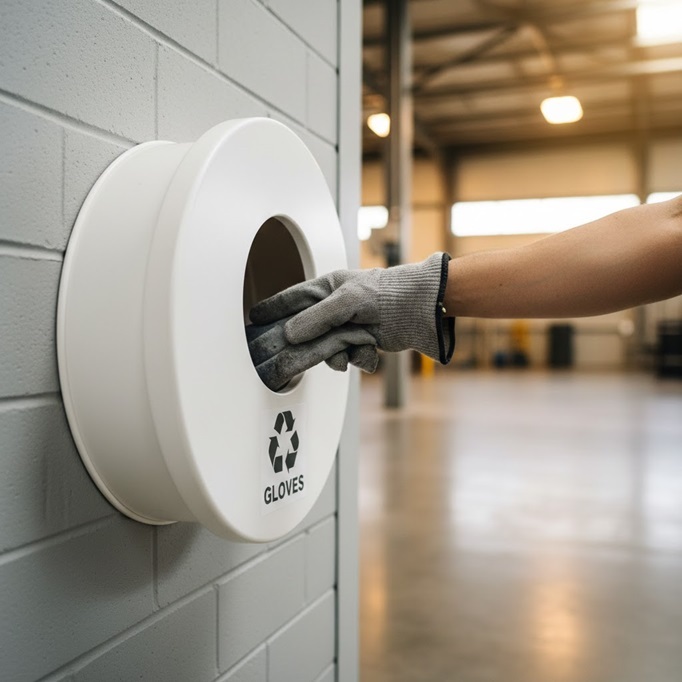
Effective segregation relies on clear visual cues. Bins specifically designed for glove recycling often feature distinct apertures. This design discourages users from depositing larger items or general trash. Clear signage using images rather than just text helps overcome language barriers in diverse workforces.
Processing and Transformation
Once collected, the waste is transported to a specialised facility. The gloves undergo a rigorous sorting process to remove any contaminants. Following this, the material is cleaned and shredded into a fine granulate. This rubber powder becomes a raw material for manufacturing new products.
Recovered nitrile and latex are often repurposed into durable rubber goods. These include safety matting, playground surfaces, garden beds, and industrial dampeners. This transformation closes the loop. It turns a single-use item into a product with a lifespan of many years.
Strategic Integration with Hygiene Services
Implementing a glove recycling programme works best when integrated with other workplace services. SWS Group, through its Cleantex division, combines waste reduction with other rental solutions. This holistic approach streamlines facility management and maximises sustainability outcomes.
Workwear Rental Alignment
Facilities that generate high volumes of glove waste often utilise workwear rental services. Staff in food processing or manufacturing plants typically change their uniforms and gloves in the same zones. Positioning recycling units near uniform lockers or change rooms increases capture rates.
Linking these services creates a seamless hygiene workflow. Workwear rental ensures staff have clean, compliant uniforms, while recycling bins capture the associated PPE waste. This integration reinforces a culture of cleanliness and responsibility. It signals to employees that the company values both their safety and the environment.
Floor Mat Rental Coordination
Entrance hygiene and waste management are closely linked. Floor mat rental services prevent dirt and debris from entering a facility. This reduces the need for harsh cleaning chemicals and protects internal flooring. Strategically, glove removal stations often sit near transition zones where mats are placed.
Coordinating these services ensures that high-traffic areas remain safe and clean. A serviced floor mat reduces slip hazards, while a glove recycling bin keeps the area free of litter. This dual approach enhances the overall safety profile of the workplace entry and exit points.
Linen Services in Healthcare
In healthcare settings, glove usage correlates strongly with bed changing and patient care. Facilities utilising linen rental services can integrate glove collection into their housekeeping routines. As staff strip beds and manage soiled linen, they also dispose of gloves.
Having recycling infrastructure present on housekeeping trolleys or in utility rooms captures this waste at the point of generation. This streamlined process prevents recyclable gloves from ending up in clinical waste bags or general rubbish bins. It consolidates supplier management, as one provider can oversee both textile and glove waste streams.
Industry-Specific Applications in Perth
Different industries in Western Australia face unique challenges regarding glove recycling. The nature of the contamination determines the viability of the programme. Tailored solutions are necessary to meet the specific needs of each sector.
Healthcare and Aged Care
The primary concern in healthcare is infection control. Gloves contaminated with blood, bodily fluids, or infectious pathogens must be treated as clinical waste. These items are not suitable for recycling due to safety risks.
However, a significant portion of gloves in hospitals are used for non-clinical tasks. Housekeeping, food service, and general administrative duties generate large volumes of recyclable waste. Implementing a split-stream system allows these facilities to divert non-hazardous gloves while maintaining strict infection control protocols. Staff education is critical here to ensure no cross-contamination occurs.
Food Processing
The food and beverage industry in Perth operates under strict HACCP guidelines. Hygiene is non-negotiable. Recycling services in this sector must ensure that collection bins do not introduce contamination risks. Bins must be sanitary, covered, and emptied frequently.
Gloves used in food handling are typically free from hazardous chemicals. They are often soiled only with organic food residue. This makes them excellent candidates for recycling. Facilities can significantly reduce their environmental footprint by capturing this clean waste stream. This also supports sustainability audits required by major retail partners.
Industrial and Mining
Workplaces in the industrial sector use gloves for protection against oils, greases, and solvents. The recyclability of these gloves depends on the specific chemicals involved. Lightly soiled gloves from assembly lines or maintenance workshops are often acceptable.
SWS Group works with industrial clients to assess contamination levels. Understanding which chemical residues are compatible with the recycling process is essential. This assessment ensures that the recovered material remains safe for remanufacturing. Heavy metals or extremely toxic substances generally require specialist hazardous waste disposal.
Environmental and Corporate Benefits
Participating in glove recycling programmes delivers measurable environmental benefits. The most immediate impact is the diversion of mass from landfill. A medium-sized food processing plant in Perth can divert hundreds of kilos of waste annually.
Reducing Carbon Footprint
Manufacturing synthetic rubber requires significant energy and petrochemical inputs. Recycling existing rubber reduces the demand for virgin materials. This process lowers the overall carbon footprint associated with glove usage.
Perth businesses are increasingly tracking their Scope 3 emissions. These are indirect emissions that occur in the value chain, including waste disposal. Recycling programmes provide tangible data for sustainability reporting. This evidence supports corporate environmental targets and net-zero commitments.
Corporate Social Responsibility (CSR)
Stakeholders, clients, and employees expect businesses to demonstrate environmental stewardship. A visible recycling programme enhances a company’s reputation. It serves as a daily reminder of the organisation’s commitment to sustainability.
This commitment can be a differentiator in competitive markets. Tenders and contracts often include sustainability criteria. Demonstrating an advanced waste management strategy can provide a commercial advantage. It also aids in staff retention, as employees prefer working for responsible organisations.
Step-by-Step Implementation Guide
Establishing a successful programme requires careful planning and execution. Facility managers in Perth should follow a structured approach to ensure high participation rates.
1. Conduct a Waste Audit
The first step is understanding the current situation. Assess how many gloves are purchased and disposed of monthly. Identify the different types of gloves used, such as nitrile, latex, or vinyl. Determine where the waste is generated. Is it on the production line, in the lab, or in the kitchen?
This data establishes a baseline. It allows management to set realistic diversion targets. It also helps in determining the number of collection units required.
2. Strategic Infrastructure Placement
Place collection boxes where they are most convenient. If a bin is too far away, staff will use the nearest general waste bin. Key locations include exits from production areas, change rooms, and laboratory benches.
Ensure the bins are clearly distinct from other waste streams. Colour coding or specialised lids can prevent confusion. Integration with existing service stations, such as commercial cleaning services cupboards or wash stations, improves logic and flow.
3. Staff Training and Engagement
Technology alone does not recycle; people do. Comprehensive staff training is vital. Explain why the programme is being introduced. Highlight the environmental benefits to motivate participation.
Provide clear visual guides on what can and cannot be recycled. Use posters and stickers on the bins. Regular toolbox talks can reinforce these messages. Celebrate milestones, such as the first 100 kilograms diverted, to maintain momentum.
4. Monitoring and Feedback
Regularly check the bins for contamination. If non-recyclable items appear, address the issue promptly with staff. Provide feedback on the volume of waste diverted. Keeping the team informed creates a sense of shared achievement.
Compliance and Safety Considerations
Safety remains the paramount concern in any Perth workplace. Recycling initiatives must never compromise the health and wellbeing of employees or the public.
Managing Contamination Risks
Contamination is the biggest threat to recycling viability. A single glove covered in hazardous waste can ruin an entire batch. Strict segregation protocols are essential.
Staff must be empowered to make the safe decision. If in doubt, the glove should go to general or clinical waste. Safety takes precedence over diversion targets. Clear protocols must exist for accidental contamination of recycling bins.
Regulatory Alignment
Western Australian businesses must comply with the Work Health and Safety Act 2020. Waste management practices must not create new hazards. Collection bins must not obstruct fire exits or walkways.
Facilities handling hazardous chemicals must adhere to specific disposal regulations. Safety Data Sheets (SDS) for all chemicals used on-site should be consulted. These documents indicate appropriate disposal methods for contaminated PPE. Programme providers can assist in interpreting these requirements for recycling eligibility.
Conclusion
Workplace glove recycling programmes represent a sophisticated evolution in facility management. They allow Perth businesses to resolve the tension between necessary safety protocols and environmental responsibility. By diverting tonnes of synthetic waste from landfills, organisations can protect their workers and the planet simultaneously.
The integration of these programmes with services like workwear rental and floor mat rental creates a cohesive hygiene strategy. It transforms waste management from a logistical burden into a sustainability asset. As Western Australia moves towards a circular economy, these initiatives will become the standard for responsible business operations.
Taking action today positions a business as a leader in sustainability. Contact SWS Group to arrange a site assessment. Call (08) 9336 6944 to discuss how a tailored recycling solution can benefit your workplace.