













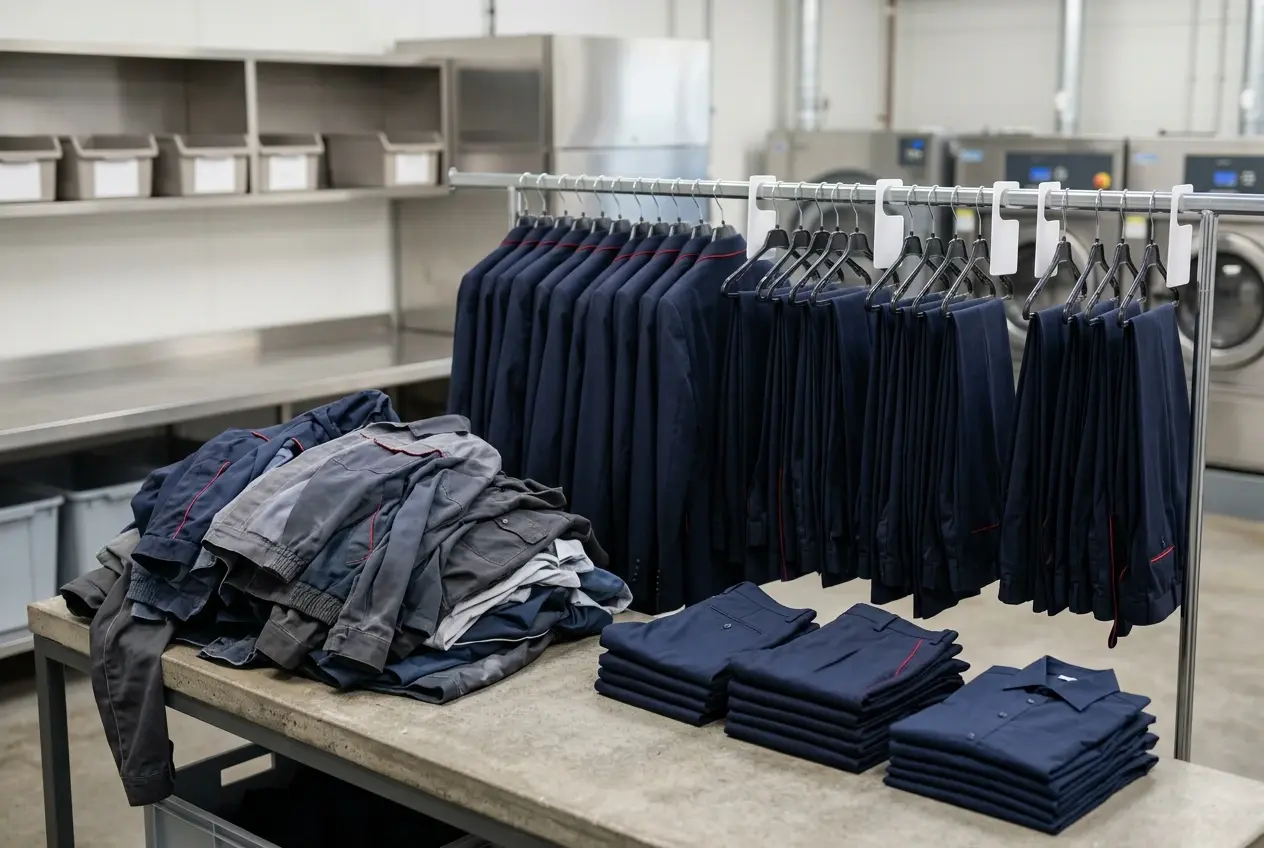
Moving from purchased uniforms to rental workwear is not a single delivery event. Rental introduces an ongoing issue, collection, laundry and return cycle that must fit the roster and workplace.
A planned transition to workwear rental begins with an accurate baseline and proceeds in stages. The business counts usable purchased stock, verifies active wearers, confirms sizes and roles, chooses branding, sets issue quantities and agrees when the rental cycle will begin. Staff also need a clear account of what changes and what happens to garments they already hold.
When switching to uniform rental, employers should know which items belong to each route and how they will be managed. A deliberate cutover prevents old stock, new allocations and service assumptions from becoming mixed together.
Define what the move is meant to change
Start by naming the operational reasons for considering rental. The business may want a managed laundry cycle, clearer wearer allocations, regular collection and delivery, garment identification or a more visible route for additions and replacements. Rank these needs so the proposed arrangement can be tested against them instead of treating rental as an end in itself.
Employer-approved garment requirements, role distinctions, brand standards and site access rules may need to carry into the new arrangement.
Set a decision group with representation from operations, workwear coordination, payroll or procurement where relevant, and employees who understand the real exchange routine. Give one person authority to maintain the baseline.
Audit purchased garments before planning the cutover
Count the garments the business owns by category, size, branding version, location and condition. Separate items issued to wearers from unissued stock and garments awaiting repair or disposal decisions.
Classify usable stock according to the organisation's current standard. Note items that can support the transition, those reserved for another purpose and those that should not return to issue. Avoid assuming that every owned garment must be consumed before rental begins. Doing so can create a prolonged mixed presentation or delay the service for sizes that are already short.
The audit gives each item a future route: continue temporarily, remain as approved reserve, move into a separately managed purchased stream, or leave circulation. Record the decision by category rather than relying on staff to recognise old and new stock later.
Rebuild the wearer record from current information
Do not copy an old purchasing list directly into the rental setup. Confirm active wearers, preferred names or identifiers, role, work location, shift pattern, approved garment categories and current sizes. Mark starters, departures and transfers expected around the changeover date so their status is not lost between systems.
Ask supervisors to verify the people they manage, then give wearers an opportunity to correct their details privately. Resolve duplicate names and unclear identifiers before garments are assigned.
Freeze a dated setup list for the initial issue while maintaining a separate change log. Each addition, removal or amendment should have an owner and effective date. This keeps late changes controlled without repeatedly rebuilding the entire baseline.
Confirm sizing through garment-specific trials
The selected garment range may use different cuts or measurements. Use the current size guidance for each item and trial key garments in the combinations people will normally wear. Include ordinary role movements such as sitting, reaching, bending or stepping where appropriate.
Plan fitting sessions around shifts and locations rather than expecting everyone to attend one narrow window. Record the confirmed garment and size against the wearer, not merely a general shirt or trouser size. Keep unresolved cases visible and escalate them before personalisation or full allocations are prepared.
Where the business has established a garment specification, trial each selected item within the approved range. Record unresolved cases and have the employer's responsible person decide whether another permitted size, cut or garment should be tested before issue.
Set issue quantities from roster and service timing
An issue quantity should connect the working week to the exchange cycle. Consider how many shifts the person works, how often garments are changed, when used items are collected and when clean items return. Include the time that garments spend away from the wearer rather than multiplying one daily change by headcount without considering the service rhythm.
Occasional outerwear should not automatically receive the same quantity logic as a garment changed each shift. Ask for the assumptions behind proposed numbers and test them against real rosters, including night shifts and employees who work across locations.
Keep contingency stock and permanent personal allocations distinct. A reserve can cover an agreed short-term exception, but quietly issuing from it every week may signal that the standard allocation is wrong. Review the first cycles closely and adjust through a recorded change rather than allowing unofficial extras to accumulate.
Lock branding and identification before production
Confirm logos, colours, placement, wearer names and any department identifiers before finalising the rental issue. A custom workwear service can include design, supply and personalisation options, so the approved artwork reference and sign-off owner should be settled before that work proceeds. A current logo applied to the wrong garment version is still a visible error.
Decide how existing purchased branding will relate to the new issue. The business may permit a defined overlap, reserve old garments for a specific use or set one coordinated cutover date. Personalised old garments may need a controlled return route rather than being placed in general spare stock.
Confirm how each rental item will be linked to the wearer or role and how employees will recognise their returned allocation. Test the naming and numbering method for duplicate names, transfers and shared roles before it is applied across the team.
Design the on-site exchange and staged changeover
Walk the physical route for used and clean garments, including shift access, available space and workplace movement. Where individual issue points are needed, managed workwear locker options are relevant to planning how clean garments are accessed and used garments enter collection. Name the site owner and document any after-hours delivery instruction.
Keep purchased garments outside the rental exchange stream unless they are explicitly included. Label separate storage and document who remains responsible for any purchased category retained after cutover.
Cleantex's workwear rental and laundry service makes the exchange route site-specific. The business can discuss supply, collection, delivery and restocking with Cleantex, then confirm the selected frequency and exchange locations before launch.
Work backwards from the first rental collection. Set the wearer-confirmation, fitting, branding, site-setup, briefing, distribution and first-return dates in one cutover schedule.
If a staged launch is useful, define what each pilot group must confirm and set its review and closure dates. Apply agreed lessons before the next group begins.
Keep launch fallback arrangements limited and dated. Name who can authorise reserve stock and where a missed or incorrect item is reported so temporary actions do not become the normal route.
Explain the change in practical terms to wearers
Give every wearer the same short launch checklist before the first issue and make it available at the exchange point. It should contain the practical facts needed to use the new route from day one.
- The garments moving into rental and the date the new issue starts.
- The location for used garments and the collection point for clean returns.
- The identifier each wearer should check before taking a returned garment.
- The route for reporting a missing item, damage, a fit concern or a role change.
- The instruction for purchased garments that remain in use, overlap temporarily or must be returned.
Demonstrate the exchange point and identifier in person where possible, then leave the written checklist available for other shifts. Questions outside the checklist should go to the named site contact.
Repeat the checklist near launch and at the first exchange. Update it only when an approved detail changes, so staff do not receive competing versions of the cutover instructions.
Distinguish rental from direct purchase in a mixed model
Some businesses may continue to purchase selected items while renting the core workwear allocation. Direct purchase means the business acquires the garments and remains responsible for the ownership decisions around that stock. Rental places the agreed garments within an ongoing service arrangement.
Assign each garment category to one route and record who handles ordering, laundry, replacement, return and stock reconciliation. Use labels or storage separation where similar-looking purchased and rental items could be confused. When a role changes, check both records so the employee does not retain an unnecessary purchased issue while receiving a new rental allocation.
A direct purchase workwear service gives businesses the option to buy uniforms, rent them or combine the two according to need. Compare the practical responsibilities of each route for the selected garment categories rather than assuming one model must cover the entire workforce.
Review the first cycles and close the transition
Review the first issue, first collection and several return cycles. Reconcile allocation errors, fit requests, reserve use and purchased garments that remain open, and check whether each shift can use the exchange points at the required times.
Assign each unresolved case an owner and date. Update the active allocation after an exchange and record any authorised quantity change rather than carrying launch notes forward indefinitely.
Close the transition when the normal exchange routine is clear and each remaining purchased garment has an agreed destination.