












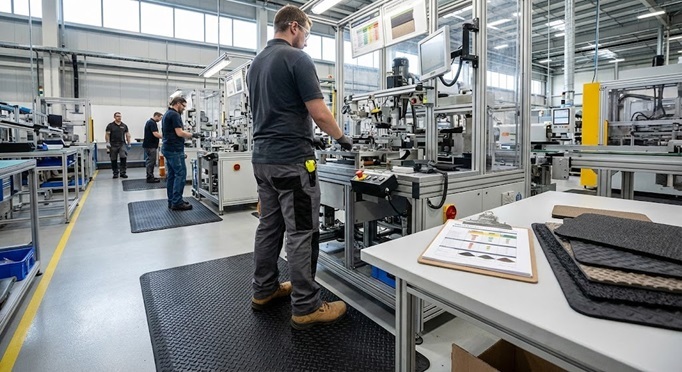
Standing on concrete for an eight-hour shift causes more than just temporary discomfort. It creates measurable physiological stress that impacts industrial facilities through reduced productivity and increased injury claims. Research from the Centre for Research Expertise in Occupational Disease shows that prolonged standing on hard surfaces forces continuous muscle engagement. This strain restricts blood flow to the lower extremities and creates cumulative musculoskeletal issues.
Industrial environments present unique challenges for worker comfort and safety. Manufacturing floors, processing facilities, and warehouse operations require employees to maintain standing positions for extended periods. Professional industrial hygiene solutions address this occupational health challenge through engineered cushioning. These solutions promote subtle, continuous movement in leg and calf muscles to prevent long-term physical damage.
SWS Group provides integrated workplace hygiene solutions that help businesses manage these ergonomic risks effectively. By focusing on the intersection of safety and efficiency, the company helps Perth businesses maintain high operational standards. Implementing the right equipment ensures that staff remain healthy and focused on their daily tasks.
The Physiological Impact of Prolonged Standing on Hard Surfaces
Industrial workers standing on concrete experience forces that compress tissues and restrict circulation. The human body is not designed for static standing on unyielding surfaces. Lower back pain develops as workers unconsciously shift their weight to find relief. Knee and hip joints experience increased loading without the shock absorption that compliant surfaces provide.
Prolonged standing leads to blood pooling in the lower legs. This condition increases pressure on the veins and can lead to chronic swelling or varicose veins. Muscles become fatigued when they must remain in a constant state of contraction to maintain balance. This fatigue often results in micro-traumas to the soft tissues, which accumulate over months and years of work.
Documented Benefits of Anti-Fatigue Matting in Industrial Settings
Facilities implementing specialized matting report measurable improvements in staff well-being. A study in Applied Ergonomics found that workers using mats experienced a 50% reduction in lower back discomfort. High-quality floor mat rental programs provide the necessary cushioning to mitigate these risks consistently.
WorkSafe data indicates that musculoskeletal disorders account for a significant portion of workplace injuries in the manufacturing sector. These injuries result in high costs related to insurance premiums and lost time. By providing a more forgiving surface, businesses can significantly lower the frequency of these claims. Improved comfort also leads to better morale and lower staff turnover rates.
Material Composition and Performance Characteristics
The performance of industrial matting depends on material properties that balance cushioning, stability, and durability. Choosing the right material ensures the mat can withstand the specific pressures of the environment.
- Vinyl and PVC: These materials offer excellent chemical resistance for laboratories or assembly lines.
- Rubber Compounds: Nitrile rubber delivers superior durability in heavy industrial zones.
- Polyurethane: These formulations represent premium options for high-performance ergonomic needs.
Thickness specifications also influence performance. Industrial mats typically range from 9mm to 25mm in thickness. It is vital to select a thickness that provides support without creating a trip hazard. Durable entrance matting solutions often combine these materials to handle both foot traffic and ergonomic requirements.
Selection Criteria for Industrial Applications
Choosing appropriate matting requires a thorough analysis of workplace conditions. Facility managers must consider the specific tasks performed at each workstation. Some roles require static standing, while others involve frequent pivoting or movement.
Environmental conditions dictate the best material selection for the site. Areas exposed to oils or chemicals require non-porous materials that will not degrade. Traffic patterns also influence mat configuration. Integrating WHS compliance protocols into the selection process ensures that all safety standards are met. This includes checking for slip resistance and ensuring edges are properly beveled.
Industry-Specific Applications and Requirements
Different sectors face unique challenges regarding floor safety and hygiene. Food processing facilities require mats that meet strict hygiene and anti-microbial standards. These environments often necessitate frequent washdowns with harsh chemicals.
Manufacturing and assembly operations benefit from customised sizing to fit specific production line layouts. Automotive and machining environments face constant oil exposure and metal shavings. Pharmaceutical settings require chemical-resistant materials that do not shed particles. Providing workwear rental alongside matting solutions creates a comprehensive safety profile for these specialized workers.
Installation Considerations and Placement Strategies
Effective safety programs require strategic placement of all mats. Workstation mapping helps identify every position where a worker stands for more than two hours daily. Coverage calculations must balance movement patterns with the physical footprint of the mat.
Edge transitions are critical to prevent trip hazards in busy corridors. Modular mats are ideal for long assembly lines where individual mats might shift and create gaps. Ensuring a secure fit to the floor prevents the mat from sliding during fast-paced operations. Following established hospitality hygiene services guidelines can also help in mixed-use facilities where aesthetics and safety overlap.
Maintenance Requirements and Service Life
Performance degrades over time without a proper maintenance schedule. Daily cleaning removes surface contaminants like grit or metal filings that can wear down the material. Deep cleaning intervals help restore the appearance and slip-resistance of the surface.
Inspection routines identify wear patterns before they become safety risks. Replacement criteria depend on the degradation of the cushioning properties. Most industrial mats deliver a service life of three to five years under normal conditions. Using a professional service ensures that mats are always in peak condition.
Cost-Benefit Analysis and Implementation Planning
Safety programs require an initial investment that must be evaluated against documented returns. Direct costs include the purchase or rental price of the equipment. However, the quantifiable benefits often far outweigh these initial expenses.
Reduced workers' compensation claims and decreased absenteeism provide immediate financial relief. Lower turnover rates save significant money on recruitment and training for specialized roles. Productivity improvements manifest through sustained task accuracy and reduced physical fatigue. Comprehensive office hygiene solutions contribute to a more professional and efficient work environment.
Regulatory Compliance and WHS Considerations
Western Australian workplaces operate under the Work Health and Safety Act 2020. Risk assessment processes must evaluate all standing work positions to identify potential hazards. Consultation requirements mandate that workers are involved in choosing the equipment they use.
Documentation standards require facilities to record all control measures used to mitigate ergonomic risks. Perth facilities managing compliance programs often integrate matting with other essential safety provisions. Maintaining high standards protects the business from legal liability and ensures a healthy workforce.
Conclusion
Anti-fatigue mats deliver measurable value through reduced injury rates and improved productivity. Effective implementation requires a careful analysis of workplace conditions and material specifications. This investment supports long-term operational success by protecting the most valuable asset of any facility: its people.
Customised solutions help maintain safety and compliance across all industrial sectors in Western Australia. To discuss specific requirements for your facility, please view the available floor mat rental and workwear rental options.
Contact the team at SWS Group for a professional assessment of your workplace needs by visiting the contact section or calling (08) 9336 6944.