












Perth facility managers face a straightforward question when selecting floor mats: rent or buy? Commercial floor mat rental affects maintenance budgets, hygiene standards, and facility presentation for years. Commercial operations from healthcare facilities to food processing plants need entrance matting that controls moisture, prevents slips, and maintains professional appearance.
The rental versus purchase decision extends beyond simple price comparison. Rental programs include regular laundering, replacement cycles, and compliance documentation that purchased mats require separate management through hygiene compliance documentation systems.
What Commercial Floor Mat Rental Includes
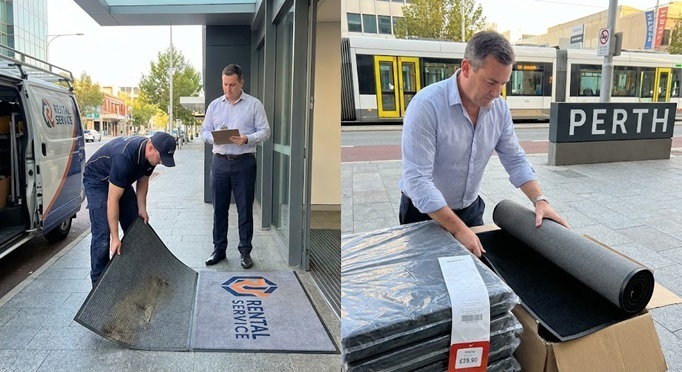
Commercial floor mat rental operates as a managed service. Service providers deliver clean mats on scheduled cycles whilst collecting soiled mats for industrial laundering through thermal disinfection laundering standards.
Rental agreements bundle several operational elements including professional laundering using industrial equipment, scheduled replacement addressing wear patterns, compliance documentation providing audit trails through hygiene compliance documentation systems, and responsive sizing adjustments accommodating seasonal changes.
SWS Group structures rental programs around service components rather than mat products alone, positioning the model as facility management.
Purchase Model Cost Structure
Purchasing floor mats shifts operational expenses to capital investment. Initial acquisition represents the visible expense, but total ownership cost analysis accumulates through laundering, storage, and replacement cycles.
Capital expenditure for quality commercial mats ranges from $80-$300 per unit. Multi-entrance facilities requiring 15-20 mats face $1,200-$6,000 upfront investment before considering laundering infrastructure.
Hygiene Standards Comparison
Hygiene performance separates rental and purchase models significantly. Industrial laundering temperature reaches 71-85°C in commercial rental facilities, achieving thermal disinfection laundering standards that eliminates bacteria, viruses, and fungi.
Chemical sanitisation protocols use hospital-grade disinfectants at controlled concentrations. Cross-contamination prevention structures rental laundry workflows. Documented hygiene verification provides audit evidence through hygiene compliance documentation systems.
Total Cost Analysis Over Three Years
Three-year cost projections reveal the true economic comparison through total ownership cost analysis. A Perth office facility with five entrance locations requiring 15 standard mats provides representative analysis.
Rental model costs total $18,720 over three years including all laundering, replacement, delivery, and compliance documentation. Purchase model total: $11,625 without existing laundry equipment, or $7,125 with commercial washing infrastructure already available.
Multi-site operations shift economics further toward rental through multi-site coordination logistics advantages.
Compliance Requirements by Industry
Industry-specific regulations influence the rental versus purchase decision. Food processing facilities operating under HACCP protocols require verified cleaning processes. Healthcare and aged care facilities managing infection control need documented environmental hygiene through thermal disinfection laundering standards.
Education facilities subject to WHS workplace safety requirements focus on slip prevention effectiveness. Hospitality operations prioritise aesthetic presentation alongside hygiene.
Seasonal Demand Flexibility
Perth's climate creates seasonal moisture tracking variations. Rental programs adjust coverage without capital expenditure. Purchase models lock facilities into fixed inventory regardless of seasonal requirements through multi-site coordination logistics limitations.
Special event coverage for conferences receives similar treatment. Rental programs temporarily increase mat quantities without permanent inventory expansion.
Implementation Considerations for Perth Facilities
Selecting between models requires assessment of specific facility characteristics through total ownership cost analysis. Existing laundry infrastructure represents the primary decision factor. Facility management priorities determine whether mat laundering represents core or peripheral activity.
Compliance documentation requirements vary by industry. Multi-site coordination complexity increases with facility count through multi-site coordination logistics challenges.
Perth businesses can contact SWS Group for facility-specific assessment evaluating these factors against actual operational requirements.
Integration With Broader Facility Services
Floor mat programs rarely operate in isolation. Facilities managing comprehensive hygiene protocols across commercial cleaning services, washroom services, and pest control benefit from integrated service coordination.
Single-vendor consolidation reduces administrative overhead. Compliance alignment across service categories creates audit efficiency. The Cleantex floor mats division operates within broader facility service integration.
Conclusion
Commercial floor mat rental delivers operational advantages for Perth facilities without existing commercial laundry infrastructure through thermal disinfection laundering standards and hygiene compliance documentation systems. Purchase models offer cost efficiency for facilities with commercial laundering capacity through total ownership cost analysis advantages.
The decision reflects facility management philosophy. Perth businesses should evaluate this question within broader facility service strategy. Reach us for comprehensive assessment of rental versus purchase economics based on specific operational characteristics including multi-site coordination logistics requirements.