









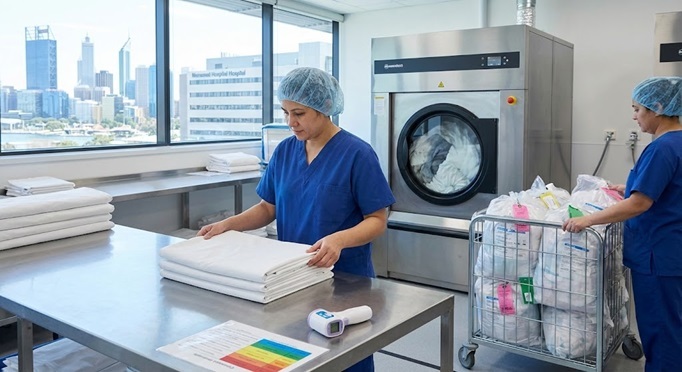
Healthcare-acquired infections affect approximately 165,000 Australian patients annually, according to the Australian Commission on Safety and Quality in Health Care. Whilst hand hygiene and surface disinfection receive significant attention, contaminated linen represents an often-underestimated transmission vector that demands rigorous management protocols through healthcare textile contamination pathways.
Perth healthcare facilities - from private hospitals to aged care homes - face unique challenges maintaining linen hygiene standards healthcare in Western Australia's climate. High temperatures accelerate bacterial growth, whilst humidity creates ideal conditions for microbial proliferation in improperly stored textiles. The consequences of inadequate linen hygiene extend beyond infection control to encompass regulatory compliance, patient satisfaction, and facility reputation.
The Microbial Reality of Healthcare Linen
Healthcare textiles harbour significantly higher microbial loads than general commercial linen. A single used hospital bed sheet can contain between 100 million to 1 billion microorganisms, including potentially pathogenic bacteria like Staphylococcus aureus, Clostridium difficile, and vancomycin-resistant Enterococci (VRE).
The transmission pathway follows a predictable pattern through healthcare textile contamination pathways. Contaminated linen contacts patient skin or wound sites. Healthcare workers handle soiled textiles during bed changes. Microorganisms transfer to hands, clothing, or environmental surfaces. Without proper protocols, this cycle continues unbroken.
Research published in the American Journal of Infection Control demonstrated that 14% of healthcare workers' uniforms became contaminated with pathogenic bacteria during routine linen handling - even when following standard precautions. The study identified handling technique, textile saturation level, and time between soiling and processing as critical variables affecting transmission risk.
Perth's healthcare sector must account for additional environmental factors. Temperatures regularly exceeding 30°C during summer months accelerate bacterial doubling times. A pathogen population that might take 8 hours to reach concerning levels at 20°C can achieve the same growth in 4 hours at 35°C. This compressed timeline demands more rigorous collection, transport, and processing protocols than facilities in cooler climates require through thermal disinfection processing requirements.
Australian Standards Framework for Healthcare Linen
The Australian and New Zealand Standard AS/NZS 4146:2000 provides the foundational framework for laundry practice in healthcare facilities through AS/NZS 4146:2000 compliance protocols. This standard establishes minimum requirements for processing reusable textiles, including thermal disinfection parameters, chemical concentrations, and quality assurance procedures.
Thermal disinfection processing requirements mandate maintaining water temperatures of 71°C for at least three minutes or 65°C for ten minutes during the wash cycle. These parameters achieve a 5-log reduction in vegetative bacteria - eliminating 99.999% of the initial microbial load. For heat-sensitive fabrics, chemical disinfection using approved biocides at specified concentrations provides an alternative pathway to equivalent microbial reduction.
The National Safety and Quality Health Service Standards, administered by the Australian Commission on Safety and Quality in Health Care, incorporate linen hygiene within broader infection prevention requirements. Standard 3 (Preventing and Controlling Healthcare-Associated Infection) specifically addresses environmental cleanliness and reprocessing of reusable medical devices and equipment - a category that encompasses healthcare textiles in direct patient contact.
Perth healthcare facilities must also comply with WHS regulations governing worker safety during linen handling. Contaminated textiles present biological hazards requiring specific risk controls, including personal protective equipment, handling procedures, and exposure response protocols through infection control linen procedures.
Collection and Transport Protocols
The infection control chain begins at the point of use. Proper collection technique significantly reduces environmental contamination and worker exposure risk during linen removal from patient care areas.
Healthcare staff should handle soiled linen minimally and avoid shaking or fluffing textiles, which aerosolises microorganisms and distributes them throughout the immediate environment. Studies using fluorescent markers demonstrate that shaking contaminated bed sheets disperses particles across a 2-metre radius, contaminating surfaces, equipment, and individuals within that zone.
Segregation at the point of use prevents cross-contamination between linen categories through infection control linen procedures. Most healthcare facilities employ a three-tier classification system:
Lightly soiled linen includes textiles with minimal body fluid contact - pillowcases, top sheets from short-stay patients, and gowns worn briefly during procedures. These items undergo standard laundering processes.
Heavily soiled linen encompasses textiles with significant body fluid contamination, including blood, faecal matter, or wound drainage. These require pre-treatment and enhanced processing parameters through thermal disinfection processing requirements.
Infectious linen refers to textiles from patients with diagnosed communicable diseases requiring additional precautions - tuberculosis, norovirus, or antibiotic-resistant organisms. These items demand segregated processing with enhanced disinfection protocols.
Perth facilities should use colour-coded or clearly labelled bags corresponding to each category. The Australian standard specifies that bags must be impermeable, prevent leakage, and withstand normal handling during transport and processing. Single-use bags eliminate recontamination risk associated with reusable hampers, though facilities using reusable systems must ensure proper decontamination between uses.
Transport procedures should minimise time between collection and processing. Extended holding periods at ambient temperatures - particularly during Perth's summer months - allow microbial populations to expand exponentially. Facilities lacking on-site laundry capabilities should arrange multiple daily pickups rather than single-day collection schedules.
Dedicated linen transport carts should never carry clean and soiled textiles simultaneously, even when separated by physical barriers. The risk of cross-contamination through aerosol dispersion, bag leakage, or handling errors outweighs any operational efficiency gained through combined transport.
Processing Requirements and Quality Assurance
Healthcare linen processing extends well beyond domestic laundering standards. The combination of mechanical action, thermal energy, chemical disinfection, and time must achieve validated microbial reduction whilst maintaining textile integrity through hundreds of processing cycles.
The wash formula typically progresses through six distinct phases:
Pre-wash flush removes gross soil and body fluids before the main wash cycle. This step uses cool to warm water (30-40°C) to prevent protein coagulation, which permanently bonds organic matter to textile fibres.
Main wash introduces detergent and alkali builders at elevated temperatures (60-71°C). This phase provides mechanical soil removal through agitation whilst chemical action breaks down organic matter and emulsifies oils.
Bleach cycle employs oxidising agents - typically sodium hypochlorite or hydrogen peroxide - to achieve chemical disinfection and stain removal. Concentration, temperature, and contact time must meet specified parameters to ensure efficacy without excessive textile damage.
Rinse cycles remove detergent residues, alkali builders, and disinfectant chemicals. Multiple rinse phases with progressively cleaner water prevent redeposition of removed soil onto clean textiles.
Neutralisation (when required) adjusts pH to neutral levels, particularly important when using chlorine bleach in hard water conditions common throughout Perth.
Final rinse may incorporate fabric softeners or optical brighteners to enhance textile appearance and user comfort.
Quality assurance protocols verify that processing achieves intended outcomes through AS/NZS 4146:2000 compliance protocols. Biological indicators - textile swatches inoculated with known quantities of test organisms - provide direct evidence of microbial reduction. Chemical indicators monitor temperature, pH, and disinfectant concentration throughout the wash cycle. Physical inspection identifies remaining stains, damage, or wear requiring item removal from circulation.
Perth healthcare facilities using off-site commercial laundry services should verify that providers maintain current AS/NZS 4146:2000 accreditation. SWS Group provides integrated solutions that coordinate linen services with complementary commercial cleaning services and washroom services, ensuring consistent hygiene standards across all facility touchpoints.
Clean Linen Storage and Distribution
Processing contaminated linen to hygienically clean standards represents only half the infection control equation. Improper storage or distribution can recontaminate textiles before they reach patient care areas.
Clean linen storage areas must remain physically separated from soiled linen collection points. The Australian standard recommends maintaining separate rooms with distinct environmental controls. At minimum, facilities should establish clear demarcation with signage, floor markings, and traffic flow patterns that prevent personnel from moving directly between contaminated and clean zones without appropriate decontamination procedures.
Environmental conditions in clean linen storage significantly impact textile hygiene. Relative humidity should remain below 60% to prevent microbial growth on stored textiles. Perth's coastal humidity - particularly during winter months - can push indoor humidity above this threshold without proper climate control. Facilities should monitor humidity levels continuously and employ dehumidification when necessary.
Storage systems should protect clean linen from environmental contamination. Enclosed cabinets or shelving with covers prevent dust accumulation and contact with potentially contaminated surfaces. Bottom shelves should remain at least 200mm above floor level to avoid contamination during floor cleaning procedures. Top shelves should provide adequate clearance below ceiling level to prevent contact with dust accumulating on overhead surfaces.
Distribution carts carrying clean linen to patient care areas must never transport soiled items on return trips. Designated clean linen carts should undergo regular cleaning and disinfection but should never enter contaminated zones. This unidirectional flow prevents cross-contamination that can undermine all upstream processing efforts.
Staff Training and Compliance Monitoring
Technical standards and equipment capabilities mean nothing without properly trained staff executing protocols consistently. Healthcare facilities commonly identify human factors as the primary variable in linen hygiene compliance.
Effective training programs address both the "how" and the "why" of linen hygiene protocols. Staff who understand the infection transmission pathways and potential consequences of protocol deviations demonstrate significantly higher compliance rates than those simply instructed to follow procedures without context.
Training should encompass:
- Segregation criteria - enabling staff to correctly classify linen at the point of use based on contamination level and patient diagnosis
- Handling technique - minimising personal exposure and environmental contamination during collection and transport
- Personal protective equipment - appropriate selection and use of gloves, gowns, and other barriers based on contamination risk
- Spill management - immediate response procedures when linen bags leak or tear during handling
- Hand hygiene - critical moments requiring hand decontamination during linen handling workflows
- Reporting systems - mechanisms for identifying protocol breaches, near-miss events, or system failures requiring corrective action
Compliance monitoring provides objective evidence of protocol adherence and identifies improvement opportunities. Direct observation using standardised checklists captures actual practice during routine operations. Audit findings should trigger targeted retraining rather than punitive responses, fostering a safety culture that encourages reporting and continuous improvement.
Environmental sampling can validate the effectiveness of linen hygiene protocols through infection control linen procedures. Periodic microbiological testing of clean linen - particularly after process changes or following identified compliance issues - verifies that processing achieves intended microbial reduction. Elevated bioburden on supposedly clean textiles signals system failures requiring immediate investigation and correction.
Integration With Broader Facility Hygiene Programs
Linen hygiene cannot exist in isolation from comprehensive facility hygiene management. Contaminated textiles interact with environmental surfaces, equipment, and other facility systems, creating potential transmission pathways that demand coordinated control strategies.
Floor mat services provide the first barrier against soil and microbial contamination entering healthcare facilities. Strategic placement of entrance matting systems reduces particulate matter tracked into patient care areas, decreasing the overall contamination burden on both environmental surfaces and textiles.
First aid services complement linen hygiene by ensuring appropriate supplies for managing exposure incidents. When healthcare workers experience direct contact with contaminated linen - through bag tears, improper handling, or accidental exposure - immediate access to first aid supplies and exposure response protocols minimises infection risk.
Perth healthcare facilities benefit from integrated approaches that coordinate linen services with environmental cleaning, waste management, and pest control. Single-vendor solutions reduce coordination complexity whilst ensuring consistent standards across all hygiene touchpoints.
Emerging Challenges and Future Considerations
Healthcare linen hygiene faces evolving challenges that demand ongoing protocol refinement. Antimicrobial-resistant organisms continue spreading throughout healthcare environments, requiring enhanced surveillance and potentially more aggressive processing parameters through thermal disinfection processing requirements. Climate change projections suggest Perth will experience increased temperatures and more frequent extreme heat events, compressing safe holding times and intensifying processing requirements.
Sustainability considerations increasingly influence linen management decisions. Healthcare generates significant environmental impact through energy-intensive laundering processes, chemical usage, and textile disposal. Facilities must balance infection control imperatives against environmental stewardship, seeking processing methods that achieve required microbial reduction with reduced resource consumption.
Textile technology advances offer potential improvements in both infection control and operational efficiency. Antimicrobial-treated fabrics incorporating silver ions or other biocidal agents may reduce microbial loads on soiled linen, though questions remain about long-term efficacy, resistance development, and environmental impact. Microfibre textiles enable more effective soil removal during processing whilst requiring lower water temperatures, potentially reducing energy consumption without compromising disinfection.
Conclusion
Healthcare linen hygiene standards represent a critical but often overlooked component of infection prevention programs. Perth healthcare facilities must implement rigorous protocols addressing collection, transport, processing, storage, and distribution - all whilst accounting for Western Australia's unique environmental conditions that accelerate microbial growth on contaminated textiles through healthcare textile contamination pathways.
Compliance with Australian standards provides the foundation through AS/NZS 4146:2000 compliance protocols, but effective programs extend beyond minimum requirements to create comprehensive systems addressing human factors, environmental controls, and quality assurance through thermal disinfection processing requirements and infection control linen procedures. Staff training ensures consistent protocol execution, whilst monitoring systems identify improvement opportunities before failures compromise patient safety.
Healthcare facilities seeking to optimise linen hygiene should consider integrated approaches that coordinate textile management with broader facility hygiene programs. The combination of proper linen protocols, environmental cleaning, entrance soil control, and first aid readiness creates layered defences against healthcare-acquired infections.
Talk to our team to discuss how integrated hygiene solutions address the complete spectrum of infection control requirements through coordinated service delivery across the Cleantex, Cleanpro, and Pestpro divisions. Healthcare administrators can arrange an obligation-free consultation to discuss how customised hygiene solutions address facility-specific challenges whilst maintaining regulatory compliance and supporting optimal patient outcomes.